


Last Updated: 6 October 2026
How many weeks pregnant am I? If you have just seen a positive test, that is almost certainly the first question on your mind — and finding the answer is simpler than it feels. In the UK, the NHS dates every pregnancy from the first day of your last period, which means working out how many weeks pregnant you are takes about thirty seconds once you know the date. This guide walks you through the exact NHS method, explains why those first two “weeks” count before conception has even happened, and shows you what each week means for your baby’s development.
You will also learn when the NHS dating scan confirms your answer to “how many weeks pregnant am I?”, how irregular cycles or a Clearblue “weeks indicator” test can confuse the count, and when to self-refer to a midwife so your antenatal care starts on time. One gentle note before we begin: this guide is for general information only and is not a substitute for professional medical care — if anything is unclear, it is always worth checking with your midwife or GP.
How many weeks pregnant am I? Count from the first day of your last period. If that was five weeks ago, you are five weeks pregnant — even though conception happened about three weeks ago. The NHS dates every pregnancy this way, a measure called gestational age. Your dating scan between 8 and 14 weeks then confirms your weeks.
What “How Many Weeks Pregnant Am I?” Really Means
When you ask “how many weeks pregnant am I?”, you are really asking about something doctors call gestational age. The definition is simple: gestational age is the number of weeks (and days) that have passed since the first day of your last menstrual period. Everything in maternity care — your due date, your scans, your screening windows — is built on this one date.
A full-term pregnancy lasts about 40 weeks, or 280 days, counted from that first day of bleeding. Your due date is simply that date plus 280 days. It feels strange at first, because roughly two of those weeks pass before conception has even happened — but the method is universal across the NHS and used by midwives in every maternity unit in Britain.
Once you have answered “how many weeks pregnant am I?”, midwives will often write your weeks as a pair of numbers, such as 8+3. That means 8 completed weeks and 3 extra days — in other words, you are partway through your ninth week. Once you know this shorthand, reading your maternity notes becomes much easier, because every appointment and scan is stamped with it.
While you are getting your head around the numbers, you may already be noticing early signs that prompted the question “how many weeks pregnant am I?” in the first place. The NHS lists the most common early symptoms as a missed period, sore breasts, nausea (which can strike at any time of day), tiredness, a heightened sense of smell, needing to wee more often, and light cramping a bit like period pains. Not everyone gets symptoms — and having none does not mean anything is wrong — but if several of these sound familiar, your positive test is simply confirming what your body was already telling you.
How Many Weeks Pregnant Am I? The 4-Step NHS Method
You do not need an app to answer “how many weeks pregnant am I?”, although plenty of good ones exist. The NHS method needs just one fact: the date of the first day of your last period. Follow these four steps and you will have your answer.
- Find day one. Write down the first day of your last period — the first day of proper bleeding, not spotting. The NHS states plainly that pregnancy is dated from this day.
- Count completed weeks. Count how many full seven-day weeks have passed since that date to answer “how many weeks pregnant am I?”. If your last period started 35 days ago, that is five completed weeks.
- Add the extra days. Any days left over become the “+days” part. For example, 38 days since day one is 5 weeks and 3 days, written 5+3.
- Estimate your due date. Add 280 days (40 weeks) to day one. That gives your estimated due date, which the dating scan will later confirm or adjust.
Here is a worked example. Suppose the first day of your last period was 1 September 2026. Count forward 35 days and you land on 6 October 2026 — exactly five weeks. So on 6 October, how many weeks pregnant am I? You are five weeks pregnant (written 5+0), just starting your sixth week. Add 280 days to 1 September and your estimated due date is 8 June 2027.
Why Doctors Count From Your Last Period, Not Conception
This is the part that confuses almost everyone. In a typical 28-day cycle, you ovulate around day 14 — and conception, if it happens, follows within a day or so of ovulation. That means at the moment of conception you are already about two weeks pregnant by the NHS count. In weeks one and two, you are not actually pregnant at all; your body is simply preparing an egg for release.
Doctors and midwives use the last period rather than conception for a very practical reason: most people do not know the exact day they conceived, but most remember roughly when their last period started. The first day of bleeding is a reliable, shared anchor — it lets every midwife, sonographer and consultant in the country work from the same calendar, so your care stays consistent wherever you are seen.
So when you are working out your dates and the number feels “too big” — a positive test at what feels like week four, for instance — remember that those first two weeks are simply part of the agreed dating system. That two-week head start is why “how many weeks pregnant am I?” always gives a bigger number than you would expect from conception. Your body did nothing wrong, and the maths is not broken — it is exactly how the NHS, and maternity services worldwide, have dated pregnancies for decades.
What Each Week of Pregnancy Means in the First Trimester
Knowing what each week means turns the answer to “how many weeks pregnant am I?” from an abstract number into something you can picture. The first trimester runs up to week 12, and the NHS describes each week with a familiar fruit or seed so you can gauge how tiny — and how fast-changing — your baby is at every stage.
| Week | What is happening | Rough size |
| 1–2 | You are not pregnant yet; your body is preparing for ovulation. These weeks still count towards your 40. | — |
| 3 | Ovulation and fertilisation typically happen now, in a 28-day cycle. | — |
| 4 | Implantation; the embryo burrows into the womb lining. Home tests are about 99% accurate from around three and a half weeks, and a missed period is often the first sign. | Poppy seed (about 2mm) |
| 5–6 | The heart begins beating and early structures form. Morning sickness and tiredness often start around now. | Pea |
| 7–8 | Facial features and tiny limb buds develop. Around week 8 the embryo is medically called a foetus. | Raspberry |
| 9–10 | All essential organs have formed and the baby is moving, though you cannot feel it yet. The heart races at around 180 beats per minute. | Apricot |
| 11–12 | The end of the first trimester. The baby is fully formed and growing fast; many people feel their energy returning. | Plum |
The NHS week-by-week pregnancy guide describes these early milestones in reassuring detail, including the symptoms you might feel and the practical steps to take at each stage. If you want the official walkthrough for the very start of the journey, the NHS week-by-week pregnancy guide is the best place to continue reading.
How Many Weeks Pregnant Am I With an Irregular Cycle?
If your cycles are longer or shorter than 28 days — or vary from month to month — working out how many weeks pregnant you are can be slightly trickier, and the standard count can be slightly off. The NHS method assumes ovulation happens around day 14, but if you ovulate on day 21 of a 35-day cycle, for example, conception happened a week later than the textbook calendar suggests. In that case, your true gestational age may be about a week less than the last-period calculation says.
This is also why a Clearblue “weeks indicator” test can look confusing. Those tests estimate from conception, not from your last period, so they typically read about two weeks lower than the NHS count. A result of “2–3 weeks” on the test usually means roughly 4–5 weeks by the NHS dating that your midwife will use. Both numbers are “right” — they are just measured from different starting lines.
The good news is that any early wobble gets corrected. When you are unsure of the answer to “how many weeks pregnant am I?” because of irregular cycles, your midwife will start from your last period and then let the dating scan settle the final number. The scan measures the baby directly, so it overrides the calendar estimate. If your cycles are very irregular, mention it at your first appointment so your care team can plan your scan timing well.
The Dating Scan: When the NHS Confirms Your Weeks
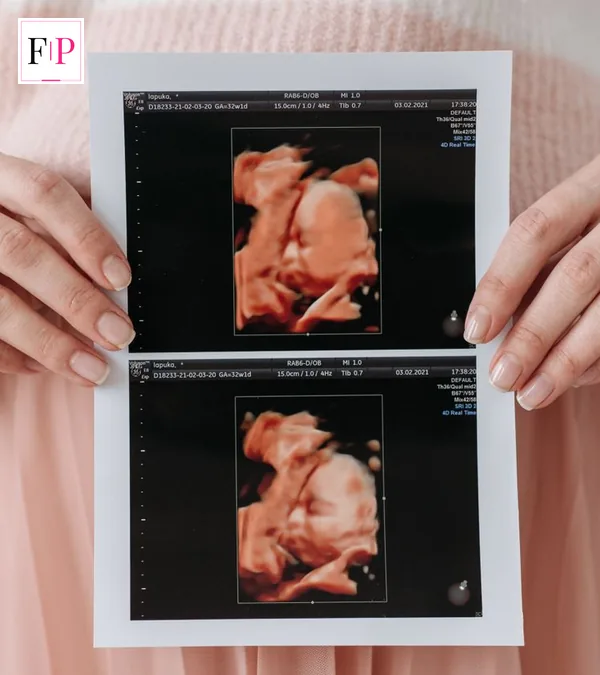
The dating scan is the moment your answer to “how many weeks pregnant am I?” becomes official. The NHS offers this ultrasound between 8 and 14 weeks — in practice, many trusts book it for around 11 to 14 weeks. It checks when your baby is due, how your baby is developing, and whether you are expecting more than one baby. It is sometimes simply called the dating scan, and it is the measurement your maternity notes will use from then on.
Do not be surprised if the scan shifts your weeks by a few days in either direction. A baby measuring three or four days “ahead” or “behind” is completely normal at this stage, and the sonographer will update your dates accordingly. Once the scan date is set, it becomes your official answer to “how many weeks pregnant am I?” — more trusted than your period calendar from that point on.
The same appointment can also include screening for Down’s syndrome, Edwards’ syndrome and Patau’s syndrome — entirely your choice, and the team will explain it fully beforehand. For the full schedule of what happens at each appointment, the NHS guide to your antenatal appointments lays out every visit from booking to birth.
When to Self-Refer to a Midwife in the UK
Once you know the answer to “how many weeks pregnant am I?”, the next step is to get into the system. The NHS says you can refer yourself for pregnancy care as soon as you know you are pregnant — you do not need to see your GP first. Most hospital trusts have a self-referral form on their maternity website; look for the maternity section of your local trust’s site and it usually takes just a few minutes to complete.
Many women self-refer while still unsure of the answer to “how many weeks pregnant am I?”, and that is completely normal — the midwife will help pin down your dates at your first appointment. After your referral, you will be offered a booking appointment between 8 and 12 weeks, which usually takes about an hour. The midwife will ask about the date of your last period, your health history and your preferences, and will arrange your dating scan.
Try not to leave it too late: many maternity services aim to see you before 10 weeks so that screening tests and scans can be arranged in good time. If this is your first baby, the NHS offers at least 10 antenatal appointments and 2 ultrasound scans in total; if you have given birth before, it is usually at least 7 appointments.
While you wait for that first appointment, there is plenty you can do. The NHS advises taking 400 micrograms of folic acid every day until at least week 12 to help your baby’s nervous system develop, and a daily vitamin D supplement is recommended through the autumn and winter months. It is also worth knowing that pregnant women are entitled to a free NHS flu jab, and that stopping smoking and avoiding alcohol give your baby the healthiest possible start.
6 Mistakes to Avoid When Working Out Your Weeks
Even with the method clear, small slips can throw your count off by a week or two. Run through these before you settle on your answer to “how many weeks pregnant am I?” — here are the mistakes midwives see most often, and how to dodge each one.
- Counting from conception. If you know when you ovulated and count from there, you will land about two weeks lower than the NHS figure. Always start from the first day of your last period.
- Using the day your period ended. Day one means the first day of bleeding, not the last. A five-day period counted from the wrong end adds nearly a week of error.
- Treating the test date as week one. A positive test usually appears around week 4 of the NHS count, not week 1 — the test detects pregnancy after implantation, not at conception.
- Trusting the Clearblue weeks number as NHS weeks. The digital “weeks indicator” counts from conception, so add roughly two weeks to match NHS dating.
- Forgetting that irregular cycles shift ovulation. Long or unpredictable cycles mean the textbook 28-day maths may overestimate your weeks — let the dating scan be the final judge.
- Worrying when the scan moves your dates. A shift of a few days at the dating scan is routine and expected; it simply means the measurement is more precise than the calendar.
So, how many weeks pregnant am I? Now you know. Count from the first day of your last period, add the extra days, and let the dating scan between 8 and 14 weeks confirm the final number. It is a beautifully simple system once you understand the two “free” weeks at the start — and it is the same system every midwife in the UK will use throughout your pregnancy.
Your next moves are clear — and please share this guide with anyone else asking “how many weeks pregnant am I?”. Self-refer to your local maternity service as soon as you have a positive test, start your folic acid if you have not already, and note your dates down somewhere safe — your midwife will ask for them at the booking appointment. Every week from here brings a new milestone, from the first flutter of a heartbeat to that first glimpse on the dating scan. Wishing you a healthy, happy pregnancy — and if anything ever feels uncertain, your midwife or GP is only ever a phone call away.
How many weeks pregnant am I if my last period started five weeks ago?
You are five weeks pregnant. The NHS dates pregnancy from the first day of your last period, so five weeks since that date means five weeks of gestational age, even though conception happened about three weeks ago. Your dating scan between 8 and 14 weeks will confirm or adjust this.
How many weeks pregnant am I when I get a positive test?
Usually around four weeks or more. Home pregnancy tests are about 99% accurate from around three and a half weeks after the first day of your last period, and most people test around the time of a missed period, which falls at the start of week four in the NHS count.
Why does my Clearblue weeks test say 2 to 3 weeks when the NHS says I am 5 weeks?
They measure from different starting points. The Clearblue weeks indicator estimates from conception, while the NHS dates pregnancy from the first day of your last period, roughly two weeks earlier. Add about two weeks to the test result to match NHS dating.
How many weeks pregnant am I if my cycle is irregular?
The last-period method may be slightly off with irregular cycles, because ovulation can happen earlier or later than day 14. Start with your best estimate from your last period, tell your midwife your cycles are irregular, and the dating scan will set your final, most accurate dates.
What does 8+3 mean in pregnancy weeks?
It means 8 completed weeks and 3 extra days, written as 8+3. You are partway through your ninth week. UK midwives use this shorthand in maternity notes, so every appointment and scan is stamped with your exact weeks and days.
Can the dating scan change how many weeks pregnant I am?
Yes, by a few days. The dating scan measures your baby directly, which is more precise than counting from your last period. If the measurement differs from your calendar estimate, your midwife will update your dates, and the scan date becomes the official one in your maternity notes.
