


Last Updated: 25 October 2026
Understanding norovirus gii.17 matters this winter, because the strain nicknamed the ‘Kawasaki bug’ is spreading again across the UK and has overtaken the long-dominant GII.4 as the most frequently detected norovirus genotype. Cases are climbing, NHS hospitals have issued ‘please don’t visit us’ alerts to anyone feeling unwell, and health officials say the shifting pattern means some people could catch the illness more than once this season.
This guide explains what norovirus gii.17 is, why it is driving this season’s surge, the symptoms to watch for, and the official NHS advice that will help you recover safely at home while protecting those around you. Whether you know it as the winter vomiting bug or are simply trying to dodge another bout of sickness this autumn, here is what the latest UK data actually says.
What is norovirus gii.17? Norovirus gii.17 is the strain of the winter vomiting bug that has become the most frequently detected norovirus genotype in the UK this season, overtaking the long-dominant GII.4. It causes sudden vomiting, diarrhoea and stomach cramps, spreads easily, and the NHS says anyone with symptoms should stay home for at least 48 hours after they stop.

What Is Norovirus GII.17?
Norovirus gii.17 is a genotype of norovirus, the highly contagious virus behind most outbreaks of the winter vomiting bug. Noroviruses are grouped into genogroups, and within genogroup II the GII.4 genotype has been the dominant strain detected in England every winter for many years. GII.17 is not actually a brand-new virus: it was identified years ago and became the main type in some regions during the 2014–2015 season, before fading back into the background. Now, it is making a comeback — and it is spreading again.
You may have seen headlines calling the strain the ‘Kawasaki bug’. One NHS health body has noted that this nickname is slightly misleading: ‘Kawasaki’ technically refers to a historic GII.17 variant from that 2014–2015 wave, rather than being another official name for the strain circulating now. The distinction matters because the nickname can be confused with Kawasaki disease, which is an entirely different and unrelated serious condition. Still, the label has stuck in media coverage, which is why you will see it used widely this winter.
What makes GII.17 important right now is not that it is more dangerous, but that it is different enough from GII.4 to catch out immune systems. Because many people have built up some immunity to the old dominant strain over the years, the return of GII.17 means it can infect people who would otherwise have been protected — including people who have already had norovirus earlier this season.
Why GII.17 Has Overtaken GII.4 This Season
According to the UK Health Security Agency, norovirus gii.17 has recently become the most frequently found genotype in England, surpassing the long-dominant GII.4. Laboratory-confirmed cases this year have been running at around double the five-season average, with almost 3,000 confirmed cases reported so far — and experts describe that figure as the tip of the iceberg, because most people simply stay home ill and never get tested.
The good news is that the current 2025/2026 season’s rise remains within expected levels for the time of year, and recent surveillance suggests the pace of the increase may be slowing. The surge is partly driven by the comeback of norovirus gii.17, which is allowing more people to become infected and, in some cases, to catch it multiple times.
| Feature | GII.4 (previous dominant strain) | GII.17 (current dominant strain) |
| Detected most winters since | Many years — the long-dominant genotype | Dominant in 2014–2015, now resurgent |
| Population immunity | Higher — most people have met it before | Lower — can reinfect people who had GII.4 |
| Severity | Standard norovirus illness | No indication of more severe illness |
| Nickname in headlines | None widely used | The ‘Kawasaki bug’ |
Crucially, UKHSA stresses there is no indication that either strain causes more severe illness. As the agency puts it: “This means that people who have already had norovirus this season may catch it again, as having one genotype does not fully protect against the other. However, at present there is no indication that either GII.17 or GII.4 leads to more severe illness.” That is the key fact behind this winter’s headlines: more infections, not worse ones.
Surveillance scientists also point to other factors behind the high numbers, including post-pandemic changes in population immunity, better diagnostic testing and changes in how cases are reported nationally. Either way, the emergence of norovirus gii.17 is seen as a true rise in transmission — and one that health teams will be watching closely as winter deepens.
What Are the Symptoms of Norovirus GII.17?
The symptoms of norovirus gii.17 are the same sudden, unpleasant signs as any norovirus infection. They usually begin 12 to 48 hours after exposure and come on fast — which is why the illness catches so many people off guard at work, school or on public transport.
- Sudden nausea — a wave of queasiness that arrives with little warning.
- Projectile vomiting — forceful vomiting is the hallmark symptom of norovirus gii.17, as with all norovirus strains.
- Watery diarrhoea — frequent, loose stools that can quickly lead to dehydration.
- Stomach cramps — gripping abdominal pain that often comes in waves.
- Mild fever — a slightly raised temperature, usually below 38°C, which a thermometer can help you track.
- Aches and pains — headaches and muscle aches, plus a general washed-out feeling.
Most people feel the worst for 24 to 48 hours and then start to improve, although tiredness can linger for a few days. For a fuller breakdown of what to expect, see our guide to the full list of norovirus symptoms. Because the illness is short-lived, many people treat norovirus gii.17 at home without ever contacting a healthcare professional — which means community case numbers are almost certainly far higher than the official figures suggest.
How Does It Spread — and Can You Catch It Twice?
Norovirus gii.17 spreads with remarkable ease. Transmission is mostly through contact with an infected person, but the virus can also be picked up from food contaminated with it or from touching contaminated surfaces — door handles, handrails, shared keyboards and light switches are all classic culprits. A person remains infectious from just before symptoms begin until at least 48 hours after they stop, which is why outbreaks rip through households, schools, offices and care homes so quickly.
And yes, you genuinely can catch norovirus gii.17 even if you have already had a stomach bug this season. Having one genotype does not fully protect you against the other, so someone who caught GII.4 earlier in the autumn can still be infected by GII.17 now that it is dominant. That is the main reason UKHSA expects some people to be ill more than once this winter — it is not that the virus has become nastier, it is simply that our immune defences recognise the new arrival less well.
The virus thrives in colder months because people spend more time indoors in close contact, and norovirus gii.17 needs only a tiny number of viral particles to cause infection. Good hygiene is therefore the single most effective line of defence — more on that below.
NHS Advice: What to Do If You Catch It
There is no specific medicine for this strain — antibiotics do not work on viruses — so treatment is about supporting your body while it fights the infection off. The NHS advises the following steps, which apply to every norovirus strain including GII.17:
- Stay home for at least 48 hours after symptoms stop. This is the single most important rule — you are still infectious during this window.
- Rest. Give your body the downtime it needs; norovirus gii.17 usually passes within two to three days.
- Drink plenty of fluids. Take small, frequent sips of water to replace what vomiting and diarrhoea take out. Oral rehydration sachets from the pharmacy can help.
- Take paracetamol for aches and fever. It eases headaches, muscle pain and a raised temperature.
- Eat when you feel able. Start with plain foods such as toast, crackers or rice once your appetite returns.
- Do not prepare food for others until at least 48 hours after symptoms have stopped.
- Wash laundry on a hot cycle and disinfect the toilet, taps and door handles with a bleach-based cleaner.
Most people with the virus recover fully without medical help. The main danger is dehydration, so keep a close eye on fluid intake — especially in children and older adults, who can become dehydrated faster than healthy adults.
Why Hospitals Are Asking Visitors to Stay Away
This autumn, several NHS hospitals have issued ‘please don’t visit us’ alerts urging anyone who has had vomiting or diarrhoea symptoms in the last 48 hours to stay away. The message is blunt but necessary: hospitals are full of vulnerable patients, and introducing norovirus gii.17 onto a ward can force bed closures, cancel operations and put seriously ill people at risk.
NHS England has said the seasonal surge in cases is putting real pressure on hospitals, with norovirus patient numbers running at seasonally high levels. That is why the 48-hour rule matters so much: it is not just guidance for your own comfort, it is how the NHS keeps wards open and protects patients whose immune systems cannot fight off what, for most of us, is a miserable but brief illness.
The same advice applies to care homes, schools and nurseries. If your child catches it, keep them home for at least 48 hours after the last bout of vomiting or diarrhoea — sending them back too early is one of the fastest ways to seed a classroom outbreak.
How to Stop Norovirus GII.17 Spreading at Home
Because the virus is so infectious, one ill person can quickly mean a whole ill household. These practical steps dramatically cut the odds of the virus hopping from person to person under your roof:
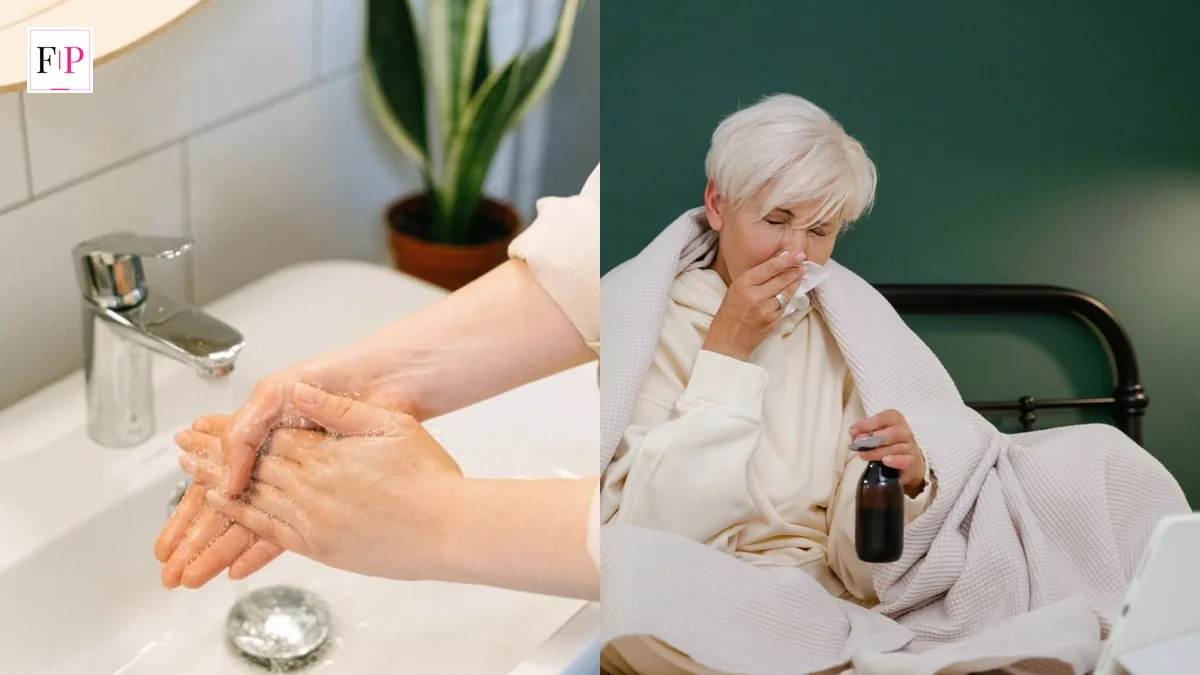
- Wash hands thoroughly with soap and warm water — especially after using the toilet and before eating or preparing food. This is the single most effective precaution.
- Do not rely on alcohol hand gels. Alcohol-based sanitisers are not effective against norovirus gii.17, so soap and water is essential.
- Disinfect surfaces with a bleach-based cleaner where possible, including toilets, flush handles, taps and kitchen worktops.
- Do not share towels, flannels or cutlery with someone who is ill, and wash their bedding and clothes separately on a hot wash.
- Ventilate rooms and try to keep the ill person in one bathroom if your home has more than one.
- Avoid visiting hospitals, care homes or vulnerable relatives while you are ill and for 48 hours afterwards.
It is worth repeating the hand-gel point, because it surprises many people: the norovirus shell is unusually tough, and standard alcohol rubs simply do not destroy it. Old-fashioned soap and water — at least 20 seconds of thorough scrubbing — is what stops norovirus gii.17 in its tracks.
Who Is Most at Risk and When to Get Help
For most healthy adults, it is deeply unpleasant but passes without complications. Three groups need extra care: young children, older adults and people with weakened immune systems. In these groups, dehydration can develop quickly and may need medical attention.
Contact your GP or call NHS 111 if you or someone you are caring for cannot keep fluids down, shows signs of dehydration (dizziness, dark or very little urine, a dry mouth, or unusual drowsiness), has bloody diarrhoea, or if symptoms have not started to improve after three days. For babies and very young children, seek advice sooner rather than later.
Reassuringly, health officials have been clear that the resurgence of norovirus gii.17 does not mean a more severe illness is circulating. The strain may be infecting more people, but it is not making them sicker — and with sensible precautions, most households will get through the season with no more than a rough couple of days.
What is norovirus gii.17?
Norovirus gii.17 is a genotype of norovirus, the highly contagious virus behind most cases of the winter vomiting bug. It has recently overtaken the long-dominant GII.4 strain to become the most frequently detected norovirus genotype in the UK, according to the UK Health Security Agency.
Why is norovirus gii.17 called the ‘Kawasaki bug’?
The ‘Kawasaki bug’ nickname comes from media coverage, but it is slightly misleading: Kawasaki technically refers to a historic GII.17 variant from the 2014-2015 season, not an official name for the strain circulating now. It should not be confused with Kawasaki disease, which is an unrelated serious condition.
What are the symptoms of norovirus gii.17?
Symptoms are the same as any norovirus infection: sudden nausea, projectile vomiting, watery diarrhoea, stomach cramps, a mild fever and aches. They usually begin 12 to 48 hours after exposure and most people feel worst for 24 to 48 hours.
Can you catch norovirus twice in one season?
Yes. The UK Health Security Agency says having one genotype does not fully protect against the other, so someone who caught GII.4 earlier in the season can still be infected by norovirus gii.17. There is no indication that either strain causes more severe illness.
How long should you stay home with norovirus?
The NHS advises staying home for at least 48 hours after your symptoms stop, because you remain infectious during this window. You should also avoid visiting hospitals, care homes and vulnerable relatives during this time, and not prepare food for others.
Does hand sanitiser kill norovirus gii.17?
No. Alcohol-based hand sanitisers are not effective against norovirus, including norovirus gii.17. The NHS advises washing your hands thoroughly with soap and warm water instead, and disinfecting surfaces with a bleach-based cleaner.
The bottom line on norovirus gii.17: it is the UK’s newly dominant stomach-bug strain, it can reinfect people who caught the older variant, and the best protection remains simple — wash your hands with soap and water, disinfect surfaces, and stay home for 48 hours after symptoms stop. Found this guide useful? Share it with family and friends, and explore more of FamePost’s health coverage to stay ahead of this winter’s bugs.
