


Last Updated: 29 September 2026
Flu jab eligibility for the 2026/27 winter season is now the question on millions of British minds, as the NHS rolls out its annual vaccination programme in two carefully timed phases. If you are wondering whether you qualify for a free jab this autumn, you are not alone: searches for who can get the vaccine free have surged since the programme opened on 1 September 2026. The good news is that the rules are clearer than ever, and checking your flu jab eligibility takes just a couple of minutes.
This complete guide explains exactly who is eligible for a free NHS flu jab in 2026, the key dates for each group, and how to book your appointment. You will also learn what happens at the appointment, the difference between the nasal spray and the injection, and what side effects to expect. Whether you are over 65, pregnant, a carer, or a parent, you will find your answer here.
Flu jab eligibility in 2026: You qualify for a free NHS flu jab if you are aged 65 or over, aged 18 to 64 in a clinical risk group, pregnant, a care home resident, a carer, a close contact of someone with a weakened immune system, a frontline health or social care worker, or a child aged 2 to 17 in an eligible group. Children have been eligible since 1 September 2026, while most adults become eligible from 1 October 2026.
What Is Flu Jab Eligibility?
Flu jab eligibility simply means whether you meet the NHS criteria for a free flu vaccine in a given winter season. Each year, the Joint Committee on Vaccination and Immunisation (JCVI) advises the government on which groups should be offered the jab free of charge. The aim is to protect those most at risk of serious illness while also slowing the spread of flu through the wider community.
Eligibility is not the same as a recommendation for everyone. While anyone can pay privately for a flu jab at a high street pharmacy, the free NHS programme is targeted. Understanding your flu jab eligibility matters because it decides whether you pay nothing at all or around £20 for private vaccination.
The 2026/27 programme was confirmed in a joint letter from the UK Health Security Agency, NHS England and the Department of Health and Social Care. There are no changes to the eligible groups this year, but the timing has been fine-tuned. Children’s flu jab eligibility opened on 1 September, while most adult groups follow from 1 October, based on JCVI advice about when protection is most effective.
Who Gets a Free Flu Jab in 2026: The 9 Eligible Groups
Here is the full list of groups covered by NHS flu jab eligibility for winter 2026/27. If you fall into any of these categories, your jab is free.
- Adults aged 65 and over — the largest eligible group, invited from 1 October 2026.
- Adults aged 18 to 64 in clinical risk groups — including people with asthma, diabetes, heart disease, kidney disease, liver disease, neurological conditions and weakened immune systems.
- Pregnant women — eligible at any stage of pregnancy, from 1 September 2026.
- Children aged 2 and 3 on 31 August 2026 — offered the jab at their GP surgery from 1 September.
- School-aged children from Reception to Year 11 — vaccinated at school, mostly with the nasal spray.
- Children aged 6 months to under 18 in clinical risk groups — offered an appointment from 1 September.
- Care home residents — vaccinated in their care home from 1 October.
- Carers — those receiving Carer’s Allowance or who are the main carer of an older or disabled person.
- Close contacts of immunocompromised people and eligible frontline health and social care workers.
If you are unsure which category applies to you, your GP surgery can confirm your flu jab eligibility in seconds. Pharmacists offering the NHS service can also check for you on the spot.
Key Dates: When Flu Jab Eligibility Opens
The 2026/27 programme runs in two phases, and the dates matter. Getting your jab at the right time gives you the best protection through the winter peak.
| Start date | Who becomes eligible |
|---|---|
| 1 September 2026 | Pregnant women; children aged 2–3; school pupils Reception to Year 11; children 6 months to under 18 in clinical risk groups |
| 1 October 2026 | Adults 65+; adults 18–64 in clinical risk groups; care home residents; carers; close contacts of immunocompromised people; frontline health and social care workers |
| End of November 2026 | Target for most vaccinations to be completed |
| 31 March 2027 | Programme closes; jabs available until this date where needed |
Why the split? Flu jab eligibility for children opens earlier because flu spreads through schools first, and vaccinating children early helps shield older adults through indirect protection. For adults, the JCVI advises waiting until October because vaccine protection gradually wanes, and flu typically peaks in December and January.
According to the confirmed dates for the 2026/27 flu vaccination programme, primary care providers are being asked to prioritise two- and three-year-olds as soon as vaccine supply allows.
How to Book Your Free Flu Jab in 5 Steps
Once you have confirmed your flu jab eligibility, booking is straightforward. Follow these steps:
- Watch for your invitation. The NHS contacts eligible people by text message, letter or through the NHS App. You do not need to wait for an invitation, though — you can book as soon as your group opens.
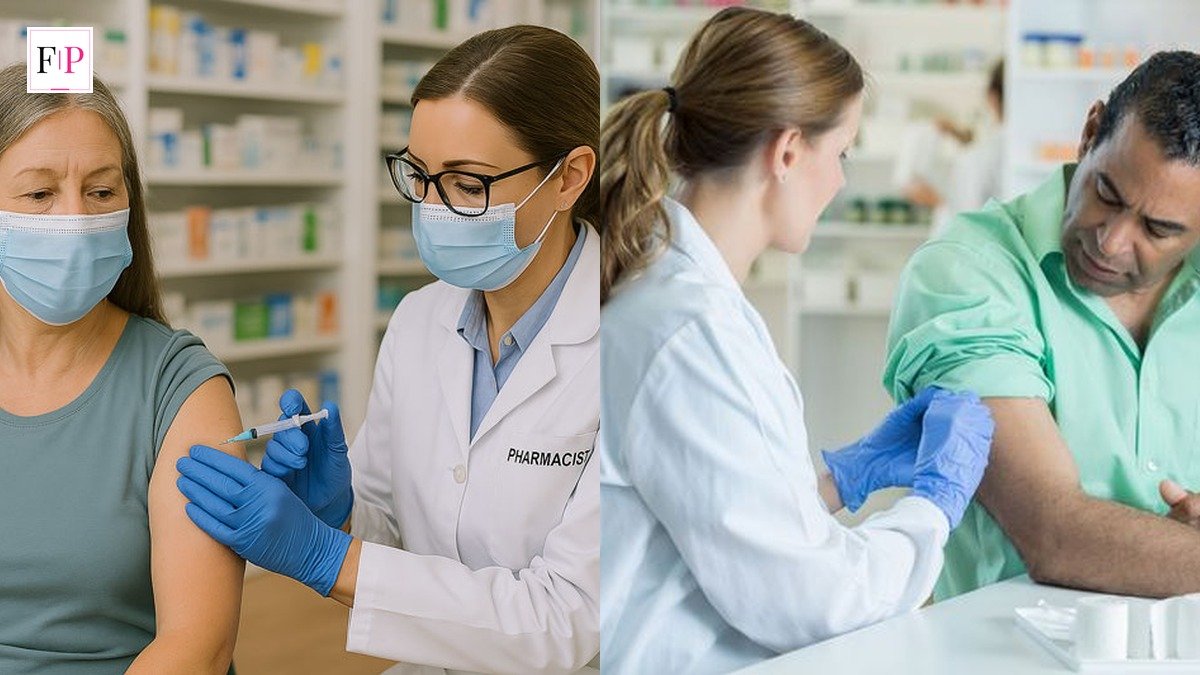
- Contact your GP surgery or local pharmacy. Both offer the free NHS jab to eligible groups. Pharmacies are often the fastest option, with many offering walk-in slots.
- Choose a time that suits you. Appointments take around 10 minutes. If you are a parent, your child’s school will send consent forms home for the nasal spray programme.
- Attend your appointment. Wear a short-sleeved top so the vaccinator can easily reach your upper arm. Bring your NHS number if you have it, but it is not essential.
- Note your record. Your vaccination is recorded in your GP record automatically, whether you have it at the surgery or a pharmacy.
Pregnant women can also be vaccinated through their maternity team, and care home residents will be offered the jab where they live. If you are a frontline worker, check whether your employer runs an occupational health scheme first.
Nasal Spray vs Injection: What You Will Get
Flu jab eligibility does not just decide whether your vaccine is free — it also influences which type you receive. Most children are offered a quick and painless nasal spray rather than a needle.
The spray is squirted up each nostril, takes seconds, and still works if your child sneezes afterwards. Protection builds over about two weeks. Children under 9 who have never had a flu vaccine before need two doses, four weeks apart.
Some children cannot have the nasal spray and are offered an injected vaccine instead. This applies to children with a weakened immune system, a severe egg or flu vaccine allergy, recent significant wheeze, asthma needing steroid tablets or hospital care, or those taking salicylate medicines.
Adults, including pregnant women, receive the standard injected vaccine in the upper arm. The adult vaccines are inactivated, which means they cannot give you flu — a myth worth busting every winter.
Flu Jab Side Effects: What’s Normal and What’s Not
Understanding flu jab eligibility is one thing; knowing what to expect afterwards is another. Most side effects are mild and short-lived.
- Sore arm — the most common reaction, usually easing within a day or two.
- Mild fever, headache or muscle aches — a sign your immune system is responding, typically gone within 48 hours.
- Runny nose — possible after the children’s nasal spray.
Serious side effects are extremely rare. Studies show the flu vaccine does not increase the risk of miscarriage or premature birth, and it helps protect newborns for months after birth. If you develop a high temperature that does not settle, or swelling that spreads, contact your GP or NHS 111.
For more detail on what to expect this season, see our guide to flu symptoms in 2026 and how to tell flu apart from a heavy cold.
Why Flu Jab Eligibility Matters More This Winter
This is not an ordinary flu season. Pharmacists have warned about a concerning new strain dubbed “Subclade K” circulating ahead of winter, urging everyone with flu jab eligibility to take it up promptly rather than waiting for cases to rise.
As one pharmacist put it in a warning over the new flu strain in the UK this winter: “If you’re eligible for a free NHS jab, you should check how and where you can get vaccinated, rather than waiting for flu levels to rise.”
The numbers explain the urgency. Flu hospitalises thousands of Britons every winter, and the burden falls hardest on the very groups covered by flu jab eligibility — the over-65s, pregnant women and people with long-term conditions. Vaccination also protects the NHS itself: fewer flu admissions mean shorter A&E waits for everyone.
There is a community benefit too. Because children’s flu jab eligibility opens first, vaccinating school-age children early reduces transmission to grandparents and other vulnerable adults. It is one of the most effective public health interventions of the winter.
Not eligible? You can still protect yourself. High street pharmacies offer private flu vaccinations — currently listed at around £19.49 at major chains — with no appointment needed in many branches.
Frequently Asked Questions
Am I eligible for a free flu jab in 2026?
You are eligible for a free NHS flu jab in 2026 if you are 65 or over, aged 18 to 64 in a clinical risk group, pregnant, a care home resident, a carer, a close contact of someone immunocompromised, a frontline health or social care worker, or an eligible child aged 2 to 17. Children became eligible on 1 September 2026; most adults from 1 October 2026.
When can over-65s get the flu jab?
Adults aged 65 and over become eligible for the free NHS flu jab from 1 October 2026. The October start follows JCVI advice, because vaccine protection wanes over time and flu usually peaks in December and January. Most vaccinations should be completed by the end of November.
Is the flu jab free for pregnant women?
Yes. Pregnant women are eligible for a free NHS flu jab at any stage of pregnancy, from 1 September 2026. You can be vaccinated through your maternity team, GP surgery or a participating pharmacy. The vaccine is inactivated and cannot cause flu, and studies show no increased risk of miscarriage.
Do children get a nasal spray or an injection?
Most children receive a quick, painless nasal spray. Children who cannot have the spray — for example those with weakened immune systems, severe egg allergy or certain asthma treatments — are offered an injected vaccine instead. Under-9s having the vaccine for the first time need two doses, four weeks apart.
Can I get a flu jab if I am not eligible for a free one?
Yes. If you fall outside the NHS eligibility groups, high street pharmacies offer private flu vaccinations, currently around £19.49 at major chains. No prescription is needed, and many pharmacies accept walk-ins.
Does the flu jab give you flu?
No. The adult flu vaccines used by the NHS are inactivated, so they cannot cause flu. Mild side effects such as a sore arm, slight fever or muscle aches are possible and usually clear within 48 hours — they are a sign your immune system is responding, not an infection.
Conclusion: Check Your Flu Jab Eligibility Today
Flu jab eligibility is your ticket to free, potentially life-saving protection this winter. With children’s appointments already under way since 1 September and adult eligibility opening on 1 October, there is no reason to delay.
Take two minutes today: check the eligible groups above, then contact your GP surgery or local pharmacy to book. If you are a parent, return that school consent form. If you are pregnant, ask your midwife at your next appointment.
Winter flu is predictable — and preventable. Confirm your flu jab eligibility now, get vaccinated at the right time, and give yourself the best possible protection for the months ahead.
