


Last Updated: 24 October 2026
reformer pilates for men has moved from the edge of the gym timetable into the centre of serious training conversations in 2026. Once wrongly dismissed as gentle stretching, it is now being used by footballers, strength athletes and everyday gym-goers who want better control alongside their usual workouts.
However, the appeal is not about replacing the weights room. Instead, it is about finding the weak links that heavy training can miss. Slow, controlled work on a sliding carriage has a habit of exposing tight hips, unsteady shoulders and a core that tires far sooner than expected.
Consequently, interest in reformer pilates for men is growing fastest among men who already train hard. They are not looking for an easier option. Rather, they are looking for a smarter way to move well, stay consistent and keep training for longer without every session feeling like a battle.
reformer pilates for men is resistance training on a sliding carriage machine that uses springs, straps and pulleys to build core strength, mobility and control through slow, low-impact movements, and men are taking it up in 2026 because it improves the movement quality that supports lifting, running and sport.

What Is Reformer Pilates and How Does It Work?
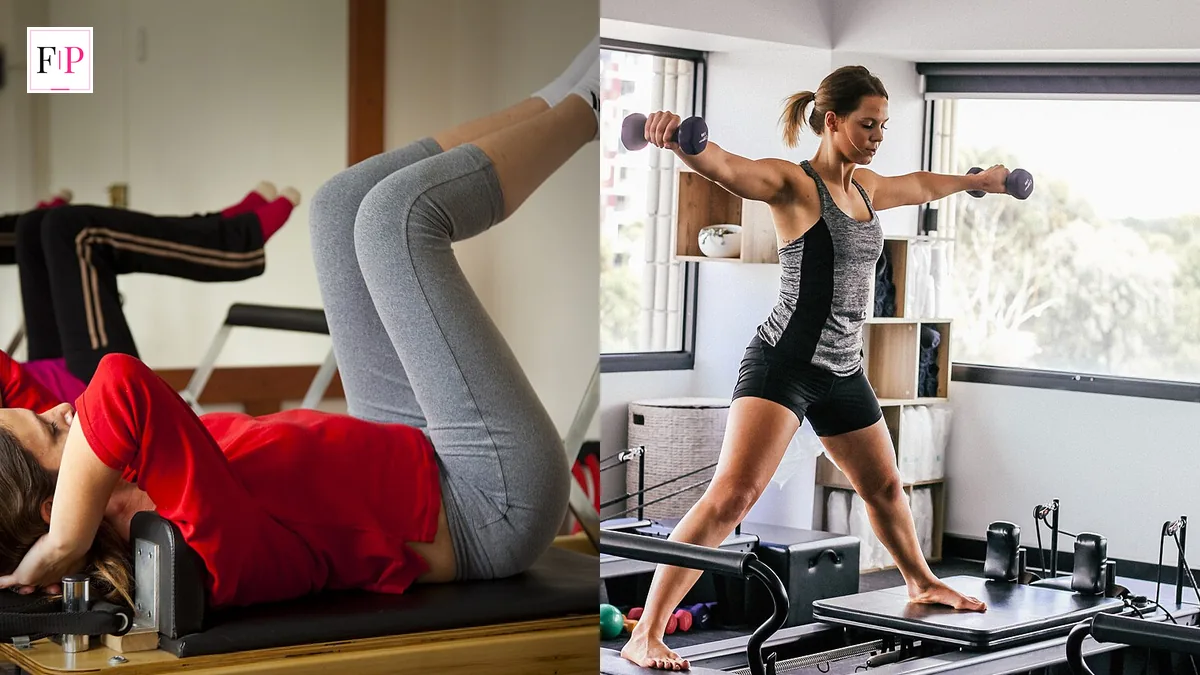
Firstly, it helps to understand the machine itself. A reformer is a long, low bed with a carriage that slides back and forth along a frame. Springs underneath provide resistance, while straps and pulleys allow your arms and legs to work through controlled ranges of movement under tension.
Reformer Pilates is a resistance-based, low-impact form of Pilates performed on a sliding carriage, using springs, straps and pulleys to challenge strength, balance and control at the same time. That combination is what separates it from a standard mat class.
Unlike a mat session, where you work mainly against your own bodyweight, the reformer can make a movement harder or easier by changing the spring tension. Lighter springs often demand more control, whereas heavier springs can add more direct resistance. As a result, the same exercise can feel completely different from one setup to the next.
Meanwhile, the moving carriage adds an element of instability. Your body has to organise itself while the surface beneath you shifts, which means smaller stabilising muscles work alongside the larger ones. For that reason, reformer pilates for men often feels surprisingly demanding, even when the weights involved look modest on paper.
Classes usually run through a full-body sequence, moving between leg work, arm work, core work and stretches. An instructor sets the pace, corrects your position and adjusts the springs to suit your level. Therefore, beginners are guided throughout, and experienced trainees can still be challenged without needing to guess what to do next.
Why More Men Are Taking Up Reformer Pilates in 2026
In 2026, the change in attitude has become hard to miss. Coverage of the trend even talks about the rise of the “Pilates bros”, as reformer studios fill with men who would previously have spent that hour under a barbell or on a treadmill instead.
Men’s Fitness UK, reporting in October 2026, noted that everyone from elite athletes to everyday gym-goers is now taking it up. That breadth matters. When a training method appeals both to professionals chasing performance and to regular men chasing consistency, it usually signals something more durable than a passing fashion.
High-profile names have helped normalise the shift, too. David Beckham and Harry Styles are among the well-known men associated with Pilates, and their visibility has made it easier for others to try a class without worrying about outdated stereotypes. Furthermore, footballers and strength athletes use the method for mobility, core control and injury prevention as part of wider training programmes.
Perhaps the clearest explanation came from strength coach Michael Baah, Men’s Fitness PT of the Year and founder of Just Train CIC. Quoted in that coverage, he said: “Men aren’t discovering Pilates, they’re returning to it.” In other words, reformer pilates for men is less a brand-new discovery and more a return to fundamentals that modern gym culture sometimes overlooks.
Supply is growing alongside demand, particularly in London. Jetset Pilates opened in Shoreditch in July 2026, followed by a Fitzrovia studio in October 2026 with 14 reformer beds and 50-minute classes. Clearly, studios would not be expanding like this unless reformer pilates for men was bringing people through the door week after week.
What Reformer Pilates Does That Heavy Lifting Does Not
Here is the key point that surprises many lifters. Being strong in squats and bench press does not guarantee mobility or control in unfamiliar ranges. You can move a heavy bar in a straight line and still struggle when a movement asks for rotation, balance or slow control at an unusual angle.
Slow, controlled reformer work exposes those weak links quickly. Hip control, shoulder stability, balance and coordination are all tested in ways that feel humbling at first. For example, a man who deadlifts confidently may find his legs shaking during a simple carriage exercise because the task demands steadiness rather than raw force.
That shaking is useful feedback, not failure. It shows exactly where control drops off, and it gives you something specific to improve. Over time, better control in those ranges can support the way you lift, run and train, because your joints are being asked to work well in more positions, not just your strongest ones.
Additionally, the low-impact nature of the work matters. Because the carriage supports much of your bodyweight and the movements are controlled, you can train hard without the pounding that comes from running or jumping. If you already enjoy impact work such as a rucking workout, a reformer session can provide a contrasting, joint-friendlier day in your week.
Ultimately, reformer pilates for men works best as a complement, not a contest. It does not need to beat the barbell at its own game. Instead, it fills the gaps that heavy lifting leaves behind, and that is precisely why so many strong men are keeping it in their routine.
Key Benefits for Strength, Running and Everyday Training
The benefits are practical rather than mysterious, and they carry over into almost every other form of exercise. Although individual results vary, regular classes can support several qualities that men commonly want to improve. The main advantages include:
- Core strength: the carriage challenges your trunk muscles constantly, helping you brace and stabilise more effectively.
- Mobility: controlled movements through fuller ranges can help hips, shoulders and ankles move more freely.
- Posture: strengthening the muscles that support an upright position can counter hours spent sitting at a desk.
- Balance and coordination: working on a moving surface trains steadiness and body awareness together.
- Low-impact conditioning: you can raise the effort and work the whole body without repeated impact on the joints.
- Support for other training: better control and mobility can complement heavy lifting, running and team sports.
For lifters, the transfer is easy to understand. A stronger, more reliable core helps you hold position during big compound movements, while better hip and shoulder control supports safer, cleaner technique. If you are still building your base, pairing classes with a structured strength training for beginners approach can give you progress in both strength and movement quality at once.
For runners, meanwhile, the appeal is control and resilience. Single-leg work, hip stability and balance are all valuable when you are covering miles on tired legs. Similarly, men who spend long days sitting often notice the posture and mobility work first, because it targets exactly the stiffness that desk work creates.
Importantly, none of this requires giving up the training you already enjoy. Most men use reformer pilates for men alongside lifting or running, not instead of it. In that supporting role, it can help you train more consistently, and consistency is where long-term progress usually comes from.
Finally, there is a simple enjoyment factor. Classes are varied, coached and over within a set time, which suits men who like structure. Because reformer pilates for men feels different from a normal gym session, many find it easier to stick with, and a session you actually attend beats a perfect plan you keep skipping.
Reformer Pilates vs Weights: How They Compare
A common question is whether the reformer can replace the weights room. The honest answer is that they do different jobs. Weights remain the most direct tool for building maximum strength and loading muscles progressively with heavy resistance, following the general activity principles set out on the NHS exercise hub.
The reformer, by contrast, excels at control, mobility and muscular endurance in varied positions. Spring resistance can certainly challenge your muscles, and beginners often feel it deeply, but the loading is different from adding plates to a bar. Therefore, comparing the two purely on weight lifted misses the point of both.
Think of it this way. The barbell asks how much force you can produce in a familiar pattern. The reformer asks how well you can control force in unfamiliar ones. Most well-rounded programmes need a bit of both, which is why so many athletes refuse to choose between them.
Cost is another practical difference. A gym membership usually covers unlimited lifting, whereas reformer classes are booked per session or through class packs and memberships. As an example of London pricing, Jetset Pilates quoted founding memberships at £79 a month for four classes, £149 for eight classes and £199 for unlimited classes, although prices may vary by studio and offer.
So, rather than asking which method wins, ask what your training is missing. If you lack raw strength, prioritise progressive lifting. If you lack mobility, control or variety, reformer pilates for men can fill that gap neatly while your main training continues as normal.
How to Start: Your First Class Step by Step
Starting well makes a huge difference, because the machine looks unfamiliar and the movements feel different from anything in a normal gym. Fortunately, beginner sessions are designed for exactly that learning curve. Follow these steps for a smoother first experience:
- Book a fundamentals or beginner class rather than an advanced session, so the instructor teaches the basic positions and spring settings first.
- Arrive early and tell the instructor about any injuries or limitations, so exercises can be adjusted for you where needed.
- Wear comfortable training clothes and grip socks, which are usually required for safety and hygiene on the carriage.
- Listen for the setup cues on springs, straps and foot position, because small changes make a big difference to each exercise.
- Move slowly and breathe steadily, resisting the urge to rush, since control is the whole point of the session.
- Expect shaking muscles in your core, hips or shoulders; it is a normal sign that unfamiliar muscles are working hard.
Afterwards, mild muscle soreness is common, especially in places you rarely train directly. That is another reason to begin with one or two sessions a week alongside your existing training, rather than booking a class every day. As Men’s Fitness coverage of the trend suggests, the men getting the most from it treat it as part of a balanced programme, not a quick fix.
During your first few weeks, focus on learning positions rather than chasing the heaviest springs. Good instructors will progress you when your control improves. Similarly, do not compare yourself with regulars in the class; many of them felt just as unsteady during their own first sessions.
Moreover, keep notes on what felt difficult. If hip control or shoulder stability kept letting you down, that information can shape your other training too. Used this way, reformer pilates for men becomes a regular check on your movement quality, highlighting what to work on before small weaknesses turn into bigger frustrations.
Above all, give it more than one session. The first class is mostly about learning the machine, so the real benefits of reformer pilates for men become clearer by the third or fourth visit, once the setup feels familiar and you can focus fully on the work itself.
Can reformer pilates build muscle for men?
Yes, to a degree. Spring resistance challenges your muscles through controlled ranges and builds muscular endurance and core strength, especially if you are new to it. However, it will not load muscles as heavily as progressive weight training, so most men use it alongside lifting rather than instead of it for maximum muscle and strength gains.
How often should men do reformer pilates?
One to two sessions a week is a sensible starting point alongside your existing training. That frequency is enough to improve mobility, core control and balance without interfering with lifting or running. Give it a few weeks at that pace, then add a third session only if your schedule and recovery allow.
What should men wear to a reformer pilates class?
Wear comfortable, fitted training clothes that let you move and stretch freely, and avoid very loose shorts. Grip socks are usually required, as they help your feet stay secure on the carriage and are a hygiene standard in most studios. Bring water, and leave watches or jewellery that could catch on straps at home.
How much does reformer pilates cost in London?
Prices vary by studio and package. As an example, Jetset Pilates in London quoted founding memberships at £79 a month for four classes, £149 for eight classes and £199 for unlimited classes when its Fitzrovia studio opened in October 2026. Single classes and introductory packs may cost less, so check your local studio for current offers.
Is reformer pilates good for runners and lifters?
Yes. Runners benefit from the hip control, single-leg stability, balance and core work, while lifters gain mobility and control in ranges that squats and bench press do not fully test. Because sessions are low-impact, reformer work also fits neatly on a lighter day between harder runs or heavy lifting sessions.
What happens in a first reformer pilates class?
Book a beginner or fundamentals class, arrive early and tell the instructor about any injuries. They will explain the carriage, springs and straps, then guide you through a full-body sequence at a controlled pace. Expect shaking muscles, especially in your core and hips — that is normal, and the setup will soon feel familiar.
Conclusion
In summary, the rise of reformer pilates for men in 2026 is not really about a machine becoming fashionable. It is about men recognising that strength alone is not the whole picture. Mobility, balance, posture and control matter too, and the reformer trains all of them in a single, low-impact session.
Whether you lift, run, play football or simply want to move better after years at a desk, one or two classes a week can support the rest of your training without replacing it. The shaking muscles may surprise you at first, but that challenge is exactly where the progress begins.
So why not try it properly? Book a beginner or fundamentals class this week, wear your grip socks, tell the instructor about any injuries, and give reformer pilates for men a fair trial over a few sessions. Your core, hips and shoulders will soon tell you whether it deserves a permanent place in your routine.
