


Last Updated: 26 October 2026
If the thought of dragging yourself out into the dark for a run fills you with dread, cozy cardio might be the fitness trend you have been waiting for. Born on TikTok and now going properly mainstream, it swaps harsh gym lighting and punishing workouts for candles, blankets, a favourite box set and a gentle walk on a walking pad. According to everyone from fitness trainers to the people actually doing it, the softer approach might be exactly why it works.
With winter drawing in across the UK and the evenings closing in early, the timing could hardly be better. Instead of fighting the season, cozy cardio leans into it, turning the hours you would spend on the sofa into low-impact movement that genuinely counts. Here is everything you need to know: what it is, how to set it up at home, the psychology behind its success, and the honest limits nobody on TikTok mentions.
What is cozy cardio? Cozy cardio is a viral TikTok fitness trend where you walk at a gentle-to-brisk pace on a walking pad in a deliberately relaxing setting, with dim lights, scented candles, comfortable clothes and your favourite show or playlist. Sessions typically last 30 to 45 minutes and prioritise consistency and enjoyment over intensity or suffering.

What Is Cozy Cardio?
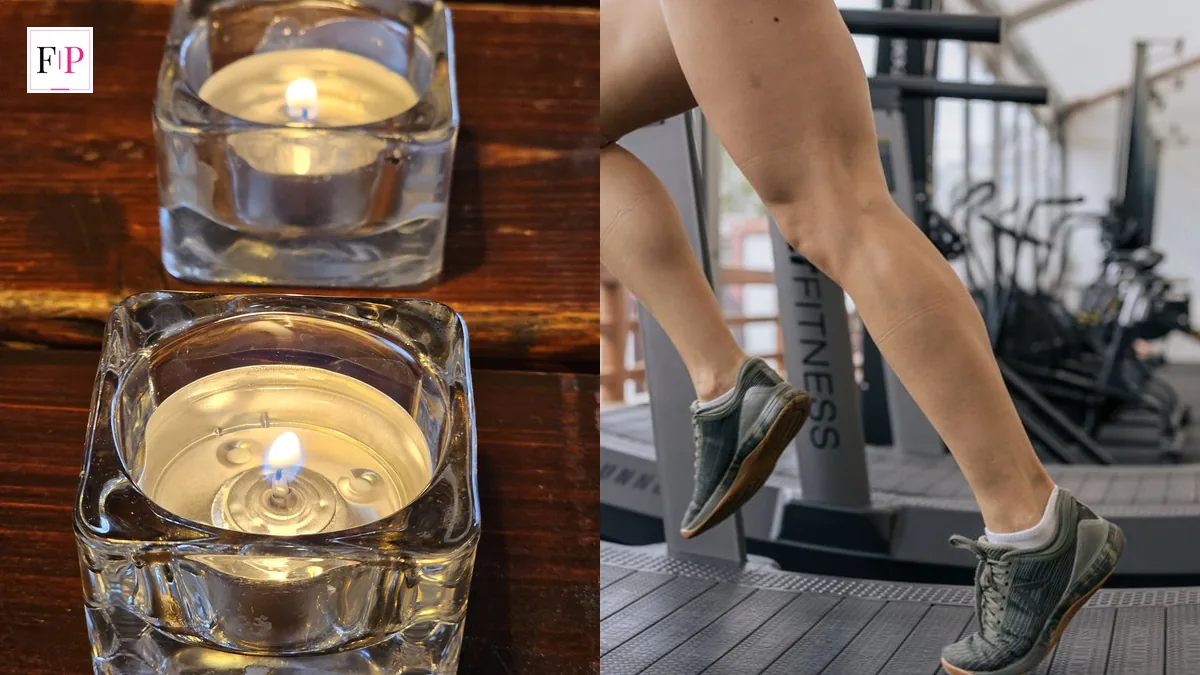
Cozy cardio is a form of low-intensity, steady-state exercise built around atmosphere first and effort second. The recipe is simple: dim the lights, light a few candles, pull on the comfiest clothes you own, set up a walking pad in front of something you actually want to watch or listen to, and walk at a gentle-to-brisk pace for around half an hour. There is no leaderboard, no burpees and no shouting instructor. The workout is deliberately unremarkable; the setup is the entire point.
The trend began with TikTok creator Hope Zuckerbrow, who started posting her morning routine in late 2022. Her videos showed a ritual that millions found instantly appealing: candles lit, coffee made, favourite Netflix show queued up, and a quiet walk on her walking pad, sometimes as early as 6am. As she later told the Associated Press, the response was overwhelming, with viewers thanking her for flipping their mindset about what exercise is supposed to feel like. Unlike most fitness fads, which are designed for people who already work out, cozy cardio spoke directly to everyone else.
The trend earned fresh attention this week when Parade published an honest hands-on review of the routine on 22 October 2026. Writer Alexa Mellardo, whose usual training is reformer Pilates four days a week plus brisk outdoor walks, swapped her walks for 45 to 60-minute walking pad sessions four days a week at a pace between leisurely and brisk. Her verdict? It did not feel like a traditional workout — and that was precisely what made it special. She was not drenched in sweat afterwards, but she felt accomplished, had banked extra movement and burned additional calories, all while staying warm indoors.
Why the Trend Works: The Psychology of Atmosphere
Cozy cardio looks like an aesthetic, but underneath it is a clever piece of behavioural design. Every element of the ritual exists to remove one reason you might skip the session: the cold, the dark, the boredom, the intimidation of the gym, the faff of getting changed. When exercise stops feeling like a chore you have to psych yourself up for, showing up becomes the default rather than the exception.
The numbers behind that idea are striking. According to the Les Mills 2026 Global Fitness Report, 41% of people view exercise as a chore, while 64% say they are more likely to exercise somewhere with a good atmosphere. The report also found that 45% of Gen Z and Millennials actively seek out group workout formats. Meanwhile, ukactive data shows that 53% of Millennials and 51% of Gen Z cite social connection as a primary reason for their gym membership. The message is consistent: how exercise feels matters at least as much as what it does.
Trainer Kiser Schemper, quoted in the Parade review, puts it neatly: “I think the biggest distinction is the experience rather than the workout itself, which can be especially appealing to beginners, people who aren’t comfortable in a gym setting, or those recovering from an injury or illness but who want to get moving.” Her advice for the setup is refreshingly undramatic: soft, warm lighting such as candles or dimmers, a comfortable room temperature, and an outfit you are completely comfortable moving in. As she adds, the only thing that ultimately matters is getting your body moving.
There is a well-known principle in habit science at work here too. Psychologists call it reducing friction: the easier and more pleasant a behaviour is to start, the more likely you are to repeat it. A walking pad already unfolded in the corner of a lamplit living room has almost no friction at all. Compare that with a 7pm gym trip in November rain, and it is not hard to see which one survives contact with a busy week.
How to Set Up Your Own Cozy Cardio Session
You do not need a home gym or expensive kit to start. Most people already own everything except the walking pad, and even that is optional at first — marching on the spot or pacing the hallway works while you decide. If you are leaning into the darker months deliberately, our winter arc guide pairs well with this routine. Here is the setup, step by step:
- Claim your corner. Choose a spot with enough floor space for a walking pad (or for marching in place), near a television, tablet or laptop stand, and ideally away from the main walkway so the setup can stay out permanently.
- Fix the lighting. Turn off the harsh overheads and switch to warm lamps, fairy lights or a string of LED candles. If you use real candles, keep them on a stable surface well away from curtains, cushions and the walking belt.
- Dress for comfort, not performance. Soft joggers, an oversized sweatshirt, pyjamas — the dress code is whatever you will actually put on. Wear supportive trainers or grippy socks, because a walking belt is no place for slippery soles.
- Choose your entertainment and make it exclusive. This is the habit-stacking trick trainers recommend: pick a box set, podcast or playlist you are only allowed to enjoy during cozy cardio. Suddenly the walk becomes something you look forward to rather than endure.
- Add the small comforts. A glass of water or a warm drink within reach, a blanket draped over the sofa for the cool-down, and your phone on silent. The goal is a session with zero excuses to stop early.
- Start embarrassingly easy. Ten to fifteen minutes at a gentle pace is a perfect first session. Build toward 30 to 45 minutes over two to three weeks. The trend rewards consistency, not heroics.
On equipment, Kiser Schemper notes that “walking pads are a low-effort, quieter way to get moving, take up less space, and are generally more affordable than a treadmill.” If you are exercising on a mat rather than a pad, she suggests adding cosy blankets or pillows for extra comfort. Whatever you choose, keep the walking surface flat, stable and clear of clutter, with something sturdy nearby to hold when you are getting on and off.
A sample 30-minute session. Wondering what half an hour actually looks like? Here is a simple session structure you can follow tonight. Aim for a pace where you can hold a conversation but feel slightly warm and breathless — what exercise scientists call the talk test. If you can sing along to your playlist comfortably, nudge the speed up a touch; if you are gasping, ease off.
| Time | What to do | How it should feel |
|---|---|---|
| 0:00 – 3:00 | Easy stroll to warm up, arms swinging gently | Effortless, like window shopping |
| 3:00 – 25:00 | Steady, comfortable walking pace while you watch or listen | Warm and slightly breathless, but you can talk |
| 25:00 – 28:00 | Pick up the pace a little for a gentle finish | Noticeably working, still in control |
| 28:00 – 30:00 | Slow right down, step off, stretch calves and hips | Cooling down, heart rate settling |
That is the whole workout. No intervals to memorise, no heart-rate zones to hit. The Parade reviewer kept her pace between leisurely and brisk across 45 to 60-minute sessions, four days a week, and reported feeling accomplished rather than exhausted afterwards. For most people, three to five sessions a week at this effort is a realistic and sustainable target through winter.
The Benefits of Cozy Cardio
Because the effort is gentle, it is easy to underestimate what regular cozy cardio sessions deliver. But low intensity does not mean low value, especially for people who are currently doing very little. The biggest benefit is the one most fitness plans fail at: adherence. A workout you genuinely enjoy is a workout you repeat, and repeated gentle movement beats an abandoned intense programme every time.
- Consistency without willpower. Pairing movement with entertainment you love turns exercise from a task into a treat, which is why people stick with cozy cardio for months rather than days.
- Better mood and lower stress. Walking is well known to ease tension, and doing it in a calm, warm environment doubles down on the wind-down effect after a demanding day.
- Kinder to joints. Walking is low impact, making cozy cardio a joint-friendly option for heavier beginners, older adults and anyone returning from injury.
- Genuinely accessible. No commute, no membership, no special skills and no need to feel self-conscious. It works in a studio flat as well as a spare room.
- Winter-proof. Dark evenings, rain and ice stop being reasons to skip movement when the workout happens in your living room.
- It counts toward your weekly target. The NHS recommends at least 150 minutes of moderate-intensity activity per week, and brisk-ish walking absolutely qualifies.
There is also a quiet mental-health dividend that reviewers keep mentioning. An evening walk that ends with you already on the sofa, candle still glowing, feels like self-care rather than self-punishment. In a season when motivation is traditionally at its lowest, that reframing is worth a great deal.
Will Cozy Cardio Help You Lose Weight?
This is where honesty matters more than hype. A gentle walk burns fewer calories per minute than a run, a spin class or a heavy lifting session — that is simply physics. Cozy cardio is not a fat-loss hack, and anyone selling it as one is overselling it. But that does not make it useless for weight management. Far from it.
The maths of weight loss rewards the boring truth: a moderate calorie deficit, sustained for months, beats an extreme one sustained for a week. A regular 30 to 45-minute walking habit adds a meaningful chunk of daily energy expenditure, particularly for someone whose alternative is a sedentary evening. It also tends to improve sleep and reduce stress-driven snacking, two quiet saboteurs of any diet. If your main goal is shedding pounds, pair your sessions with sensible eating rather than expecting the walking pad alone to do the job — our guide to walking for weight loss explains how to structure walks for maximum effect.
It is also worth remembering that the scale is not the only scoreboard. Improved stamina on the stairs, looser jeans, steadier energy through the afternoon and better sleep are all legitimate wins that show up long before dramatic weight changes. Judge cozy cardio on the habit it builds, not just the calories it burns.
Who Cozy Cardio Is Best For — and Its Honest Limits
Cozy cardio shines brightest for beginners, the gym-shy, busy parents, remote workers and anyone coming back from injury or illness. If the choice is genuinely between a candlelit walk and no movement at all, the candlelit walk wins by a mile. It is also a smart winter strategy for regular exercisers who want to protect their step count when dark evenings kill their motivation to go outside.
The limits are equally clear. Cozy cardio will not build meaningful strength or muscle — for that you need resistance training. It will not develop the cardiovascular ceiling of vigorous exercise, and it will not prepare you for a 10K. It is a complement to a balanced routine, not a replacement for one. The creator herself is refreshingly upfront about the aesthetic side of it, admitting that the vast majority of her videos are about romanticising the setup — the drink, the candles, the show — rather than the workout itself.
There is one more caveat worth hearing. For people who already train hard, swapping gym sessions for cozy cardio would likely mean a step down in fitness benefits. The trend’s magic is aimed squarely at the inactive and the inconsistent. Know which group you are in, and set your expectations accordingly.
Staying Safe: Candles, Walking Pads and Common Sense
A candlelit workout needs a little more care than a gym session, but none of it is complicated. Never leave lit candles unattended, keep them on a stable surface well away from curtains, throws and the walking belt, and blow them out before the cool-down stretch if you are at all drowsy. Flameless LED candles give the same glow with zero fire risk and are worth considering, especially in small rooms.
For the walking itself, place your pad or mat on a flat, non-slip surface with clear space around it, and keep children and pets out of the area while the belt is moving. Start every session at the slowest speed until you find your balance, wear grippy socks or supportive trainers, and keep a glass of water within reach. If you have a heart condition, balance problems, diabetes or any other health concern, check with your GP before starting a new exercise routine — the NHS exercise guidance is a sensible first port of call.
Conclusion
Cozy cardio works because it finally admits something the fitness industry has resisted for years: the best workout is the one you will actually do. By wrapping gentle movement in warmth, comfort and entertainment, it turns the hardest part of exercise — starting — into the easiest part of your evening. It will not replace strength training or transform you overnight, but as a way to stay active through the darkest months of the year, it is one of the smartest trends TikTok has produced.
Tonight, try the simplest version: dim the lights, put on one episode of something you love, and walk in place for fifteen minutes. If you enjoy it, you have found your winter routine. If you want more structure, bookmark our walking for weight loss guide and our winter arc plan — and light the candle. Your coziest workout is waiting.
What is cozy cardio?
Cozy cardio is a viral TikTok fitness trend where you walk at a gentle-to-brisk pace on a walking pad in a deliberately relaxing setting, with dim lights, scented candles, comfortable clothes and your favourite show or playlist. Sessions typically last 30 to 45 minutes and prioritise consistency and enjoyment over intensity.
Who started the cozy cardio trend?
The trend was started by TikTok creator Hope Zuckerbrow, who began posting her morning routine in late 2022. Her videos showed her lighting candles, making coffee, queuing up a favourite Netflix show and walking on a walking pad, sometimes as early as 6am. Millions of viewers found the ritual instantly appealing.
Do I need a walking pad for cozy cardio?
No. A walking pad is the classic setup because walking pads are quieter, more compact and generally more affordable than full treadmills, but you can start by marching on the spot or pacing your hallway. The atmosphere — dim lighting, comfort and entertainment — matters more than the equipment.
How long should a cozy cardio session be?
Most cozy cardio sessions last 30 to 45 minutes at a gentle-to-brisk pace where you can hold a conversation. Beginners should start with 10 to 15 minutes and build up over two to three weeks. Three to five sessions per week is a realistic, sustainable target through winter.
Will cozy cardio help me lose weight?
Cozy cardio is not a fat-loss hack: a gentle walk burns fewer calories per minute than running or intense training. However, a regular 30 to 45-minute walking habit adds meaningful daily energy expenditure, improves sleep and can reduce stress-driven snacking. For weight loss, pair it with sensible eating rather than relying on the walking alone.
Is cozy cardio safe?
Yes, for most people, with common-sense precautions. Never leave lit candles unattended and keep them away from curtains and the walking belt — flameless LED candles remove the risk entirely. Use a flat, stable surface, start at the slowest speed, wear grippy socks or trainers, and check with your GP first if you have a heart condition, balance problems or another health concern.
