


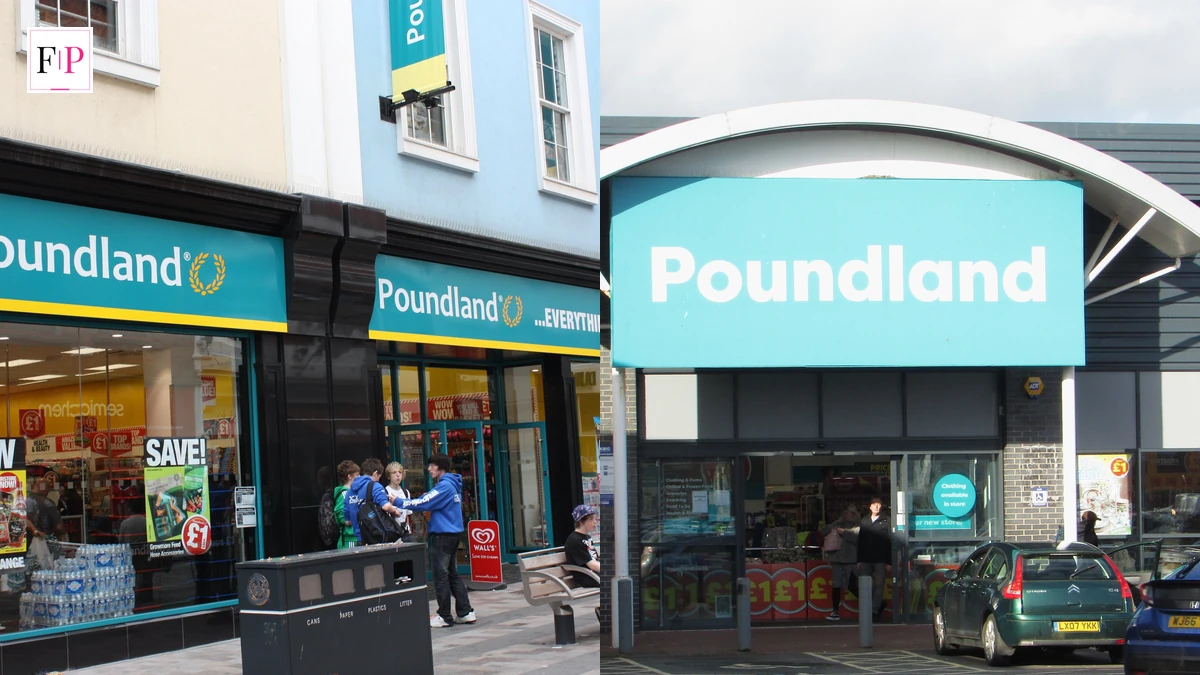
Poundland administration became a reality on Wednesday 25 November 2026, when the discount chain’s directors filed for insolvency at the High Court and AlixPartners was appointed to run the business. Around 11,000 jobs are at risk across roughly 600 stores in the UK and Ireland, just weeks before Christmas.
When FamePost covered the rescue talks on 27 October, the Poundland administration was still only a risk hanging over the chain. That risk has now become reality. But it does not mean the shops have shut. Stores and distribution centres remain open while the administrators look for buyers, and shoppers can still walk in and buy. This article explains what the Poundland administration means for shoppers, staff and the high street, what has changed on refunds and gift cards, and what happens next.
Poundland administration means the discount retailer entered administration on 25 November 2026, with AlixPartners appointed as joint administrators. Its roughly 600 UK and Ireland stores remain open and trading for now, around 11,000 jobs are at risk, and change-of-mind refunds have stopped, while faulty goods are still covered by statutory rights.
What Happened on 25 November 2026
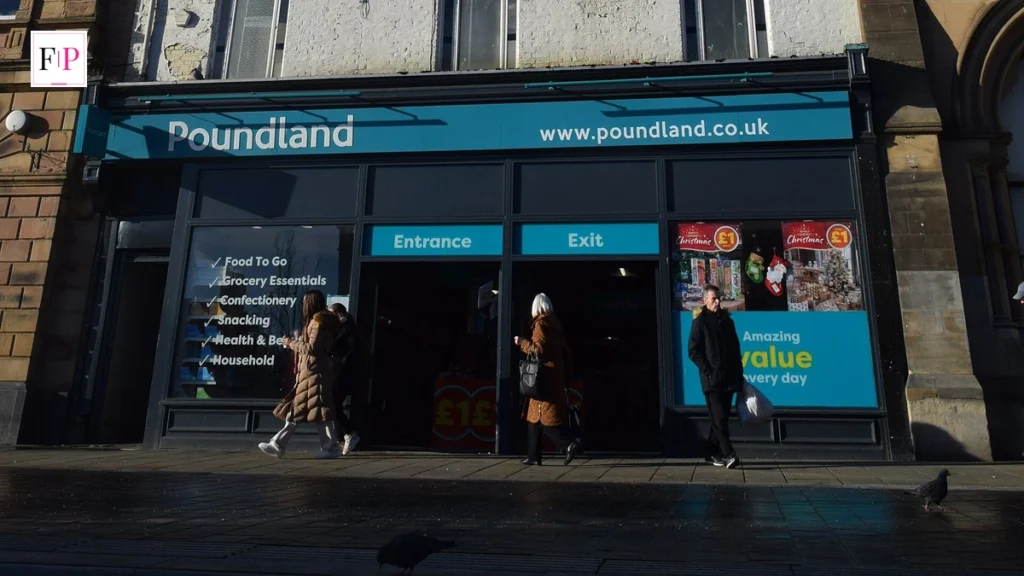
Poundland Limited entered administration on Wednesday 25 November 2026. Clare Kennedy, Daniel Imison and Kevin Wall of AlixPartners were appointed as joint administrators of Poundland Limited and Poundland Elgin Limited, after the company’s directors filed for insolvency at the High Court. The appointment came just hours before a midnight deadline, when the second notice of intention to appoint administrators was due to expire. An earlier notice had been filed on 29 October, with a second one following on 12 November.
In a statement, AlixPartners said the sales process that had run since September had “not identified a viable solvent solution for the business as a whole”. The administrators said they would now pursue “all options including sales of the business and its assets, either in whole or part”. Poundland shops and distribution centres, including Dealz outlets in the Republic of Ireland, will remain open and continue trading in the near term while those options are explored.
Gordon Brothers, the US investment firm that owns Poundland, said the chain had faced “several years of instability” and that it had explored “every avenue to secure a sale of the whole company”. Managing director Barry Williams told staff in a message that the board had “no alternative but to take this decision” after talks with several potential bidders fell through at the eleventh hour.
| Date of administration | Wednesday 25 November 2026 |
| Joint administrators | Clare Kennedy, Daniel Imison and Kevin Wall, AlixPartners |
| Stores | Around 600 across the UK and Ireland, including Dealz |
| Jobs at risk | Around 11,000, according to the BBC |
| Owner | Gordon Brothers, which bought Poundland for £1 in June 2025 |
| Trading status | Stores open and trading for now |
What the Poundland Administration Means in Plain English
Administration is a formal insolvency process. When a company enters administration, its directors hand control to independent, licensed insolvency practitioners, who run the business while they try to rescue it, sell it, or get a better result for creditors than an immediate shutdown would deliver. It is the closest UK equivalent to the Chapter 11 bankruptcy process used in the United States.
Crucially, the Poundland administration is not the same as liquidation, and it is not the same as closure. A company in administration can keep trading, its staff can keep working, and its shops can keep serving customers while the administrators look for a buyer. That is exactly what is happening under the Poundland administration: the administrators have said the business will continue to trade while they examine every option for its future.
That does not mean everything is fine. Poundland administration usually means a business has run out of money and cannot pay its debts as they fall due. The administrators’ first job is to work out whether any part of the business can be saved or sold. As insolvency expert Molly Monks of Parker Walsh put it: “Administration does not automatically mean every employee is made redundant immediately. The administrators will initially assess the business, its finances and whether any parts can be sold or rescued.” She added that “there is inevitably a very real risk of redundancies if stores close or parts of the business cannot be sold”.
The Poundland administration is one of the most significant UK retail insolvencies since the collapse of wilko in 2023. Sky News has described it as the biggest collapse on the high street since BHS in 2016. That scale is why the story matters far beyond the 600 stores themselves: suppliers, landlords, shopping centres and whole high streets feel the effects when a chain of this size is in trouble.
Are Poundland Stores Closing?
No. As of 27 November 2026, the administrators have not announced the closure of any Poundland store, and no list of closures has been published. All of the chain’s roughly 600 stores in the UK and Ireland remain open, and the company’s own statement says most stores will remain open until further notice. Shoppers can still visit their local branch as normal.
That picture is likely to change over time. The administrators are openly pursuing a sale of the business in whole or in part, and most industry watchers expect the Poundland administration to end with the estate broken up, with rival retailers buying parcels of stores. B&M, Tesco and Lidl were named among the retailers expected to look at individual sites rather than the whole business, alongside Iceland, The Range and Poundstretcher. If stores are sold to rivals, they may reopen under a different name. If no buyer is found for some sites, those shops will eventually close.
What nobody can honestly say yet is which stores, if any, will close, or when. The administrators have given no timetable, and any list circulating on social media should be treated with caution unless it comes from AlixPartners or Poundland itself. If you are planning a special trip to a particular branch, it is worth checking the Poundland store finder before you travel.
The timing adds to the pressure. Poundland is heavily stocked ahead of Christmas, its busiest trading period, and keeping the shops open through December is in everyone’s interest: the administrators want the trading income, suppliers want their stock sold, and staff want their jobs. Whether that is enough to carry the whole estate through to a sale is the question the Poundland administration must answer in the coming weeks.
What the Poundland Administration Means for Shoppers
For most shoppers, the immediate experience has barely changed: the doors are open, the shelves are stocked, and you can pay at the till as normal. But the Poundland administration has already changed the rules on refunds, and there are open questions over gift cards and orders. Here is what we know.
Refunds and exchanges have changed
From 26 November 2026, under the Poundland administration, Poundland no longer offers refunds or exchanges for items bought in-store if you simply change your mind. That applies to purchases made on or after 26 November. For items bought before that date, you can still make a claim under the old 28-day returns policy, but because of the Poundland administration, your claim will be dealt with as an unsecured claim rather than being paid in full. Claims should be sent to poundland@alixpartners.com, the contact address the administrators have given customers.
Your statutory rights have not been withdrawn. If goods are faulty, not as described, or otherwise fail the tests in the Consumer Rights Act 2015, you may still be entitled to a refund, repair or replacement. However, Poundland’s own notice warns that where your purchase was made before the Poundland administration began, the company may not be able to honour that entitlement, and any loss you suffer as a result will be dealt with as an unsecured claim. In practice, that means faulty-goods claims from before 25 November may not be paid in full.
Gift cards are not guaranteed
Poundland has not confirmed whether gift cards and store credit will be honoured. That matters, because during the Poundland administration, gift cards and store credit are not automatically guaranteed to be honoured. Molly Monks, the insolvency expert at Parker Walsh, has advised customers to “check the administrators’ latest guidance before relying on them” and warned that “the important thing is not to assume that normal customer policies will continue unchanged”. If you hold a Poundland gift card, keep an eye on the administrators’ updates, and do not assume it will be accepted indefinitely.
What shoppers should do now
- Keep your receipts. Proof of purchase matters more than ever if you need to make a claim through the administrators.
- Check faulty goods quickly. If something you bought is faulty, raise it now rather than waiting, and keep a record of every conversation.
- Do not rely on gift cards lasting forever. Poundland has not confirmed they will be honoured, so check the latest guidance from the administrators before counting on them.
- Check before a special journey. Stores are open, but the position can change, so confirm your branch is trading before travelling a long way.
- Do not panic-buy. Shelves are stocked and stores are trading, so there is no need to stockpile. The risk to shoppers is about refunds and gift cards, not about finding the doors shut without warning.
What It Means for Poundland Staff
Around 11,000 jobs are at risk, according to the BBC. Some earlier reports put the figure at about 12,000, but that was the number circulating in October, when the first notice of intention to appoint administrators was filed. The figure reported at the point of the Poundland administration itself is around 11,000, and that is the number this article uses.
The retail union Usdaw called the Poundland administration “devastating news” and said it was seeking urgent meetings with the administrators. Its concern is the timing as much as the scale: the collapse has come just weeks before Christmas, when many retail workers rely on seasonal hours and overtime. Andy Burnham, whose Makerfield constituency hosts Poundland’s largest distribution centre, said the retailer was “part of the fabric” of high streets across the country, and that the news “will be deeply concerning for workers and their families”.
For staff, the immediate position under the Poundland administration is that stores and distribution centres are still trading, so people are still at work. The Poundland administration does not automatically mean redundancy on day one. What happens next depends on the sale process: if a buyer takes over a store or a distribution centre, staff may transfer with it under TUPE rules, which protect employment terms when a business changes hands. If parts of the business cannot be sold, redundancies will follow.
Employees of an insolvent employer have statutory protections. If redundancies do happen, staff can claim redundancy pay, notice pay and unpaid wages through the government’s Redundancy Payments Service, with details on GOV.UK. That safety net does not replace a job, but it is there for workers whose employer cannot pay. Usdaw has said it will press the administrators for a single buyer that protects as many jobs as possible, rather than a break-up that leaves staff scattered between rival chains.
How Poundland Got Here
Poundland was founded in 1990 by Dave Dodd and Steven Smith in Walsall, in the West Midlands, with starting capital of just £50,000. Its promise was simple and it was in the name: everything cost £1. The formula worked, and over 36 years the chain grew to around 600 stores across the UK and Ireland, becoming a fixture of high streets and retail parks and a regular stop for millions of shoppers buying groceries, toiletries, cleaning products and seasonal ranges.
The trouble built up over several years. Pepco Group, the previous owner, decided to sell the business, and in June 2025 Gordon Brothers bought Poundland for a nominal £1. The US investment firm committed up to £80 million in financing to fund a restructuring and turnaround plan led by managing director Barry Williams. Around 150 stores were closed and about 2,200 jobs cut by the end of 2025 as part of that turnaround.
Here is the paradox at the heart of the Poundland administration: trading was actually improving. Like-for-like sales were up 7% in the latest quarter, Halloween week sales were 11.4% higher than the year before, and results for the year to September 2026 improved from a £68 million loss to an £18.1 million profit. Shoppers had not stopped coming. What ran out was cash.
In the months before the Poundland administration, the BBC reported that around £50 million had been frozen by Gordon Brothers, leaving the chain unable to buy new stock to fill its shelves. On 27 October, Williams told staff that Gordon Brothers had removed “all borrowing facilities and access to our bank accounts”. A £30 million shareholder loan sat at the centre of the dispute: Gordon Brothers held £22.5 million of it and Pepco held £7.5 million, and Gordon Brothers wanted its share repaid in full. A whole-business bid from Martin Property Group was rejected because it proposed deferred repayment, and a last-minute proposal from German investment firm Zachert Private Equity also came to nothing.
Gordon Brothers says it provided £85 million in financing since taking over and made around £18 million from debt interest payments and other fees. Its critics, including MPs, have questioned whether the owner was genuinely pursuing a solvent rescue or managing the chain towards a break-up. The BBC’s analysis of what went wrong notes that the owner was also one of the company’s lenders, a structure that left Poundland dependent on funding decisions made by the very firm that owned it.
What Happens Next
Under the Poundland administration, the administrators now control the sale process. AlixPartners has invited interest from “anybody interested in acquiring the business in part or as a whole”, and will pursue all options for the business and its assets. The most likely outcome, according to industry watchers, is a break-up: rival retailers buying parcels of stores, with the Poundland name possibly surviving in some form and disappearing from other high streets altogether.
Parliament is watching closely. The Business, Innovation, Science and Trade Committee is set to recall representatives from Gordon Brothers to answer questions about their stewardship of the chain, and Mark Newton-Jones, the boss of Gordon Brothers’ European operations, has been called to face a second round of questioning. Business Secretary Jonathan Reynolds has asked his chief business adviser to establish the facts about whether Gordon Brothers unnecessarily pushed Poundland into administration.
For shoppers and staff, the honest answer is that nobody can yet say how the Poundland administration ends. The stores are open, the administrators are talking to buyers, and Christmas trading is under way. What to watch for in the coming weeks is any announcement of store sales, any new closure list, and any update from the administrators on gift cards and refunds. We will update this article as those announcements are made.
Is Poundland closing down?
No. Poundland entered administration on 25 November 2026, but its stores have not closed. The administrators have announced no closures and no closure list. Around 600 stores in the UK and Ireland remain open and trading while the administrators look for buyers, although a break-up of the estate is expected over time.
Are Poundland stores still open?
Yes. All of Poundland’s roughly 600 stores across the UK and Ireland, including Dealz stores in the Republic of Ireland, remain open and trading during the Poundland administration, along with its distribution centres. The company’s own statement says most stores will remain open until further notice. It is worth checking the Poundland store finder before a long journey.
Can I still use my Poundland gift card?
Poundland has not confirmed whether gift cards and store credit will be honoured. During the Poundland administration, gift cards are not automatically guaranteed to be honoured, so customers should check the administrators’ latest guidance before relying on them, and should not assume normal customer policies will continue unchanged.
Can I get a refund from Poundland now?
From 26 November 2026, Poundland no longer offers refunds or exchanges for items bought in-store if you simply change your mind. For items bought before 26 November, you can claim under the old 28-day returns policy, but the claim is treated as an unsecured claim in the Poundland administration and should be sent to poundland@alixpartners.com. Faulty goods are still covered by your statutory rights under the Consumer Rights Act 2015.
What happens to Poundland staff now?
Around 11,000 jobs are at risk, according to the BBC. Staff are still at work while stores keep trading, and the Poundland administration does not automatically mean immediate redundancy. If a buyer takes over a store, staff may transfer under TUPE rules. If redundancies follow, employees can claim redundancy pay, notice pay and unpaid wages through the government’s Redundancy Payments Service. The union Usdaw is seeking urgent meetings with the administrators.
Will Poundland be sold?
Under the Poundland administration, the administrators at AlixPartners are pursuing all options, including a sale of the business and its assets in whole or in part. B&M, Tesco, Lidl, Iceland, The Range and Poundstretcher have been named among retailers interested in parcels of stores. No sale has been announced yet, and a whole-business rescue has not been ruled out.
Conclusion
The Poundland administration is a big moment for the British high street: a 36-year-old chain with around 600 stores and 11,000 staff has run out of money just before Christmas, even as its sales were recovering. The shops are open, the administrators are looking for buyers, and shoppers can still buy as normal, but the rules on refunds have already changed and gift cards carry no guarantee. For staff, the coming weeks will decide whether their store is sold, kept open under a new owner, or closed for good.
If you shop at Poundland during the Poundland administration, keep your receipts, check faulty goods promptly, and do not assume gift cards will be honoured indefinitely. If you work there, your union and GOV.UK can explain your rights if redundancies follow. And if you want the full background, our report from 27 October explains how the rescue talks reached this point. FamePost will keep this article updated as the administrators announce what happens next.
Last Updated: 27 November 2026
