


Featured Snippet Answer: What Are the Best Plantar Fasciitis Shoes?
The best plantar fasciitis shoes combine firm arch support, a deep heel cup, a rigid midsole, and a heel-to-toe drop of 8–12mm. Podiatrists in 2026 frequently recommend models like the Hoka Bondi 9, Brooks Adrenaline GTS 25, and Vionic Walker Classic for easing heel pain during daily activity.
Quick Facts Table
| Feature to Look For | Why It Matters |
| Firm arch support | Reduces strain on the plantar fascia as it stretches with each step |
| Deep, structured heel cup | Cradles the heel bone and limits side-to-side motion |
| 8–12mm heel-to-toe drop | Reduces tension on the fascia and Achilles tendon |
| Rigid midsole/shank | Should resist folding in half; prevents excess midfoot flex |
| Removable insole | Allows custom orthotics to be added if needed |
| Roomy toe box | Prevents added pressure that can alter your gait |
What Is Plantar Fasciitis?
Plantar fasciitis is one of the most common causes of heel pain. It happens when the plantar fascia — a thick band of tissue connecting your heel bone to your toes — becomes irritated or develops small tears from repeated stress.
Therefore, people with this condition often describe a sharp, stabbing pain in the bottom of the foot, especially with their first steps in the morning. According to Mayo Clinic, the pain typically eases as you move around, but it can return after long periods of standing or after getting up from sitting.
Furthermore, plantar fasciitis is more common in runners, people who are on their feet for long stretches, and those who wear shoes with inadequate support. As a result, footwear is one of the few factors within your direct control.
What to Look for in Plantar Fasciitis Shoes
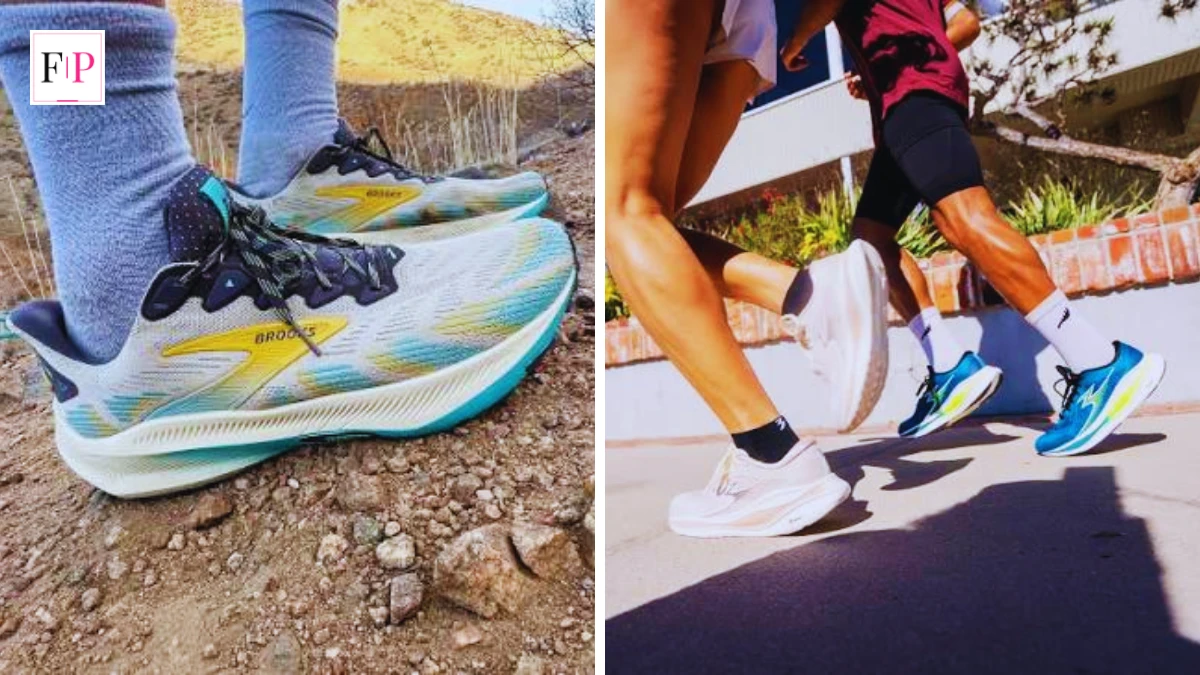
Podiatrists consistently point to the same core features when recommending plantar fasciitis shoes. However, not every shoe with “comfort” marketing actually includes them.
Key features to check before buying:
- Structured arch support — supports the midfoot and reduces strain on the fascia
- A deep, firm heel cup — cradles the heel and limits excess motion
- A rigid midsole — the shoe shouldn’t fold easily in half when you twist it
- A moderate heel-to-toe drop (8–12mm) — eases tension through the fascia and Achilles tendon
- A removable insole — lets you add an orthotic if your podiatrist recommends one
- A secure, non-slip heel fit — your heel shouldn’t lift or slide during a stride
Some podiatrists also recommend shoes with a rocker-shaped sole, which curves like a rocking chair to smooth out the heel-to-toe transition and spread pressure more evenly across the foot. However, this isn’t a cure on its own — it’s one tool among several.
Best Running Shoes for Plantar Fasciitis
Runners with plantar fasciitis need cushioning that absorbs impact without sacrificing support. Podiatrists interviewed by outlets including CNN Underscored and Forbes in 2026 repeatedly named the same handful of models.
Frequently recommended running shoes:
- Hoka Bondi 9 — maximal cushioning and a thick, supportive sole make this a common top pick for heel-dominant pain
- Hoka Clifton 10 — a lighter, more stable option for walkers and runners with a neutral stride
- Brooks Adrenaline GTS 25 — a supportive, structured shoe well-regarded for overpronators
- Asics GEL-Nimbus — praised by podiatrists for soft cushioning and strong shock absorption, especially for people who stand or walk all day
Therefore, if you run regularly, a maximal-cushion shoe like the Bondi or a structured-support shoe like the Adrenaline GTS are reasonable starting points, depending on whether your arch tends to roll inward (overpronation) or stay neutral.
Best Walking Shoes for Plantar Fasciitis
Walking shoes for plantar fasciitis prioritize all-day comfort and stability over speed. As a result, the best options tend to blend orthotic-grade support with everyday wearability.
Frequently recommended walking shoes:
- Vionic Walker Classic — one of the few consumer brands building orthotics-grade arch support directly into the footbed
- Skechers Go Walk Arch Fit Unify — a budget-friendly option (typically under $70) with podiatrist-certified arch support and a removable insole
- New Balance 928v3 — a stability-focused walking shoe often recommended for all-day wear
- Hoka Transport — a more casual-looking walking shoe that still uses Hoka’s rocker geometry to reduce heel-strike force
Furthermore, the Vionic and Skechers options in particular are worth considering if you find custom orthotics uncomfortable or too expensive, since both are designed to provide meaningful arch support out of the box.
Best Work Shoes for Plantar Fasciitis
For people on their feet for eight or more hours a day — nurses, teachers, retail staff, and warehouse workers — footwear choice can make or break a treatment plan.
Frequently recommended work shoes:
- Dansko Professional — a long-standing favorite for people working long shifts on hard floors, thanks to its rigid rocker sole and roomy toe box
- Vionic Walker Classic — doubles as a work-appropriate option with built-in orthotic support
Therefore, if your job keeps you standing for most of the day, prioritize a rigid sole and deep heel cup over style, since those two features do the most to protect the fascia during long shifts.
Plantar Fasciitis Shoes Compared
The table below compares the shoe categories above so you can match a option to your daily activity.
| Shoe | Best For | Key Feature | Price Tier |
| Hoka Bondi 9 | Running, heel-dominant pain | Maximal cushioning | $$$ |
| Hoka Clifton 10 | Running, neutral stride | Lightweight stability | $$$ |
| Brooks Adrenaline GTS 25 | Running, overpronation | Structured support | $$$ |
| Asics GEL-Nimbus | Running/standing all day | Shock absorption | $$$ |
| Vionic Walker Classic | Walking, mild flat feet | Built-in orthotic support | $$ |
| Skechers Go Walk Arch Fit Unify | Walking, budget option | Certified arch support | $ |
| New Balance 928v3 | All-day walking | Stability | $$ |
| Dansko Professional | Long work shifts | Rigid rocker sole | $$$ |
Price tier key: $ = budget-friendly, $$ = mid-range, $$$ = premium.
Shoes and Habits That Make Plantar Fasciitis Worse
Just as some shoes help, others actively make plantar fasciitis worse. Therefore, it’s worth knowing what to avoid, not just what to buy.
Common culprits:
- Flip-flops and other flat, unsupportive sandals
- Worn-out running shoes past their support lifespan
- High heels, which shift pressure onto the forefoot and shorten the calf muscle over time
- Completely flat shoes with no arch support or heel structure
- Walking barefoot on hard floors for extended periods
However, this doesn’t mean you need to wear supportive shoes every waking hour. It simply means minimizing time spent in unsupportive footwear while your fascia is inflamed.
Footwear Alongside Other Treatment
Shoes alone won’t cure plantar fasciitis, but they’re an important part of a broader treatment approach. According to the American Podiatric Medical Association, conservative treatment typically combines several approaches together.
Common conservative treatments, alongside proper footwear:
- Rest and activity modification
- Calf and plantar fascia stretching
- Icing the affected area
- Physical therapy
- Supportive insoles or custom orthotics
Furthermore, in cases where conservative treatment doesn’t help, a podiatrist may recommend additional options such as corticosteroid injections or, rarely, surgery. Therefore, persistent heel pain is always worth a professional evaluation rather than shoe-shopping alone.
Frequently Asked Questions
What shoes are best for plantar fasciitis?
Shoes with firm arch support, a deep heel cup, a rigid midsole, and an 8–12mm heel-to-toe drop — such as the Hoka Bondi 9 or Brooks Adrenaline GTS 25 — are commonly recommended by podiatrists.
Can the right shoes cure plantar fasciitis?
No. Supportive shoes help manage and reduce pain, but they work best alongside stretching, rest, and other conservative treatments.
Are flip-flops bad for plantar fasciitis?
Yes. Flip-flops and other flat, unsupportive sandals typically lack the arch support and heel structure needed to protect the fascia.
How much heel-to-toe drop is best for plantar fasciitis?
Many podiatrists recommend a moderate drop of 8–12mm, which can help ease tension on the fascia and Achilles tendon.
Do rocker-sole shoes help with plantar fasciitis?
They can. A rocker sole smooths the heel-to-toe transition and spreads pressure more evenly, though it isn’t a standalone fix.
When should I see a podiatrist for plantar fasciitis?
If heel pain lasts more than a couple of weeks despite rest and supportive shoes, it’s worth getting a professional evaluation.
Conclusion
Choosing the right plantar fasciitis shoes comes down to a few consistent features — arch support, a deep heel cup, a rigid midsole, and the right heel-to-toe drop — rather than any single “miracle” brand. Furthermore, matching your shoe to your daily activity, whether that’s running, walking, or standing at work, makes a real difference in day-to-day comfort. For more guidance on managing heel pain, explore the related resources below.
You may also read: Fame Post
