


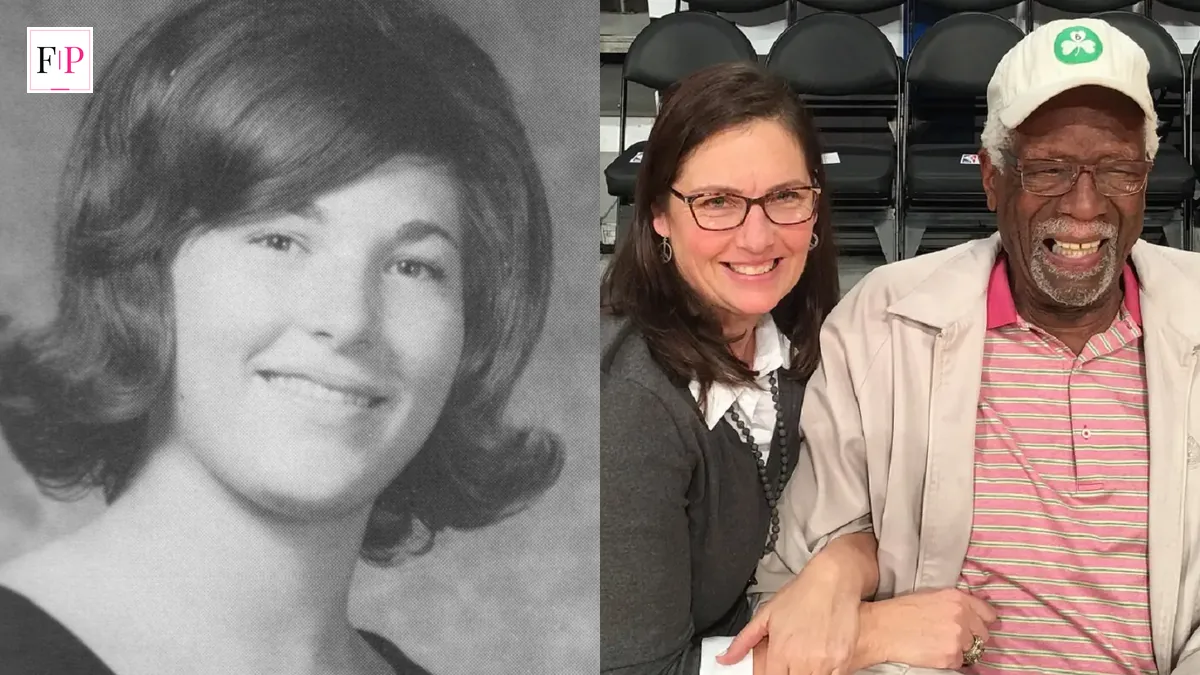
Some names become widely known only because of the person beside them, yet the life behind the name deserves to be told on its own terms. Marilyn Nault is one of those figures. She was not a basketball player, a coach, or a public personality in her own right, and she did not seek the spotlight that came with her husband’s fame. She was a working woman from Kansas who built a life in Seattle, met one of the greatest players in basketball history in the course of an ordinary working day, and then spent the final years of her life largely away from public attention.
For readers in the United Kingdom who come across the name while reading about Bill Russell, the questions are usually simple ones: who was Marilyn Nault, how did she meet Russell, when did they marry, and what happened in her final weeks? The answers are, for the most part, straightforward, but they are also limited. Much of her life was private by choice, and the public record respects that privacy in a way that leaves several details unrecorded. This article sticks to what can be verified, and leaves out what cannot.
Who was Marilyn Nault?
Marilyn Nault was an American jewellery salesperson who became the third wife of Boston Celtics legend Bill Russell. That short description is accurate, but it does not capture the full picture. Before she met Russell, Marilyn had already made a significant move of her own, leaving her home town to find work in a new city and building an independent working life there. Her story is not only a story about a famous marriage. It is also a story about an ordinary working life that happened to cross paths with an extraordinary sporting career.
Marilyn is best known today because of that marriage, and it would be misleading to pretend otherwise. At the same time, reducing her entirely to a single relationship would miss the point. She met Russell as an adult with a job, a home, and a life of her own. She did not grow up in the world of professional basketball, and she did not enter public life as a young celebrity spouse. She came to Russell’s life later, when he was long retired from playing, and their years together were shaped far more by private family life than by courts, cameras, or headlines.
From Concordia, Kansas, to Seattle
Marilyn Nault grew up in Concordia, Kansas, a small town in the American Midwest. After finishing high school, she left Concordia for Seattle, Washington, a move that would change the course of her life. Seattle in those years was a very different place from a small Kansas town: larger, busier, and full of people who had arrived from elsewhere for work. It was there that Marilyn settled and found work as a jewellery salesperson.
That detail matters because it explains how she met Russell. She was not introduced to him through sport, through friends in basketball, or through any celebrity circle. She met him at work, in the jewellery store where she was employed. A customer walked in, as customers do, and a conversation began. It is a reminder that even the most famous lives are often shaped by ordinary moments, and that the people who become part of those lives are often people who were simply doing their jobs well.
Little is recorded in reliable public sources about her early years in Concordia beyond that move, and this article does not fill the gaps with guesswork. No attempt is made here to reconstruct a childhood or a family history that the public record does not support in clear terms. What is certain is the shape of the journey: from a Kansas home town, through high school, to Seattle, and then to a working life in jewellery sales that brought her into contact with Bill Russell.
Meeting Bill Russell in Seattle
Marilyn Nault met Bill Russell in Seattle in 1996, when Russell visited the jewellery store where she worked. The meeting has often been retold in short biographical summaries, but the central fact is simple and human: a working woman met a retired sporting great in her workplace, and the two began a relationship that would last for the rest of her life.
Russell, by that stage, was already one of the most decorated figures in American team sport. He had played centre for the Boston Celtics from 1956 to 1969, winning eleven NBA championships in thirteen seasons, and in 1966 he had become the first African American coach of a major professional sports team in the United States. By the time he met Marilyn Nault, that playing career was decades behind him. He was a figure of history rather than a current player, and the relationship that followed was not played out in the glare of a sporting season.
Marilyn Nault and Russell dated for about four years after meeting in 1996. That long period before marriage is worth noting, because it suggests a relationship that developed steadily rather than hastily. They were not strangers who married on impulse. They spent years getting to know each other before making a formal commitment, and that time together forms an important part of the story, even though its day-to-day details were never made public.
Marriage on 17 February 2000
Marilyn Nault married Bill Russell on 17 February 2000, in a small, private ceremony. The privacy of the occasion fits everything else that is known about her approach to public life. There was no large public celebration, no attempt to turn the wedding into a media event, and no subsequent effort to build a public profile from the marriage. For a couple in which one partner was among the most famous athletes in American history, that restraint is striking, and it appears to have been deliberate.
After the wedding, Marilyn Nault became Russell’s third wife. Russell had been married twice before, and his children from his first marriage became part of the wider family picture. Marilyn was their stepmother, a role that is recorded in biographical summaries of her life. She and Russell did not have children together, and that fact is also part of the public record. Beyond that, the private details of family life were not shared publicly, and this article does not speculate about them.
The marriage lasted until her death in early 2009, a period of just under nine years. Those years were spent largely out of the spotlight. Russell remained a respected elder figure in basketball, invited to games and honoured for his achievements, but Marilyn Nault herself did not become a regular public figure. Her name appeared in connection with Russell, but she did not pursue interviews, endorsements, or a public career of her own. That quiet approach is one of the reasons why so little is known about her beyond the main facts of her life.
A private life beside a public legend
To understand Marilyn Nault, it helps to understand the scale of the public life beside which she lived. Bill Russell (https://www.britannica.com/biography/Bill-Russell) was not simply a successful player. He transformed the defensive side of basketball, redefined the value of shot-blocking and rebounding, and led the Celtics to a run of success that remains unmatched in the sport. His teams won in 1957, then eight championships in a row from 1959 to 1966, and two more in 1968 and 1969. He was voted the NBA’s Most Valuable Player five times, and he later became a coach, a broadcaster, and a civil rights voice.
Living beside a figure of that stature could easily have pulled Marilyn into public life, but the evidence points the other way. She remained a private person. That privacy should not be read as absence. A private life is still a life, with work, family, friendships, and daily routines, even when those details are not published. The absence of a large public record is, in itself, a form of evidence about the choices she and Russell made as a couple: to keep their home life at home.
For British readers, there is a useful comparison to be made with the spouses of other sporting greats, whose names are often known but whose own working lives are rarely examined. In the case of Marilyn, the working life is actually one of the clearest parts of the story. She was a jewellery salesperson in Seattle, she met her future husband at work, and she brought an independent adult life into the marriage. That is a more complete picture than a simple label such as “wife of” can convey, and it deserves to be stated plainly.
Family life and stepmotherhood
Marilyn Nault’s role within the Russell family is described in reliable summaries as that of a stepmother to Bill Russell’s children from his first marriage. She did not have children with Russell, but she became part of a family that already existed, with its own history and relationships. That is a familiar and often underappreciated role, and it is worth stating without embellishment.
No reliable public source used for this article provides a detailed account of her daily family life, and none is invented here. There are no invented anecdotes about family gatherings, no claimed quotations from private conversations, and no attempt to describe relationships that were never made public. What can be said is that the marriage was a lasting one, that it was entered into after four years of dating, and that it continued until her death. Those facts, taken together, describe a committed family life, even if its private details remain private.
It is also important to be clear about who Marilyn Nault was not. She is sometimes confused in online searches with a different woman of a similar name, but that other person is an entirely different individual with a different life and a different history. This article is about Marilyn Nault, the wife of Bill Russell, and no details relating to any other person of a similar name have been included here.
The final weeks and the David Stern call
One of the most widely retold episodes in the story of Marilyn Nault concerns her final weeks, and it involves a gesture of kindness from one of basketball’s most senior figures. Former NBA Commissioner David Stern called Marilyn shortly before her death to tell her that the league intended to rename its NBA Finals Most Valuable Player trophy in her husband’s honour, as the Bill Russell Award (https://www.basketballnetwork.net/old-school/that-was-one-of-the-nicest-things-that-i-can-imagine-happening-to-our-family-how-david-sterns-respectful-gesture-helped-bill-russell-go-through-the-toughest-days-of-his-life).
Russell later spoke about that call with evident emotion. According to his later account, Stern had called his wife some weeks before the public announcement, and she had kept the news from Russell himself, so that the honour would remain a surprise for him. Russell described that gesture as one of the nicest things he could imagine happening to his family. It was, in his words, a sign of sensitivity at a time when his wife was in her final weeks and the family knew she did not have long left.
The public announcement followed after her death. On 14 February 2009, during the NBA All-Star Weekend in Phoenix, Stern announced that the award would be renamed the Bill Russell NBA Finals Most Valuable Player Award. The first player to receive the newly named trophy was Kobe Bryant, after the Los Angeles Lakers won the 2009 NBA Finals. Since then, the award has carried Russell’s name every year, a permanent reminder of a playing career that had ended forty years earlier.
That sequence of events gives the story a particular poignancy. She knew, before she died, that her husband’s achievements were about to be honoured in a lasting and public way, and she kept that knowledge to herself so that he could experience the surprise. It is a small, human detail, but it is the detail most often remembered when her name is discussed, and it is entirely consistent with the private, considerate character suggested by the rest of her life.
Death on 21 January 2009
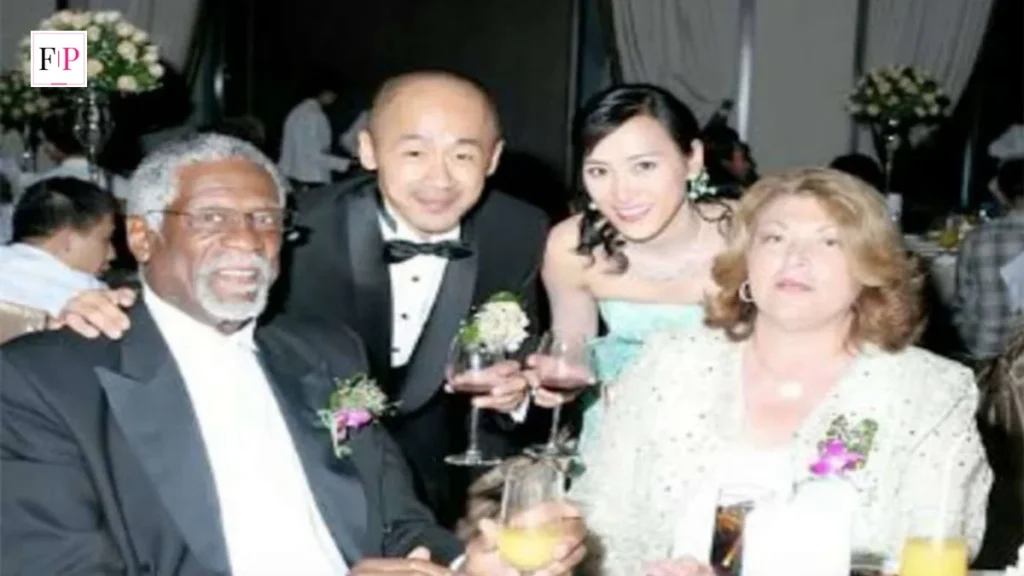
Marilyn Nault died on 21 January 2009 in Seattle, Washington, at the age of 59. Her death came just weeks before what would have been her ninth wedding anniversary with Bill Russell, on 17 February 2009. The timing adds a further sadness to the story: a marriage that had begun in a small, private ceremony in 2000 ended only a few weeks short of its ninth anniversary.
Russell lived for more than thirteen years after her death, dying on 31 July 2022 at the age of 88. In the years after Marilyn’s death, he continued to be honoured by the sport he had served, including presenting the trophy that now bore his name to successive Finals Most Valuable Players. That public role continued, but the private loss remained part of his story, as his later remarks about the Stern call make clear.
This article does not present a settled cause of death for Marilyn Nault, because the sources available do not agree on that point and it has not been verified from a primary source for this article. Readers who encounter a single, confident cause elsewhere should treat it with caution unless it is supported by a reliable primary record. The verified facts are the date, the place, and her age at death, and those are the facts used here.
Why Marilyn Nault is still searched today
Interest in Marilyn Nault has continued long after her death, for several reasons. First, Bill Russell remains a central figure in basketball history, and anyone reading about his life will naturally want to know about the people closest to him. Second, the story of the Stern call is a genuinely moving episode that is often retold when Russell’s legacy is discussed. Third, the relative privacy of her life means that many basic questions remain unanswered in short online summaries, which prompts readers to search for a fuller account.
For a British audience, there is also a wider point. The United Kingdom has its own tradition of sporting spouses who remain largely private while their partners become household names, and the pattern is familiar. A person can be central to a famous life without becoming famous in their own right, and a biography can respect that balance. Marilyn Nault’s story is a good example: a working woman, a wife, a stepmother, and a private person whose final weeks included a moment of quiet dignity that her husband remembered for the rest of his life.
That is why a careful biography matters. It is easy to produce a short page that repeats a few dates and a famous name, but it is harder, and more worthwhile, to separate what is known from what is merely repeated. In the case of Marilyn Nault, the known facts form a clear, if incomplete, picture: a Kansas childhood, a move to Seattle after high school, work in jewellery sales, a meeting in a shop in 1996, a marriage in 2000, a private family life, a stepmother’s role, a final weeks telephone call that she kept as a surprise, and a death in Seattle in January 2009 at the age of 59.
Reading a private life with care
There is a temptation, when writing about the spouse of a famous person, to fill every silence with a plausible detail. That temptation should be resisted, especially when the person concerned chose privacy in life. A biography that invents a childhood anecdote, a favourite restaurant, a private conversation, or a financial figure may read more smoothly, but it would be misleading, and it would do a disservice to the person it claims to describe. The approach taken here is the opposite: where the record is silent, the silence is left in place, and where sources disagree, the disagreement is acknowledged rather than smoothed over.
That approach has a cost. It means this account cannot answer every question a curious reader might ask. It cannot describe, in detail, a typical day in Seattle, or a typical family weekend, or the contents of private letters and conversations that were never published. It cannot give a confident account of matters that were never part of the public record. What it can do is present the outline that is supported: a home town, a move, a job, a meeting, a marriage, a family role, a final gesture of recognition, and a death. Those points, taken together, are enough to give a respectful and recognisable portrait, without pretending to a completeness that the evidence does not support.
It also means being careful with language. Words such as “reportedly” and “according to his later account” are not evasions. They are signals to the reader about the strength of the evidence behind a particular claim. When Russell later described the call from Stern, he was speaking from personal experience, and his account is the source for that episode. When short online summaries state other details with complete confidence, the reader is entitled to ask what primary record supports them. If no such record is offered, caution is the right response.
The same care applies to photographs and images. A private person who did not seek fame may not have a large public photographic record, and any image used to illustrate a biography should be checked for licence, date, and identity before publication. An image that shows the wrong person, or that is used without permission, would undermine the very respect that the text tries to show. For that reason, image selection for this article is treated as a separate verification task, not as an afterthought, and no image should be used unless it has been confirmed to depict the right person under a usable licence.
Finally, there is a point about tone. It is easy, in writing about a famous marriage, to slip into speculation about motives, feelings, or private disagreements. None of that is attempted here. The marriage is described in terms of its public facts: its start, its duration, its private character, and its end. The emotions that can fairly be described are those that Russell himself expressed publicly, notably his gratitude for Stern’s gesture. Beyond that, the article leaves private feelings private, which is where they belong.
Frequently asked questions
Who was Marilyn Nault?
Marilyn Nault was an American jewellery salesperson from Concordia, Kansas, who moved to Seattle after high school and became the third wife of Boston Celtics legend Bill Russell. She met Russell in 1996 in the Seattle jewellery store where she worked, married him on 17 February 2000, and died in Seattle on 21 January 2009 at the age of 59.
How did Marilyn Nault meet Bill Russell?
Marilyn Nault met Bill Russell in Seattle in 1996, when Russell visited the jewellery store where she worked as a salesperson. The couple dated for about four years after that meeting before marrying in 2000. The meeting was an ordinary workplace encounter, not an introduction through basketball or celebrity circles.
When did Marilyn Nault marry Bill Russell?
Marilyn Nault married Bill Russell on 17 February 2000, after dating since 1996. The ceremony was small and private. Their marriage lasted until her death in January 2009, just weeks before what would have been their ninth wedding anniversary.
Did Marilyn Nault have children with Bill Russell?
No, Marilyn Nault did not have children with Bill Russell. She was stepmother to Russell’s children from his first marriage. The private details of family life were not made public, and this article does not speculate beyond the verified fact of her stepmother role and the absence of children together.
What was the David Stern call to Marilyn Nault about?
Former NBA Commissioner David Stern called Marilyn Nault shortly before her death to tell her that the NBA Finals Most Valuable Player trophy would be renamed in her husband’s honour as the Bill Russell Award. Russell later said she kept the news from him so it would remain a surprise, and he described Stern’s gesture as one of the nicest things he could imagine happening to his family.
When and where did Marilyn Nault die?
Marilyn Nault died on 21 January 2009 in Seattle, Washington, at the age of 59. Her death came weeks before her ninth wedding anniversary with Bill Russell. This article does not state a settled cause of death, because available sources do not agree on that point and it has not been verified from a primary source here.
