


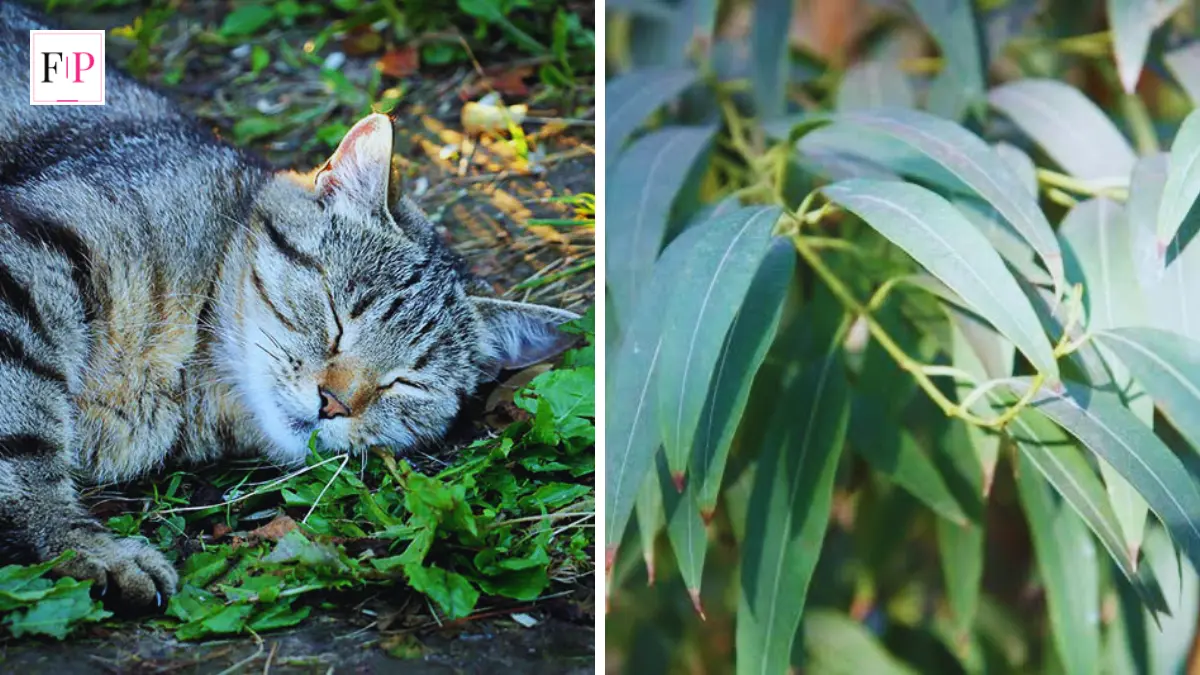
Quick Answer: Is eucalyptus safe for cats?

No. Eucalyptus is toxic to cats in every form: fresh, dried, as an essential oil, and as diffused vapour. The plant contains eucalyptol and related volatile oils, which cats cannot break down efficiently. Ingestion or heavy exposure can cause drooling, vomiting, diarrhoea, weakness and depression.
So, is eucalyptus safe for cats? The short answer is no, and the reason is biological rather than a matter of dose.
Cats lack an efficient version of a liver enzyme that most mammals use to process the compounds in eucalyptus. Consequently, what a human body clears in hours can sit and accumulate in a cat.
This matters more than ever. Eucalyptus is now everywhere in US and UK homes: hanging in showers, packed into diffusers, tucked into dried floral arrangements and blended into cleaning sprays.
This article delivers the complete safety picture. You will get the ASPCA classification, the exact symptoms to watch for, the difference in risk between the plant and the oil, a step-by-step emergency plan, and a table of genuinely cat-safe alternatives.
Furthermore, you will find straight answers on diffusers, dried stems and shower bundles. Therefore, by the end you will know precisely what to remove from your home and what you can safely keep.
Is Eucalyptus Safe for Cats? The Direct Answer
Eucalyptus is not safe for cats. The ASPCA lists eucalyptus on its toxic plant register for cats, dogs and horses.
The toxic principle is eucalyptol, also known as cineole. It is the compound responsible for that sharp, clean, medicinal smell.
Here is the classification at a glance:
- Common names: Eucalyptus, gum tree, blue gum, silver dollar plant
- Scientific name: Eucalyptus species, most commonly Eucalyptus globulus
- Toxic to: Cats, dogs and horses
- Toxic principle: Eucalyptol (cineole) and related volatile terpenes
- Main clinical signs: Salivation, vomiting, diarrhoea, depression, weakness
- Risk level: Moderate from plant material, high from concentrated oil
One point creates constant confusion online. Koalas eat eucalyptus safely, which leads some owners to assume it is broadly harmless.
However, koalas have a specialised digestive system and liver adapted over millions of years for exactly this diet. Cats have the opposite: a liver that is unusually poor at handling these compounds.
Why Cats React So Badly to Eucalyptus
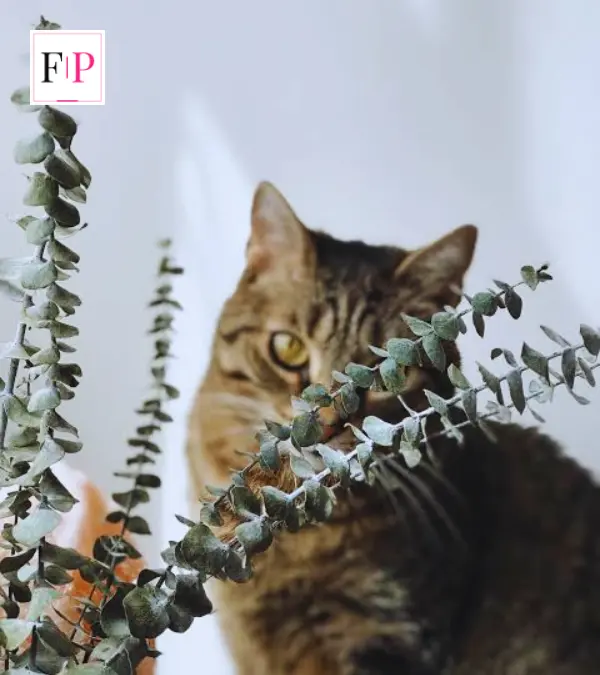
The explanation sits in feline liver chemistry. Cats have a limited supply of glucuronyl transferase, an enzyme used to attach glucuronic acid to toxins so the body can flush them out.
This process is called glucuronidation. It is the primary route mammals use to clear phenols and terpenes, the exact chemical families found in eucalyptus.
As a result, cats process these compounds slowly. Repeated small exposures can therefore build up rather than clear.
The Grooming Multiplier
There is a second, underrated risk. Cats groom constantly.
If diffused eucalyptus oil settles on a cat’s coat, the cat licks it off. Consequently, an exposure that started as airborne becomes an oral dose.
This is why veterinary toxicologists treat active diffusers differently from a passive dried bundle. The oil travels, lands and gets ingested.
Symptoms of Eucalyptus Poisoning in Cats
Signs usually appear within a few hours of exposure. Watch for the following.
Digestive Signs
- Excessive drooling or salivation — often the very first sign
- Vomiting, sometimes repeatedly
- Diarrhoea
- Loss of appetite or refusing food entirely
Neurological and General Signs
- Lethargy or depression — unusual stillness, hiding, low responsiveness
- Weakness or an unsteady, wobbly walk
- Disorientation or apparent confusion
- Tremors in more serious cases
Respiratory and Contact Signs
- Coughing, wheezing or laboured breathing after inhaling vapour
- Watery eyes or pawing at the face
- Skin redness or irritation where oil made contact
Cats with asthma face elevated risk. Airborne essential oils can trigger a respiratory episode even without any ingestion.
Importantly, cats are experts at hiding illness. Therefore, do not wait for dramatic symptoms before calling a vet.
Fresh Plant vs Dried vs Essential Oil vs Diffuser
Not all eucalyptus exposure carries the same weight. This table breaks down the real-world risk of each format.
| Format | Risk Level | Main Danger | Verdict |
| Fresh potted plant | Moderate | Leaf chewing | Remove or keep fully out of reach |
| Cut or dried stems | Moderate | Chewing and dropped leaf fragments | Not recommended in a cat home |
| Shower bundle | Moderate | Steam-released oils in a small room | Only in a bathroom the cat cannot enter |
| Essential oil (undiluted) | High | Skin absorption and ingestion | Never use around cats |
| Active diffuser | High | Inhalation plus oil settling on fur | Never run in a shared space |
| Cleaning spray with eucalyptus | Moderate to high | Paw contact then grooming | Switch to a pet-safe cleaner |
The pattern is consistent. Concentration drives severity, and the essential oil is many times more concentrated than the leaf.
A single dried stem in a tall vase is a smaller problem than a diffuser running eight hours a day. Nevertheless, neither belongs in a home with a curious cat.
What to Do If Your Cat Eats Eucalyptus: Step by Step
Act quickly and calmly. Follow this sequence.
- Separate the cat from the source. Remove the plant, switch off the diffuser and open a window for ventilation.
- Do not induce vomiting. Never do this without veterinary instruction, as volatile oils can be inhaled into the lungs on the way back up.
- Check for oil on the coat. If oil is present, wash the area with mild dish soap and lukewarm water, then dry the cat thoroughly.
- Estimate the exposure. Note what was consumed, roughly how much, and how long ago.
- Call your vet or a poison line immediately. In the US, contact the ASPCA Animal Poison Control Center or the Pet Poison Helpline. In the UK, call the Animal PoisonLine or your practice directly.
- Bring the packaging or plant. Take the bottle, label or a leaf sample to the appointment.
- Follow through on monitoring. Watch for delayed symptoms across the next 24 to 48 hours.
Both US poison lines charge a consultation fee. However, that fee is trivial next to an avoidable emergency admission.
Cat-Safe Alternatives to Eucalyptus
You do not have to give up greenery or scent. You simply need to swap the source.
Safe Plants (ASPCA Non-Toxic to Cats)
- Areca palm — tall, feathery and completely non-toxic
- Boston fern — lush texture with no toxicity risk
- Calathea — bold patterned leaves, entirely cat-safe
- Spider plant — hardy and forgiving of chewing
- Parlour palm — a strong visual substitute for eucalyptus height
- Cat grass — gives your cat something it is meant to chew
Safer Ways to Scent a Home
- Simmer citrus peel and cinnamon on the stove in a room the cat is not in.
- Use unscented beeswax or soy candles placed well out of reach.
- Ventilate properly rather than masking odours with oils.
- Choose pet-safe cleaning products from brands that publish full ingredient lists.
- Keep any diffuser in a closed, cat-free room if you cannot give them up entirely.
One caution on the last point. Passive reed diffusers still leak oil onto surfaces, so they are not a genuine workaround.
Prevention: Cat-Proofing Your Home
Prevention is far easier than treatment. Start with an audit.
Walk each room and list every plant, oil, diffuser and spray. Then check each item against the ASPCA plant database.
Pay particular attention to gift items. Dried eucalyptus bouquets and “spa” hampers are common presents and often arrive unlabelled.
Also check the laundry cupboard. Scented dryer products and linen sprays frequently contain eucalyptus oil.
Finally, brief anyone who house-sits. A well-meaning visitor lighting a eucalyptus diffuser can undo an otherwise safe home in a single evening.
Frequently Asked Questions
Is eucalyptus safe for cats?
No. Eucalyptus is toxic to cats in fresh, dried, oil and diffused forms.
Is dried eucalyptus toxic to cats?
Yes. Drying reduces moisture but the volatile oils remain, so chewing can still cause vomiting and drooling.
Can I use a eucalyptus diffuser around my cat?
No. Diffused oil is inhaled and also settles on the coat, where the cat ingests it while grooming.
Is eucalyptus in the shower safe for cats?
Only if the cat cannot enter the bathroom. Steam releases the oils into a small, enclosed space.
What are the symptoms of eucalyptus poisoning in cats?
Drooling, vomiting, diarrhoea, lethargy, weakness and, in serious cases, tremors or breathing difficulty.
How much eucalyptus is dangerous for a cat?
There is no established safe amount. Concentrated oil is dangerous in very small quantities.
Why can koalas eat eucalyptus but cats cannot?
Koalas evolved a specialised liver and gut for it. Cats lack the enzyme needed to clear the compounds.
Should I call a vet if my cat licked eucalyptus oil?
Yes. Call immediately, even if your cat looks fine, because symptoms can be delayed.
Conclusion
So, is eucalyptus safe for cats? No, and the answer does not change with format, brand or dilution.
The three things to remember are simple. Eucalyptus is ASPCA-listed as toxic, cats cannot metabolise eucalyptol efficiently, and the essential oil is far more dangerous than the plant.
The good news is that safe swaps are easy. Areca palms, Boston ferns, calatheas and spider plants give you the same green look with zero risk.
Do this today: audit every plant and diffuser in your home, save your local emergency vet number in your phone, and remove eucalyptus for good so the question of whether eucalyptus is safe for cats never becomes an emergency in your house.
You may also read: Fame Post
