


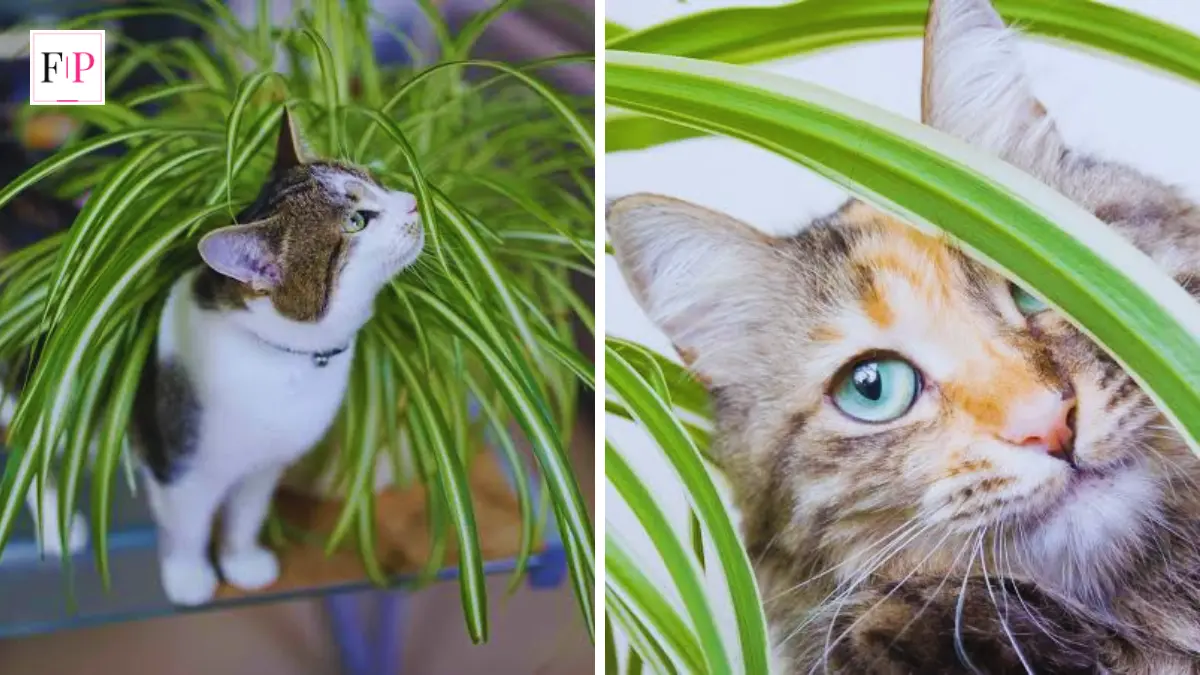
Quick Answer: No, spider plants (Chlorophytum comosum) are not toxic to cats, according to the ASPCA’s official plant list. However, cats that chew large amounts of the leaves can still get an upset stomach — mild vomiting or diarrhea — from the plant fiber itself, not from poison.
If you’ve ever caught your cat batting at your spider plant’s long, arching leaves and wondered, “are spider plants toxic to cats?” — you’re not alone. It’s one of the most common houseplant questions pet owners search for, and the good news is simple.
Spider plants are one of the few popular houseplants that are genuinely safe for feline households. That said, “non-toxic” doesn’t mean “no risk at all.” This guide breaks down what the science actually says, why cats seem obsessed with this plant, what symptoms to watch for, and how to keep both your cat and your plant happy.
What Is a Spider Plant?
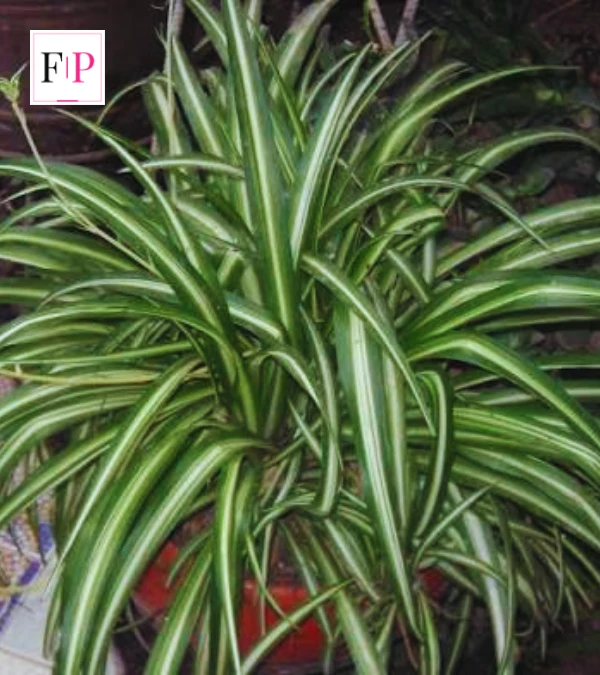
A spider plant is a hardy, easy-care houseplant known scientifically as Chlorophytum comosum. It’s also called the ribbon plant or spider ivy.
It gets its name from the small “spiderettes,” or baby plantlets, that dangle from long stems. These arching, grass-like leaves make it one of the most popular hanging plants in the world. Therefore, it’s no surprise that curious cats often can’t resist batting at them.
Are Spider Plants Toxic to Cats? The Official Answer
Here’s the direct answer: spider plants are officially classified as non-toxic to cats and dogs by the ASPCA Animal Poison Control Center. This is one of the most trusted resources for pet plant safety in the United States.
That means spider plants don’t contain the alkaloids, glycosides, or calcium oxalate crystals found in genuinely dangerous plants like lilies, sago palms, or pothos. As a result, eating a spider plant will not cause organ damage or life-threatening poisoning.
However, ASPCA educational materials also note that spider plants can be mildly irritating in large amounts. Furthermore, the fibrous leaf material can trigger:
- Mild vomiting
- Loose stool or diarrhea
- Temporary stomach discomfort
This is a mechanical reaction to fiber, not a toxic reaction to poison. In other words, it’s similar to a person eating too much raw celery — uncomfortable, but not dangerous.
Why Do Cats Love Chewing Spider Plants?
Many cat owners notice their cat becomes almost obsessed with this particular plant. There are three likely reasons.
- Movement mimics prey. The long, swaying leaves resemble the motion of insects or small prey, which triggers a cat’s natural hunting instinct.
- Mild stimulant-like compounds. Some research suggests spider plants contain compounds chemically similar to those in catnip, which may explain the playful or “loopy” behavior some owners report after their cat chews the leaves. This effect isn’t fully proven, but it’s a widely reported observation.
- Texture and boredom. Smooth, flexible leaves give indoor cats something satisfying to chew on and explore, especially if they don’t have much outdoor stimulation.
None of these reasons indicate a problem. However, if your cat won’t stop attacking the plant, that’s a sign it needs more enrichment — not that the plant is dangerous.
Symptoms to Watch For If Your Cat Eats a Spider Plant
Even though spider plants are non-toxic, it’s smart to know what mild irritation looks like. Watch for:
- Vomiting (usually within a few hours of eating leaves)
- Diarrhea or soft stool
- Excess drooling
- Mild lethargy for a few hours
- Disorientation or hyperactivity (linked to the catnip-like compounds, not toxicity)
Important: If your cat shows difficulty breathing, tremors, seizures, or collapse, these are not typical spider plant symptoms. Contact your veterinarian immediately, since these signs point to exposure to something else entirely.
What to Do If Your Cat Eats a Spider Plant
If you catch your cat mid-snack, don’t panic. Follow these steps:
- Remove access to the plant so your cat can’t keep eating it.
- Offer fresh water to help settle the stomach.
- Withhold food for a few hours if vomiting occurred, then reintroduce small, bland meals.
- Monitor for 24 hours, tracking vomiting frequency, appetite, and energy level.
- Call your vet or the Pet Poison Helpline if symptoms last longer than a day or seem severe.
Most mild cases resolve on their own within 12–24 hours without any treatment.
Spider Plant vs. Other Houseplants: Toxicity Comparison
Not all popular houseplants are as forgiving as the spider plant. Here’s how it stacks up against other common options.
| Plant | Toxic to Cats? | Main Risk |
| Spider Plant (Chlorophytum comosum) | No (non-toxic) | Mild GI upset if overeaten |
| Pothos (Devil’s Ivy) | Yes | Calcium oxalate crystals — mouth/throat irritation |
| Peace Lily | Yes | Calcium oxalate crystals — drooling, swelling |
| Easter Lily (true lily) | Yes — severe | Kidney failure, potentially fatal |
| Sago Palm | Yes — severe | Liver failure, seizures |
| Boston Fern | No (non-toxic) | Generally safe, low risk |
| Areca Palm | No (non-toxic) | Generally safe, low risk |
As the table shows, true lilies and sago palms are in a completely different risk category than spider plants. Therefore, it’s worth double-checking any new plant against the ASPCA’s toxic plant list before bringing it home.
How to Keep Your Cat Safe Around Spider Plants
Even with a non-toxic plant, a little prevention goes a long way.
- Hang it up high. Use a hanging basket out of jumping range.
- Trim dangling leaves so cats can’t easily grab and pull at spiderettes.
- Offer cat grass as a substitute chewing outlet.
- Watch fertilizers and leaf-shine products. These additives, not the plant itself, are often the real source of illness.
- Keep decorative soil toppers like moss or decorative rocks away from curious paws, since these can pose a choking or blockage risk unrelated to plant toxicity.
Safe Alternatives to Spider Plants
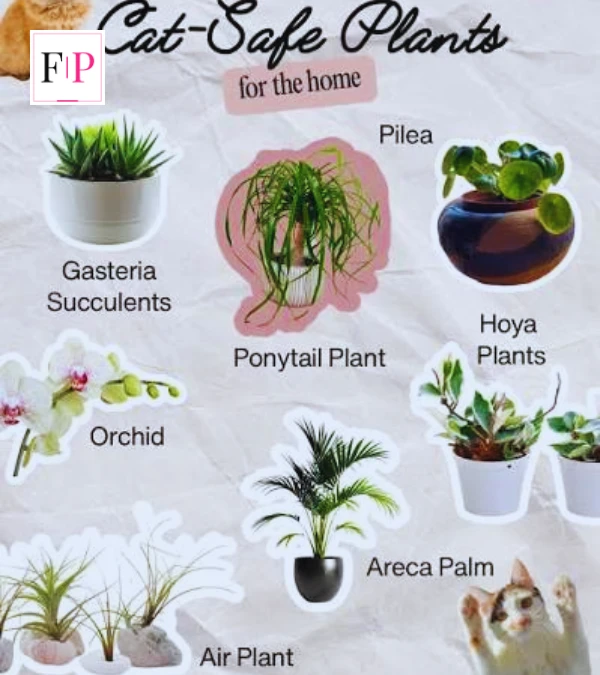
If you’d still rather avoid any chewing risk at all, several other cat-safe houseplants offer a similar look:
- Boston fern — soft fronds, thrives in humid rooms
- Parlor palm — air-purifying and shade-tolerant
- Calathea orbifolia — patterned leaves, zero toxicity
- Peperomia obtusifolia — compact, waxy leaves that resist chewing
[LINK TO: Full guide to cat-safe houseplants]
FAQ: Spider Plants and Cats
Are spider plants poisonous to cats?
No. The ASPCA classifies spider plants as non-toxic to cats, though large amounts of the fibrous leaves can cause mild, temporary stomach upset.
Why does my cat act “high” after eating a spider plant?
Some owners report playful or hyperactive behavior, possibly linked to mild compounds in the plant. It’s considered harmless and short-lived, similar to a catnip reaction.
Can kittens eat spider plants safely?
Kittens are technically at the same non-toxic risk level as adult cats, but their smaller bodies and developing digestive systems mean they can get an upset stomach more easily. It’s best to keep the plant out of reach regardless of age.
What should I do if my cat won’t stop eating my spider plant?
Move the plant out of reach, trim loose leaves, and offer cat grass as a safe outlet for chewing behavior.
Are spider plant babies (spiderettes) toxic to cats?
No. The small plantlets contain the same non-toxic compounds as the parent plant.
When should I call the vet after my cat eats a houseplant?
Call immediately if your cat shows trouble breathing, tremors, seizures, or repeated vomiting lasting more than a day, or if you’re unsure which plant was eaten.
Conclusion
So, are spider plants toxic to cats? The clear, ASPCA-backed answer is no. Spider plants are one of the safest popular houseplants you can keep in a home with cats, though a curious cat that overindulges may still end up with a mild, short-lived stomach upset.
As a result, most cat owners can keep this low-maintenance plant without serious worry — just place it somewhere your cat can’t turn it into an all-you-can-eat buffet. If your cat ever shows severe symptoms after eating any plant, don’t wait: contact your veterinarian or the Pet Poison Helpline right away.
You may also read
