



Last Updated: 27 November 2026
The Tyson Fury schizophrenia revelation is the most personal story the former heavyweight champion has ever told. In a new Netflix documentary, Fury speaks publicly for the first time about the schizophrenia diagnosis he received after winning the world heavyweight title in 2015, describing years of darkness, fear and sleepless nights that followed the greatest night of his career.
What is the Tyson Fury schizophrenia story? Tyson Fury has revealed he was diagnosed with schizophrenia shortly after beating Wladimir Klitschko to win the world heavyweight title in November 2015. He speaks about the diagnosis in the Netflix documentary Tyson Fury, which premieres on Friday 27 November 2026, two weeks before his fight against Anthony Joshua in Cardiff on Friday 11 December 2026.
Fury, 38, has spoken openly about depression, anxiety and bipolar disorder before, but the Tyson Fury schizophrenia diagnosis is something he had never discussed in public until now. The documentary, directed by Lucy Wilcox, tells the story of how he reached the top of boxing, lost his way completely, and fought his way back. It includes interviews with his wife Paris Fury and his father John Fury, alongside previously unseen archive footage from across his life and career.
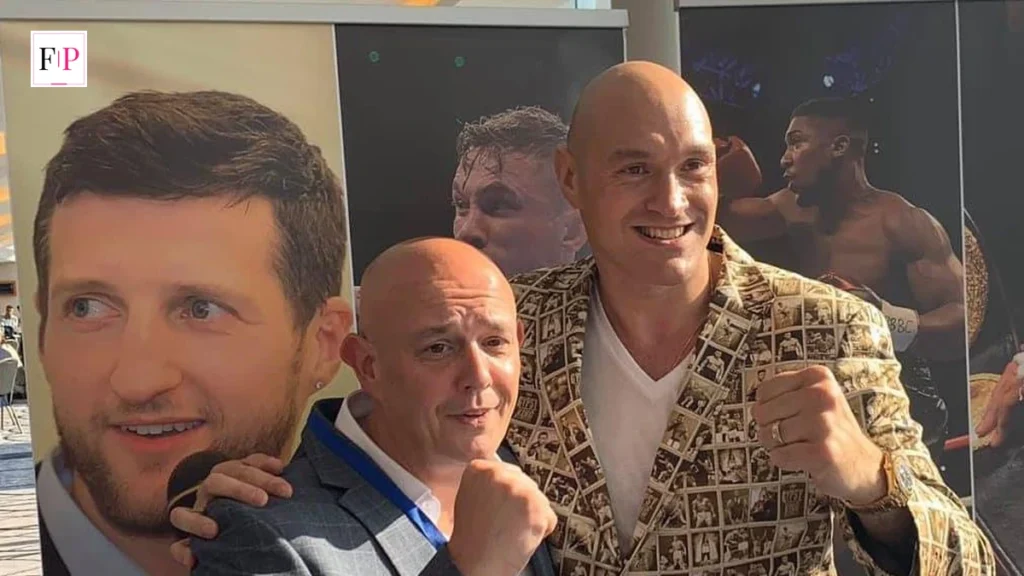
Tyson Fury Schizophrenia: What He Revealed About His Diagnosis
The news broke on Monday 23 November 2026, when Netflix released a statement carrying quotes from the film. In it, Fury says he was diagnosed with schizophrenia after his world title win over Klitschko in 2015, and that the years that followed were the darkest of his life. CNN reported the revelation on 24 November, and it has since been covered by news outlets around the world.
The Tyson Fury schizophrenia revelation matters because of who Fury is and how long he kept it private. He is one of the most famous boxers on the planet, a two-time heavyweight champion known as the Gypsy King, and a man who has built a public image around confidence, humour and showmanship. Behind that image, he says, he was living in fear.
Fury has always been open about parts of his mental health. He has spoken for years about depression and anxiety, and about the weight gain, drinking and time away from boxing that followed his 2015 title win. What the documentary adds is the diagnosis itself: schizophrenia, confirmed after psychiatric assessment, and a bipolar disorder diagnosis that followed. Until this film, the Tyson Fury schizophrenia diagnosis had never been discussed publicly by Fury or anyone close to him.
The timing is deliberate. The documentary premieres on Friday 27 November 2026, exactly two weeks before Fury faces Anthony Joshua at the Principality Stadium in Cardiff on Friday 11 December. The fight will stream live on Netflix, the same platform releasing the film. Fury has two wins from his two fights in 2026, and the Joshua bout is the biggest all-British heavyweight fight in years. By speaking now, Fury has put the Tyson Fury schizophrenia story at the centre of the build-up to the biggest night of his career.
After Klitschko: When the Darkness Began
To understand the Tyson Fury schizophrenia story, you have to go back to 28 November 2015. That night in Düsseldorf, Fury beat the long-reigning champion Wladimir Klitschko on points to win the world heavyweight title, achieving the childhood dream he had chased since he was a boy. It should have been the happiest night of his life. Instead, he says, it was the start of the worst period of his life.
“I achieved all my childhood dreams,” Fury says in the documentary. “And then when I finally beat this man, it was like my whole point of existence had been taken away.” He had spent so much of his life dreaming of beating Klitschko that once it happened, there was nothing left to aim for. The purpose that had driven him for years was gone overnight.
What followed is well documented. Fury withdrew from boxing, vacated the world titles he had won from Klitschko, and spent long stretches out of the sport. He gained a large amount of weight, drank heavily, and stopped training. But the Tyson Fury schizophrenia revelation shows that the public story — the weight, the drink, the cancelled fights — was only the surface. Underneath it, he was experiencing symptoms he did not understand and could not control.
Fury says he began hearing voices, including voices he believed were threatening him and his family. At times he believed messages were being directed at him through the radio, and he became convinced that people wanted to harm him and those closest to him. He has also spoken about believing the Illuminati was out to harm his family. These are experiences he describes in his own words in the film, and they are the reason the Tyson Fury schizophrenia diagnosis, when it came, made sense of what he had been going through.
“I Thought I’d End Up in a Padded Room”
The most powerful moments in the documentary come from Fury himself, speaking directly about what the illness felt like. His words are blunt, and they are worth quoting in full, because they are the heart of the Tyson Fury schizophrenia story.
“Words can’t explain the darkness I was in. I came from the living version of the pits of hellfire. And I 100% thought at times I’d end up in a padded room with the door locked, and that scared me so much.”
He describes nights when sleep would not come and anxiety took over completely. “I was waking up in the night like this, the anxiety was crippling me. I just could not overcome it,” he says in the film. The fear was not abstract. He genuinely believed he was heading for a locked ward, and that belief terrified him.
Eventually, Fury went to see a psychiatrist in London. “Completely gone, and that’s when I went and saw the psychiatrist down in London. She asked me like a gazillion questions and stuff, and I ticked all the boxes, whatever was going on. Depression, anxiety, bipolar disorder…” he says. The assessment that followed led to the diagnoses of schizophrenia and bipolar disorder that he is now speaking about for the first time.
The Tyson Fury schizophrenia quotes matter because they come from Fury himself, in his own language, without varnish. He does not present himself as a medical expert, and he does not offer advice to others. He simply describes what happened to him, in the words he used at the time and the words he uses now. That honesty is why the film has struck such a chord, and why so many people who live with mental illness have said they recognise their own experience in his story.
The Hospital Visit in June 2016
One of the most difficult episodes in the Tyson Fury schizophrenia story came in June 2016, months after the Klitschko win. Fury was admitted to hospital with what was believed to be a heart attack. Doctors determined that he had suffered an anxiety attack, not a cardiac event, and he was released. But the episode did not end there.
According to the documentary, Fury believed the radio in the hospital was speaking directly to him, and he asked his wife Paris to take him out of the hospital because he feared people wanted to harm him. It was after his release from hospital that the diagnoses of schizophrenia and bipolar disorder were confirmed, following psychiatric assessment.
The hospital visit is a reminder of how physical and frightening mental illness can feel. Fury went into hospital believing he was having a heart attack. What the doctors found was anxiety so severe that it mimicked a cardiac emergency. For Fury, the experience was real and terrifying, whatever the cause. The Tyson Fury schizophrenia diagnosis gave a name to what he had been experiencing, but the fear and the symptoms were there long before the name was.
Fury has said he was diagnosed with bipolar disorder in 2017, two years after the schizophrenia diagnosis. The two conditions are different, and the documentary treats them as separate diagnoses that Fury has lived with side by side. What matters for this story is that both were diagnosed by psychiatrists after assessment, and that Fury is speaking about them now in his own words, rather than leaving others to guess.
Paris Fury and John Fury Speak in the Film
The documentary is not only Fury’s story. His wife Paris Fury and his father John Fury both appear in the film, and their accounts fill in what Fury himself could not always see. Paris describes how his mental health deteriorated after the Klitschko win, and how the family lived with the consequences day by day.
Paris Fury has been at the centre of Fury’s public life for years, and she has spoken before about the strain of his mental health struggles on the family. In the film, she recounts the hospital visit and the fear that ran through the household. Her presence in the documentary gives the Tyson Fury schizophrenia story a second perspective: not only what it felt like for Fury, but what it was like to live alongside it.
John Fury, himself a former professional boxer, says his son’s mental health issues have “always been there”. It is a short line, but it carries weight. It suggests that what surfaced after 2015 was not something entirely new, but something that had been present in Fury’s life for far longer, and that only became visible — and only received a name — when it became too severe to hide.
The film also includes previously unseen archive footage from across Fury’s life and career, tracing the path from the young fighter who dreamed of beating Klitschko to the champion who lost his way and then found it again. The 90-minute documentary, directed by Lucy Wilcox, is built around those interviews and that footage, and it is the first time the family has told the Tyson Fury schizophrenia story together, in one place.
The Road Back — and the Joshua Fight on 11 December
The Tyson Fury schizophrenia story is not only about the darkness. It is also about the way back, and Fury has spoken about the night he decided he could not carry on alone. On Halloween night in 2017, he has said, he looked at himself and thought he was “a fat mess, addicted to alcohol”, and decided: “I can’t do this on my own anymore.” It was a turning point, and it came before any comeback was imaginable.
Fury resumed his professional career in June 2018, less than two years after the hospital visit and the diagnoses. In February 2020, he stopped Deontay Wilder in their rematch to become heavyweight champion for a second time, completing one of the great comebacks in modern boxing. The comeback did not erase what had happened — Fury has never claimed that — but it showed that a diagnosis did not have to end his career.
That is the context for the Joshua fight. Fury has won both of his fights in 2026, and on Friday 11 December he faces Anthony Joshua at the Principality Stadium in Cardiff, in a long-awaited all-British heavyweight showdown that will stream live on Netflix. The Tyson Fury schizophrenia documentary premieres two weeks before the fight, and Fury has chosen to tell the hardest part of his story at the very moment the boxing world is watching him most closely.
For readers who want the full story of Fury’s life and career — his early years, his rise through the heavyweight division, his titles and his record — our biography of the Gypsy King covers it in full. This article stays with the revelation itself: what Fury said, when he said it, and what it means. You can read the full biography here: How Old Is Tyson Fury? 38 Facts About the Gypsy King.
The build-up to the Joshua fight has already begun, with the two men facing the press in London in September. Our report from that press conference sets the scene for 11 December: AJ vs Fury Press Conference. What the documentary adds to that build-up is something no press conference can offer: Fury, in his own words, explaining what he has lived with, and why he is still standing.
Schizophrenia: What It Is, and Where to Find Support in the UK
Schizophrenia is a mental health condition that affects how a person thinks, feels and experiences the world. People living with it may hear voices, hold beliefs that others do not share, or find it hard to tell what is real from what is not. The symptoms and the experience vary a great deal from person to person, and the condition is diagnosed by psychiatrists after careful assessment — exactly the process Fury describes in the documentary.
It is worth saying plainly: the Tyson Fury schizophrenia story is Fury’s own experience, and it is not a description of what schizophrenia is like for everyone. No two people experience it in the same way, and nobody should read one man’s story as a guide to another person’s condition. What Fury’s openness does offer is a reminder that mental illness can affect anyone, including a world champion at the very top of his sport, and that speaking about it is a strength rather than a weakness.
That is also why so many people have welcomed the documentary. When a figure as famous as Fury speaks honestly about a diagnosis that still carries stigma, it makes it easier for others to speak too. Mental health charities have long argued that open conversation is one of the most powerful tools against stigma, and the Tyson Fury schizophrenia film is a striking example of that in practice.
If you or someone you know is struggling, support is available in the UK. You can call Samaritans free, day or night, on 116 123, or visit samaritans.org. You can also speak to your GP, or call NHS 111 for urgent advice. The charity Mind offers information and support at mind.org.uk. Asking for help is not a sign of weakness — as Fury’s own story shows, it can be the first step back.
Why Fury’s Revelation Matters
The Tyson Fury schizophrenia revelation will be remembered as one of the most significant moments of Fury’s career, and not because of anything that happened in a ring. It matters because a world-famous athlete chose to talk about a diagnosis that many people still feel they must hide, and because he did it in his own words, without softening the hardest parts.
It also matters because of what comes next. On Friday 11 December, Fury walks into the Principality Stadium in Cardiff to face Anthony Joshua, with the whole boxing world watching. Whatever happens that night, the documentary has already changed how people see him. He is no longer only the Gypsy King, the showman, the two-time champion. He is a man who has lived with schizophrenia and bipolar disorder, who has spoken about it openly, and who is still fighting.
The Tyson Fury schizophrenia documentary premieres on Netflix on Friday 27 November 2026. If you watch it, watch it for Fury’s words — the darkness, the fear, the hospital visit, the turning point — and for the family who stood beside him through it all. And if his story speaks to your own experience, remember that support is there: Samaritans on 116 123, your GP, or NHS 111.
What do you think of Tyson Fury speaking so openly about his diagnosis? Share your thoughts in the comments below, and follow FamePost for full coverage of the Joshua fight on 11 December, including the result, the reaction and what it means for the heavyweight division.
What did Tyson Fury reveal about his schizophrenia diagnosis?
Tyson Fury revealed that he was diagnosed with schizophrenia shortly after beating Wladimir Klitschko to win the world heavyweight title in November 2015. The Tyson Fury schizophrenia story is told in the Netflix documentary Tyson Fury, which premieres on Friday 27 November 2026, where he speaks about the diagnosis for the first time. He describes years of darkness, sleepless nights and fear following the title win.
When was Tyson Fury diagnosed with schizophrenia?
Tyson Fury was diagnosed with schizophrenia after his world title win over Wladimir Klitschko in November 2015. The Tyson Fury schizophrenia diagnosis was confirmed after psychiatric assessment following a hospital visit in June 2016, when he was admitted with a suspected heart attack that doctors determined was an anxiety attack.
What is the Tyson Fury Netflix documentary called and when is it out?
The documentary is called Tyson Fury, and the Tyson Fury schizophrenia story is told in it. Directed by Lucy Wilcox, the 90-minute film premieres on Netflix on Friday 27 November 2026. It includes interviews with Fury, his wife Paris Fury and his father John Fury, alongside previously unseen archive footage.
Was Tyson Fury also diagnosed with bipolar disorder?
Yes. Tyson Fury has said he was diagnosed with bipolar disorder as well as schizophrenia. He has said the bipolar disorder diagnosis came in 2017, two years after the schizophrenia diagnosis. Both diagnoses were made by psychiatrists after assessment, and both are discussed in the Tyson Fury schizophrenia documentary.
What did Tyson Fury say about hearing voices?
Tyson Fury says he began hearing voices after his 2015 title win, including voices he believed were threatening him and his family. He also believed messages were being directed at him through the radio, and at times believed the Illuminati was out to harm his family. He describes these experiences in his own words in the Tyson Fury schizophrenia film.
When is Tyson Fury vs Anthony Joshua?
Tyson Fury faces Anthony Joshua on Friday 11 December 2026 at the Principality Stadium in Cardiff. The long-awaited all-British heavyweight fight will stream live on Netflix, the same platform releasing the Tyson Fury schizophrenia documentary on Friday 27 November 2026.
