


Last Updated: 18 November 2026
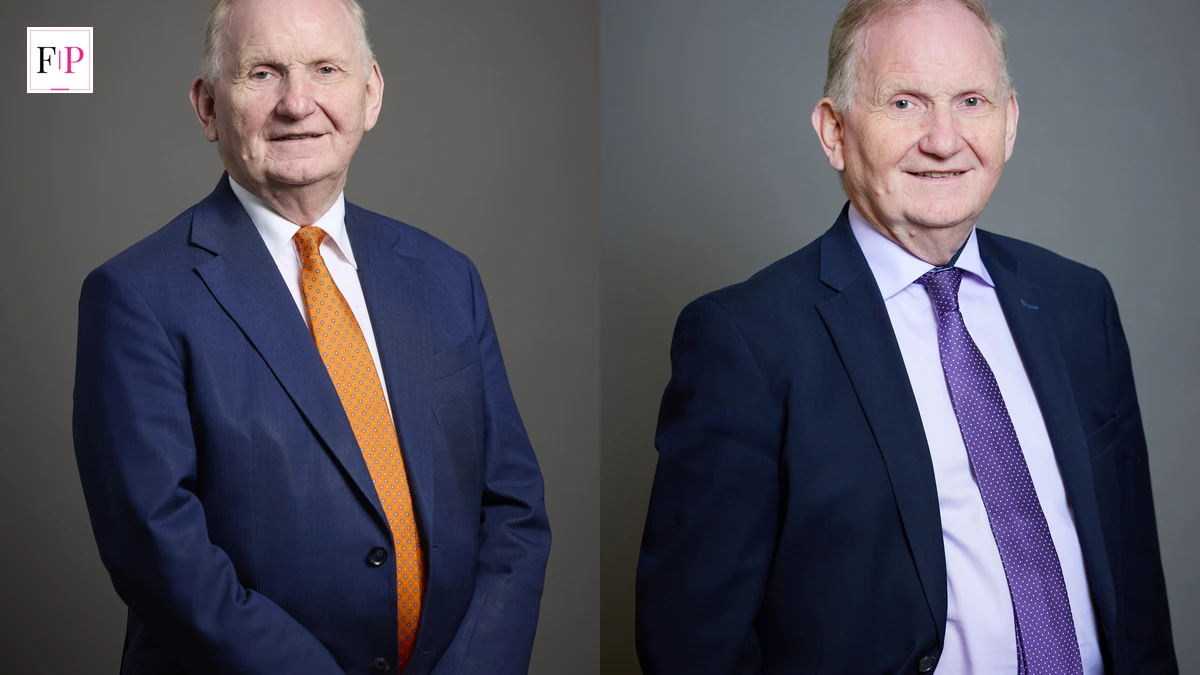
Maurice Morrow is alive. The Democratic Unionist Party chairman and former Northern Ireland minister, who turned 78 in September 2026, is grieving the loss of his wife and one of his daughters, who died hours apart on Sunday 15 November 2026. This article is a biography of Lord Morrow — his early life in County Tyrone, his five decades in politics, his two spells as a Stormont minister and his 26 years as DUP chairman — and a careful account of the double loss his family has suffered this week.
If you are searching for maurice morrow today, the short answer is that he is alive and that the sad news concerns his family, not him. His wife, Lady Jennifer Morrow, and his daughter, Rachel Burrows, both died on Sunday 15 November 2026 after illness, within hours of each other.
Rachel’s funeral is to be held at 1pm on Wednesday 18 November at Carland Presbyterian Church in Dungannon, and Lady Jennifer’s funeral is to be held at 1.30pm on Friday 20 November at Dungannon Free Presbyterian Church. This article covers the full story: his childhood in Ballygawley, his council years, his time as an MLA, his ministerial career, his life peerage, the landmark law he championed, and the tributes paid to his family.
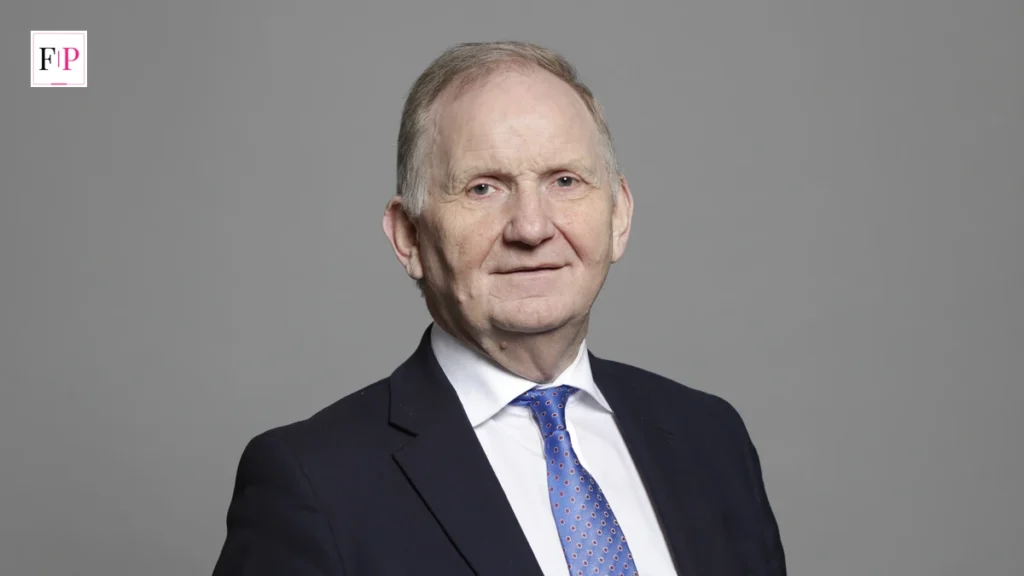
Who is Maurice Morrow? He is a Northern Irish unionist politician, chairman of the Democratic Unionist Party since 2000, a former MLA for Fermanagh and South Tyrone and a life peer in the House of Lords. Born on 27 September 1948 in Ballygawley, County Tyrone, he served as Minister for Social Development from 2000 to 2001.
Early Life in Ballygawley
Maurice Morrow was born Maurice George Morrow on 27 September 1948 in Ballygawley, County Tyrone, Northern Ireland, the son of Ernest and Eliza Jane Morrow. He was educated at Ballygawley Primary School, Drumglass High School and Dungannon Technical College, and then built a career as an estate agent before politics took over his working life.
Ballygawley is a small village in the Clogher Valley, the part of County Tyrone that would later give Lord Morrow his peerage title. His roots in the area have run through his whole public life: he has represented the people of Fermanagh and South Tyrone at every level of government, from the local council to the Northern Ireland Assembly and the House of Lords, and he has lived in the Dungannon area throughout his adult life.
Little is publicly recorded about his childhood beyond his schooling and his early career, and that is in keeping with a politician known as a quiet, steady worker rather than a headline-seeker. The estate agency gave him a practical knowledge of the farming community and small businesses of the Clogher Valley, and that local knowledge shaped the priorities he carried into public office.
First Steps in Politics: The Council Years
Maurice Morrow joined the Democratic Unionist Party in the early 1970s, and his political career began in 1973, when he was elected to Fermanagh District Council. He went on to serve as a councillor on Dungannon and South Tyrone Borough Council, representing Dungannon Town, giving him more than two decades of experience in local government before he ever stood for the Assembly.
Those council years mattered. Local government in Northern Ireland in the 1970s and 1980s was where unionist politics was organised street by street, and Morrow became known as a reliable, hard-working representative who turned up, listened and followed through. It was also where he built the reputation inside the DUP that would eventually carry him to the party chairmanship.
In May 1996 he was returned as a member of the Northern Ireland Forum for the constituency of Fermanagh and South Tyrone, the body elected to take part in the talks that led to the Good Friday Agreement. He served in the Forum until 1998, when the new Northern Ireland Assembly was created and he was elected to it at the first opportunity.
Stormont: MLA for Fermanagh and South Tyrone
Maurice Morrow was elected as a Member of the Legislative Assembly for Fermanagh and South Tyrone on 25 June 1998, in the first election to the new Northern Ireland Assembly. He held the seat for more than 18 years, until 26 January 2017, when he lost it in the Assembly election of that year. For much of that time he served alongside Arlene Foster as one of the constituency’s two DUP MLAs, and he also served as the DUP’s Chief Whip in the Assembly.
His long run at Stormont spanned the most turbulent years of devolution: the suspension of the institutions, their restoration at St Andrews, and the power-sharing Executives that followed.
Five dates sum up the shape of his career at Stormont and beyond:
- 25 June 1998 — elected as an MLA for Fermanagh and South Tyrone in the first Assembly election.
- July 2000 — becomes Minister for Social Development, and takes on the DUP chairmanship the same year.
- 7 June 2006 — created Baron Morrow of Clogher Valley, one of the DUP’s first three life peers.
- 2015 — his Human Trafficking and Exploitation Act becomes law in Northern Ireland.
- January to May 2016 — serves as Minister for Communities in the Northern Ireland Executive.
Minister for Social Development, 2000–2001
In July 2000, Maurice Morrow became Minister for Social Development in the Northern Ireland Executive, serving under First Minister David Trimble. He held the post from 27 July 2000 to 24 October 2001, and was both preceded and succeeded in the role by Nigel Dodds, under the DUP’s policy of rotating its Executive appointments between members of its Assembly party.
During his time in the department he was credited with policies recognising the needs of older people and the farming community, and with introducing new measures to tackle welfare fraud. It was a short ministerial spell — a little over a year — but it put him in charge of one of the Executive’s biggest departments, responsible for social security, housing and urban regeneration across Northern Ireland.
| Role | Dates | Notes |
|---|---|---|
| MLA for Fermanagh and South Tyrone | 25 June 1998 – 26 January 2017 | More than 18 years at Stormont; also DUP Chief Whip |
| Minister for Social Development | 27 July 2000 – 24 October 2001 | Served under First Minister David Trimble |
| Chairman of the DUP | 2000 – present | 26 years in the role by November 2026 |
| Life peer, House of Lords | 7 June 2006 – present | Baron Morrow of Clogher Valley |
| Minister for Communities | 12 January – 25 May 2016 | Served under First Minister Arlene Foster |
Life Peer: Baron Morrow of Clogher Valley
It was announced on 11 April 2006 that Maurice Morrow would be one of the first three members of the DUP to be created life peers, giving the party its first representation in the House of Lords. He was created Baron Morrow, of Clogher Valley in the County of Tyrone, on 7 June 2006, and was formally introduced to the House of Lords on 27 June. The other two new DUP peers were Wallace Browne, the former Lord Mayor of Belfast, and Eileen Paisley, a former vice-president of the DUP and wife of the party’s late leader, Ian Paisley.
A life peer is a member of the House of Lords whose title is held for their own lifetime only, rather than being passed on to their children. Life peers sit in the Lords and can vote on legislation, but their peerage does not pass to an heir. Morrow became a working life peer, meaning he was expected to take a full and active part in the work of the House rather than holding the title as an honour alone.
A decade after entering the Lords, he returned to ministerial office for a second time. On 12 January 2016 he became Minister for Communities in the Northern Ireland Executive, serving under First Minister Arlene Foster until 25 May 2016. He was preceded in the role by Mervyn Storey and succeeded by Paul Givan. The department covered housing, local government, culture and communities, and his short spell in charge came in the final months of the Assembly term before the 2016 election.
The 2015 Human Trafficking and Exploitation Act
The single piece of legislation most closely associated with Maurice Morrow is the Human Trafficking and Exploitation Act, which was passed in Northern Ireland in 2015. After hearing testimony from children and adults forced to work in brothels, farms and factories — including a Romanian woman who had been kidnapped in London and forced to work as a prostitute in Ireland — he put forward the bill in the Northern Ireland Assembly.
The Act made Northern Ireland the first and only place in the United Kingdom where the act of buying sex is a crime, while the act of selling sex was decriminalised. It was a deliberately asymmetric approach: the law targets the demand for paid sex rather than the people selling it. The measure was opposed by campaigners who wanted sex work decriminalised altogether, and a later application for a judicial review of the law failed after the campaigner who had brought it died.
Whatever view is taken of the law itself, it remains the most distinctive legislative achievement of his career, and the one that carried his name furthest beyond Northern Ireland. It showed a side of Morrow that his Stormont colleagues had long known: a politician guided by a strong personal faith, willing to take on a difficult and divisive subject and to see a bill through to the statute book.
DUP Chairman Since 2000
Maurice Morrow has served as chairman of the Democratic Unionist Party since 2000 — 26 years in the role by November 2026. The chairman is the party’s senior organisational figure, responsible for the running of the party machine, its conferences and its internal discipline, working alongside the leader of the day. Morrow has held the post under every DUP leader since Ian Paisley, through Peter Robinson, Arlene Foster, Edwin Poots, Jeffrey Donaldson and Gavin Robinson.
It is a role that suits his reputation. Party leaders have relied on him as an organiser and a steadying presence, and in the days since his family’s loss, that reputation has been reflected back to him. DUP leader Gavin Robinson said that Morrow had been “a rock of strength and support to so many of us through difficult moments in our lives”, adding: “Now, in his darkest hour, it is our turn to be a rock for him.”
Family Life and the Double Loss of November 2026
Maurice Morrow was married to Jennifer Morrow, née Meneely, and the couple had two daughters, Victoria and Rachel. Rachel was married to John Burrows, a former road racer who is now a racing team owner, and was a devoted mother to their two children, Jack and Isla. She was in her forties. Victoria is married to Kirk, and Lady Jennifer was a grandmother to four grandchildren: Jack, Isla, Seth and Parker.
On Sunday 15 November 2026, Rachel Burrows died peacefully, surrounded by her loving family, after an illness. Hours later that same day, Lady Jennifer Morrow also died, after a period of illness of her own. DUP leader Gavin Robinson said that Lady Jennifer died about four hours after her daughter, calling the double loss “a deep personal shock and tragedy” for Lord Morrow, his surviving daughter Victoria, Rachel’s husband John and their two children, and the wider Morrow and Burrows families. Both women had been ill for some time, and no cause of death has been made public.
Rachel’s funeral is to be held at 1pm on Wednesday 18 November at Carland Presbyterian Church in Dungannon, followed by a private interment. Lady Jennifer’s funeral is to be held at 1.30pm on Friday 20 November at Dungannon Free Presbyterian Church, also followed by a private interment. Family and friends were welcomed at the family home on the Cookstown Road in Dungannon on Monday 16 and Tuesday 17 November between 2pm and 9pm.
Tributes have come from across Northern Ireland’s political life. BBC News NI reported that Gavin Robinson said “words cannot adequately express the heartbreak and sorrow felt across our party” and that there were “no words that can ease the pain of such an unimaginable loss”. Former DUP leader Baroness Foster, who has known Lord Morrow and his family for many years, paid tribute on BBC Radio Ulster, and sympathies were also offered by Traditional Unionist Voice leader Jim Allister, First Minister Michelle O’Neill and Taoiseach Micheál Martin. A meeting of the North-South Ministerial Council scheduled for Friday in Dublin was postponed following a request from the First and deputy First Ministers.
Maurice Morrow has given more than five decades of his life to public service in Northern Ireland, from a council seat in 1973 to the chairmanship of his party, two spells as a minister and a seat in the House of Lords. He turned 78 in September 2026, and the story of his life is one of steady, local, unshowy politics — the kind that rarely makes headlines. This week it is the headlines that have found him, and for the saddest of reasons.
As his family lays Rachel to rest and prepares to say goodbye to Jennifer on Friday, the thoughts of many across Northern Ireland will be with Lord Morrow, his daughter Victoria, and the wider Morrow and Burrows families. If this article has helped you understand who maurice morrow is and what his family is going through, please share it, and leave a message of sympathy in the comments below.
Is Maurice Morrow still alive?
Yes, Maurice Morrow is alive. He is 78 years old and is the chairman of the Democratic Unionist Party. The deaths reported in November 2026 were those of his wife, Lady Jennifer Morrow, and his daughter, Rachel Burrows, who died hours apart on Sunday 15 November 2026.
Who is Maurice Morrow?
He is a Northern Irish unionist politician and chairman of the Democratic Unionist Party since 2000. He was an MLA for Fermanagh and South Tyrone from 1998 to 2017, served as Minister for Social Development from 2000 to 2001, and has been a life peer, Baron Morrow of Clogher Valley, since 2006.
What happened to Maurice Morrow’s wife and daughter?
Lady Jennifer Morrow and her daughter Rachel Burrows died hours apart on Sunday 15 November 2026, after illness. DUP leader Gavin Robinson said Lady Jennifer died about four hours after Rachel. Rachel’s funeral is to be held at 1pm on Wednesday 18 November 2026 at Carland Presbyterian Church, Dungannon, and Lady Jennifer’s funeral is to be held at 1.30pm on Friday 20 November at Dungannon Free Presbyterian Church.
When was Maurice Morrow born?
Maurice Morrow was born Maurice George Morrow on 27 September 1948 in Ballygawley, County Tyrone, Northern Ireland. He turned 78 on 27 September 2026.
What roles has Maurice Morrow held?
He has been chairman of the Democratic Unionist Party since 2000. He was an MLA for Fermanagh and South Tyrone from 1998 to 2017, Minister for Social Development from 2000 to 2001, and Minister for Communities from January to May 2016. He has been a life peer in the House of Lords since 7 June 2006.
How long has Maurice Morrow been DUP chairman?
He has been chairman of the Democratic Unionist Party since 2000, which is 26 years as of November 2026. He has held the post under every DUP leader since Ian Paisley.
