


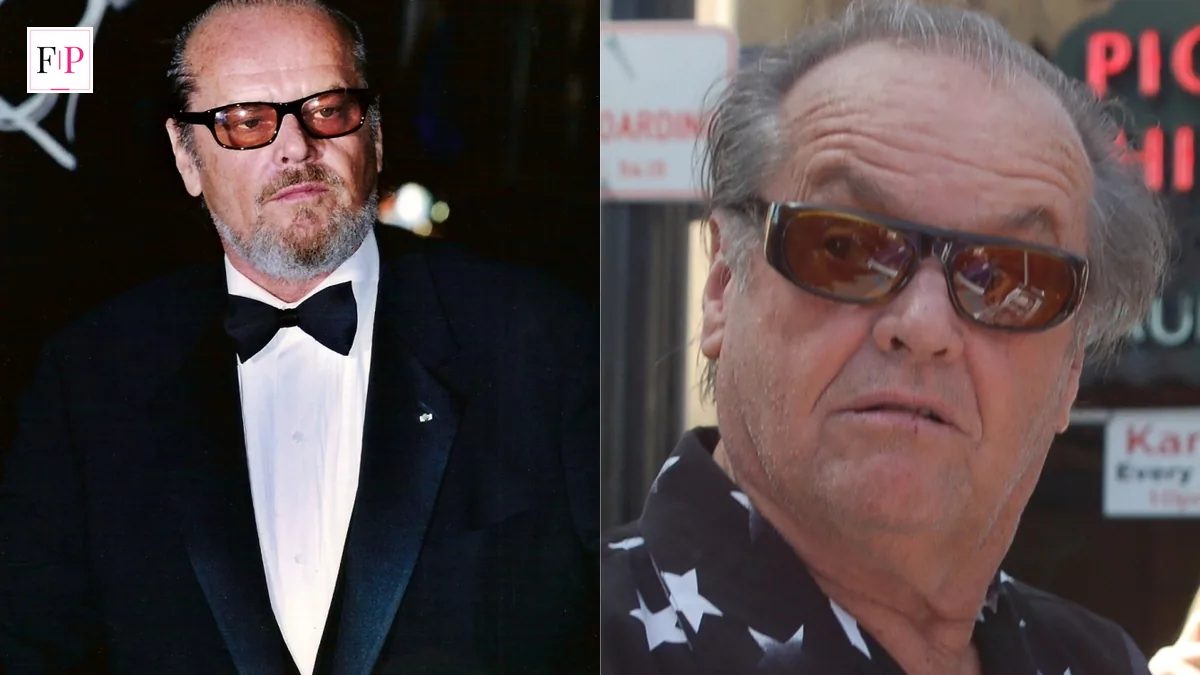
If you are looking for a way into one of the great screen careers, jack nicholson movies are a good place to start. Across more than five decades, Nicholson moved from low-budget films to counterculture classics, from nerve-shredding horror to warm comedy, and he did it without ever becoming predictable. His grin, his timing and his willingness to play difficult men made him one of the most recognisable actors of his generation, and jack nicholson movies are still watched, quoted and argued about by UK audiences today.
This guide to jack nicholson movies covers the essential films in order, explains why they matter, and separates the verified record from the rumours that tend to gather around a star who has stepped back from public life. It is a film guide first and a biography second: jack nicholson movies are the story, and the awards simply confirm how consistently good the work was.
Who Is Jack Nicholson?
Jack Nicholson was born John Joseph Nicholson on 22 April 1937 in Neptune City, New Jersey. He grew up believing that his grandmother was his mother and that his mother was his older sister, learning the truth only when he was 37, during research for a magazine cover story in 1974. It is a strange start to a life in public, and it is often mentioned in biographies of the actor, but it does not explain the career that followed. That career was built slowly, in Los Angeles, after he moved there in 1954 and took an office job in the animation department at Metro-Goldwyn-Mayer.
In the late 1950s Nicholson worked on stage in Los Angeles and began to appear in low-budget films. His first film role came in The Cry Baby Killer in 1958, and he spent much of the next decade working with Roger Corman and other makers of inexpensive, fast-moving pictures. He also worked as a screenwriter, with credits including The Trip in 1967. None of that work made him a star, but it gave him a practical education in how films are made, and it left him ready when a bigger opportunity arrived.
For readers who enjoy a straightforward screen biography, jack nicholson movies reward a chronological watch. The early jack nicholson movies show an actor learning his craft in public, the 1970s jack nicholson movies show him at full power, and the later jack nicholson movies show a performer who could still surprise an audience well into his sixties.
Why Jack Nicholson Movies Still Matter in the UK
There is no new Jack Nicholson film to promote, and that is part of the point. The interest in jack nicholson movies does not depend on a fresh release. It depends on a body of work that keeps finding new viewers, whether through television repeats, film seasons, or the annual return of horror favourites in the autumn.
The Shining is the clearest example. Stanley Kubrick’s 1980 horror film, adapted from the Stephen King novel, has become a permanent part of Halloween-season viewing in Britain. It is not a jack nicholson movie that needs a new event to justify a revisit: the isolated hotel, the slow descent of Jack Torrance, and the famous door scene are already part of film culture. For a UK viewer coming to the film for the first time, it also works as an entry point to a much wider career, which is why a guide like this one is useful in October and November as well as at any other time of year.
You can find a lighter, seasonal companion piece in FamePost’s guide to Halloween costume ideas (https://famepost.co.uk/halloween-costume-ideas/), which covers the costumes and looks that define the season. The connection is not forced: many of the most recognisable Halloween figures in British popular culture come from films like The Shining, and Nicholson’s performance is one of the reasons that film has stayed in the conversation for so long.
The Breakthrough Years: Easy Rider and Five Easy Pieces
Nicholson’s breakthrough came with Easy Rider in 1969, in which he played George Hanson, a Southern lawyer who joins two bikers on the road. It was a supporting role, but it earned him his first Academy Award nomination, for Best Supporting Actor, and it changed how casting directors saw him. He was no longer just a dependable face from low-budget films. He was an actor who could steal a scene and make a small part feel essential.
Five Easy Pieces followed in 1970, and it confirmed the breakthrough. Nicholson played Bobby Dupea, a man alienated from his family, his work and his relationships, in a jack nicholson movie that became a defining entry in the early 1970s art-film movement in Hollywood. The performance earned him an Academy Award nomination for Best Actor. Together, these two jack nicholson movies set the pattern for much of what followed: characters who do not fit comfortably into the world around them, played with humour, anger and a refusal to soften the edges.
Anyone beginning with jack nicholson movies should watch these two films early. They are not his most famous titles, but they explain why directors kept coming back to him. The charm is there, but so is the danger, and the audience is never quite sure which one will win.
The 1970s Peak: Chinatown and One Flew Over the Cuckoo’s Nest
If the late 1960s made Nicholson a name, the mid-1970s made him a legend. In Chinatown in 1974, directed by Roman Polanski, he played Jake Gittes, a stylish private detective in Los Angeles who discovers, too late, how little power he has against wealth and corruption. The film is widely regarded as a masterpiece of film noir, and Nicholson’s performance earned him another Academy Award nomination for Best Actor.
One year later came the role that won him his first Oscar. In One Flew Over the Cuckoo’s Nest in 1975, directed by Milos Forman, Nicholson played Randle McMurphy, a free-spirited patient in a psychiatric ward who challenges the authority of the institution around him. The film won five Academy Awards from nine nominations, including Best Actor for Nicholson and Best Picture, with Michael Douglas among its producers. McMurphy is a rebel, but Nicholson never plays him as a simple hero. He is funny, reckless, warm and self-destructive, often in the same scene, and that complexity is why the performance has lasted.
The Last Detail in 1973, in which Nicholson played a military policeman escorting a young sailor to prison, also earned him an Academy Award nomination, and it belongs in any serious account of this period. Taken together, these jack nicholson movies show an actor at the height of his powers, working with major directors and choosing material that trusted the audience to think.
The Shining and a Horror Legacy
The Shining in 1980 is, for many viewers, the first of the jack nicholson movies they think of, and for good reason. Directed by Stanley Kubrick, the film follows Jack Torrance, a writer who takes a job looking after an isolated hotel through the winter and slowly loses his grip on reality. Nicholson’s descent is gradual at first and then terrifying, and the film’s most famous images — the empty corridors, the typewriter, the door scene — have become part of cinema history.
It is worth being clear about what The Shining is and is not. It is an adaptation of a Stephen King novel, but Kubrick’s film is its own work, with its own cold, formal style. Nicholson’s performance fits that style precisely: he is controlled when the film needs control, and unhinged when it needs release. That balance is why the film still works for a first-time viewer, and why it returns every Halloween season in Britain without feeling dated.
Nicholson returned to darker material elsewhere, including Wolf in 1994, but The Shining remains his defining horror performance. It is also a useful reminder that his range was never limited to drama or comedy. He could play menace without losing the humour that made audiences like him, and he could play humour without losing the menace underneath it.
The 1980s: Terms of Endearment, Prizzi’s Honor and Batman
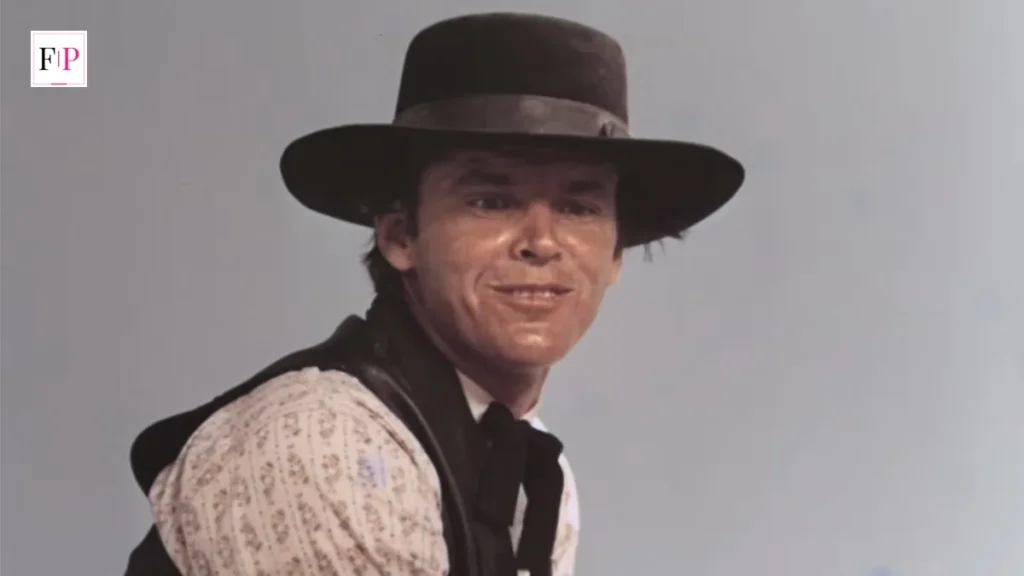
The 1980s showed a different side of Nicholson, and a wider one. In Terms of Endearment in 1983, he played Garrett Breedlove, a former astronaut and neighbour who becomes part of a complicated family story. The role earned him the Academy Award for Best Supporting Actor, his second Oscar overall. It is a warm, funny and sad performance, and it proved that he did not need to play a rebel to hold a film together.
Prizzi’s Honor in 1985 and Ironweed in 1987 both earned him further Academy Award nominations, and Reds in 1981 had done the same before them. The Witches of Eastwick in 1987 showed his comic timing in a fantasy setting, but the most famous popular success of the decade came in 1989, when he played the Joker in Tim Burton’s Batman. The Joker is a comic-book villain, but Nicholson played him with the same relish and danger that marked his dramatic roles, and the film introduced him to a new generation of younger viewers who had not grown up with his 1970s work.
For UK audiences, this decade is a good place to see how jack nicholson movies crossed from critical acclaim to popular culture. The Oscar nominations continued, but so did the box-office hits, and the two sides of his career stopped looking like separate things. He was, by the end of the 1980s, both a serious actor and a movie star, and he seemed comfortable with both descriptions.
The 1990s and 2000s: A Few Good Men, As Good As It Gets and The Departed
The 1990s began with another defining supporting performance. In A Few Good Men in 1992, Nicholson played Colonel Nathan Jessup, a military officer at the centre of a courtroom drama, and earned another Academy Award nomination. The role is remembered for its courtroom confrontation, but the performance as a whole is more interesting than any single scene: Jessup is certain, articulate and frightening, and Nicholson never lets the audience settle on whether he is a villain, a patriot, or both.
As Good as It Gets in 1997 gave him his third Academy Award, for Best Actor, for playing Melvin Udall, a New York writer living with obsessive-compulsive disorder. It is a romantic comedy, but Nicholson’s performance is not softened for the genre. Melvin is difficult, funny and, gradually, capable of change, and the film works because Nicholson allows all three things to be true at once. About Schmidt in 2002, which earned him another Academy Award nomination, continued that late-career interest in older, quieter men facing the end of a familiar life.
The 2000s also brought lighter work, including Something’s Gotta Give in 2003 and Anger Management in the same year, and a return to crime drama in The Departed in 2006, directed by Martin Scorsese, in which he played Frank Costello. The Bucket List in 2007 closed this period with a popular, crowd-pleasing turn. None of these jack nicholson movies repeats the 1970s, and none of them needs to. Together, they show an actor who kept working, kept choosing interesting collaborators, and kept finding new ways to use the screen presence he had built over decades.
Behind the Camera: The Films Jack Nicholson Directed
Nicholson did not only act. He directed three films: Drive, He Said in 1971, Goin’ South in 1978, and The Two Jakes in 1990, the last of which was a sequel to Chinatown. None of these jack nicholson movies is as famous as his acting work, and that is not surprising. Directing is a different job, and Nicholson’s gifts as a performer — spontaneity, danger, humour — do not automatically translate into a director’s control of a whole film.
Still, the directing credits matter for anyone studying jack nicholson movies in full. They show an actor who wanted to understand films from the other side of the camera, and who was willing to take a risk on material that was not guaranteed to succeed. The Two Jakes is the most interesting of the three for a viewer who has just watched Chinatown, because it returns to the same world with the benefit — and the burden — of hindsight. It is not essential viewing for a first watchlist, but it completes the picture of a filmmaker, not just a film star.
Awards in Full: Twelve Nominations and Three Wins
The awards record for jack nicholson movies is unusually clear, and it is worth setting out in full because it explains his standing in Hollywood history. Nicholson has received twelve Academy Award nominations, which makes him the most nominated male actor in the Academy’s history. He has won three of those awards: Best Actor for One Flew Over the Cuckoo’s Nest and for As Good as It Gets, and Best Supporting Actor for Terms of Endearment.
His other Academy Award nominations came for Easy Rider, Five Easy Pieces, The Last Detail, Chinatown, Reds, Prizzi’s Honor, Ironweed, A Few Good Men and About Schmidt. Beyond the Oscars, he has won three BAFTA Awards, six Golden Globe Awards, a Grammy Award and a Screen Actors Guild Award. He received the American Film Institute’s Life Achievement Award in 1994 and the Kennedy Center Honor in 2001. Those honours are not the reason to watch jack nicholson movies, but they are a useful check: when a career is recognised across five decades, from the 1960s to the 2000s, it is because the work kept meeting a high standard, not because of one lucky year.
Full details of the nominations and wins are set out in the full list of awards and nominations (https://en.wikipedia.org/wiki/List_of_awards_and_nominations_received_by_Jack_Nicholson), and a concise career summary is available in Britannica’s biography (https://www.britannica.com/biography/Jack-Nicholson). Both are useful if you want to check a date or a category before a film-night argument.
Jack Nicholson Movies: Where to Start
If you have never watched a Nicholson film, the best order is not strictly chronological. Start with the performances that explain his reputation, then fill in the gaps. This watchlist for jack nicholson movies is built for a UK viewer who wants the essential jack nicholson movies first, without being overwhelmed by fifty years of jack nicholson movies.
Start here:
- One Flew Over the Cuckoo’s Nest (1975) — the Oscar-winning central performance, and the best single introduction to his style.
- Chinatown (1974) — the noir masterpiece, and a masterclass in controlled, intelligent acting.
- The Shining (1980) — the horror landmark, best watched with the lights low and no distractions.
Then watch:
- Easy Rider (1969) and Five Easy Pieces (1970) — the breakthrough years, and the origin of the anti-hero persona.
- Terms of Endearment (1983) — the warm, funny supporting Oscar win that shows his range.
- Batman (1989) — the popular Joker turn that introduced him to a younger audience.
Then explore further:
- A Few Good Men (1992), As Good as It Gets (1997) and About Schmidt (2002) — three very different later jack nicholson movies, each Oscar-nominated or Oscar-winning.
- The Departed (2006) and The Bucket List (2007) — popular late-career jack nicholson movies that show how his screen presence worked in an ensemble.
- Prizzi’s Honor (1985), The Witches of Eastwick (1987) and Something’s Gotta Give (2003) — for viewers who want comedy, fantasy and romance alongside the dramas.
This order for jack nicholson movies is a suggestion, not a rule. Some viewers will prefer to start with The Shining in Halloween season and work backwards, and that works just as well. The point is to watch the major performances first, so that the smaller jack nicholson movies make more sense when you reach them.
Later Years and Life Now
Nicholson’s last film role to date came in How Do You Know in 2010, directed by James L. Brooks, in which he appeared alongside Reese Witherspoon, Owen Wilson and Paul Rudd. Since then, he has not appeared in a film, despite rumours linking him to projects that never came to fruition. It is important to be precise here: Nicholson has never made a formal announcement that he has retired from acting. He has simply stopped working in films, and he said in 2013 that he was less driven to be out in public than he once was, and that he only wanted to make films that move people.
His most recent on-screen appearance came in February 2025, during the Saturday Night Live 50th anniversary special on NBC, where he introduced a segment fronted by Adam Sandler, his co-star from Anger Management. He turned 89 in April 2026, and his daughter Lorraine shared a photograph of him smiling and applauding around that birthday. In October 2026, his longtime friend and collaborator Michael Douglas, speaking in Swansea while promoting his memoir One Helluva Ride, said that Nicholson is well, is not working any more, and spends his days quietly at home. Douglas, who produced One Flew Over the Cuckoo’s Nest, was careful to add that Nicholson is fine and that he still sees him.
Those updates should be reported as what they are: remarks by a friend, not a medical bulletin and not a retirement announcement. They do not change jack nicholson movies, and they do not diminish them. If anything, they explain why a guide to jack nicholson movies is timely now: the work is complete, it can be watched in full, and it does not depend on what happens next.
For another FamePost biography of a performer with a long screen career, see Selma Blair (https://famepost.co.uk/selma-blair/), which covers a very different kind of longevity, from 1990s comedy to recent advocacy work.
Conclusion
Jack Nicholson movies remain essential viewing because they cover so much ground without losing a recognisable centre. He could play a rebel, a detective, a monster, a lover, a villain and a tired older man, and in each case the audience believed him. That is not a trick of charisma alone. It is the result of decades of work, from B-films to Oscar winners, and of choices that trusted audiences to follow difficult characters.
If you watch only three films, watch One Flew Over the Cuckoo’s Nest, Chinatown and The Shining. If you watch ten, add Easy Rider, Five Easy Pieces, Terms of Endearment, Batman, A Few Good Men, As Good as It Gets and The Departed. Either way, you will have seen why Nicholson is the most nominated male actor in Academy Awards history, and why jack nicholson movies are still discussed in Britain more than a decade after his last film role. The guide to jack nicholson movies ends where it began: with the work itself, which is still there, still watchable, and still worth an evening.
Frequently Asked Questions
What are the best jack nicholson movies to start with?
Start with One Flew Over the Cuckoo’s Nest (1975), Chinatown (1974) and The Shining (1980). Together they show his dramatic range, his control in a noir, and his power in horror. After those three, Easy Rider (1969) and As Good as It Gets (1997) are the natural next steps.
How many Academy Awards has Jack Nicholson won?
Jack Nicholson has won three Academy Awards from twelve nominations. He won Best Actor for One Flew Over the Cuckoo’s Nest and for As Good as It Gets, and Best Supporting Actor for Terms of Endearment. His twelve nominations make him the most nominated male actor in Academy Awards history.
What was Jack Nicholson’s last movie?
Jack Nicholson’s last film role to date was in How Do You Know in 2010, directed by James L. Brooks, alongside Reese Witherspoon, Owen Wilson and Paul Rudd. He has not appeared in a film since, although he did appear on television in the Saturday Night Live 50th anniversary special in February 2025.
Has Jack Nicholson officially retired from acting?
No formal retirement announcement has been made. Nicholson has simply not worked in films since 2010, and in 2013 he said he was less driven to be out in public. In October 2026, Michael Douglas said Nicholson is well and is not working any more, but those were Douglas’s remarks, not an official retirement statement by Nicholson himself.
What is Jack Nicholson’s most famous horror movie?
His most famous horror movie is The Shining (1980), directed by Stanley Kubrick and adapted from the Stephen King novel. Nicholson plays Jack Torrance, a writer looking after an isolated hotel through the winter, and the film has become a permanent part of Halloween-season viewing in Britain.
Did Jack Nicholson direct any films?
Yes. Jack Nicholson directed three films: Drive, He Said (1971), Goin’ South (1978) and The Two Jakes (1990). The Two Jakes was a sequel to Chinatown, in which he had starred as Jake Gittes in 1974.
