


Last Updated: 2 October 2026
A well-structured triceps workout at home can build seriously strong, sculpted arms without a gym membership, a commute, or a single expensive machine. The triceps make up roughly two-thirds of your upper-arm muscle, yet most people obsess over biceps and leave the biggest arm muscle undertrained. That changes today. Whether your goal is sleeve-filling size, toned definition, or simply stronger arms for everyday life, training at home removes every excuse — no queues for equipment, no monthly fees, and no wasted travel time.
This guide gives you everything you need for an effective triceps workout at home: the anatomy that matters, nine proven bodyweight and dumbbell exercises with precise form cues, a weekly training plan, a four-week progression system, and the nutrition basics that support muscle growth. Every move can be done in your living room with nothing more than a sturdy chair, a pair of dumbbells, and optionally a resistance band. We have also included proper warm-up guidance, the most common form mistakes to avoid, and realistic timelines so you know exactly when to expect visible results.
What is the best triceps workout at home?
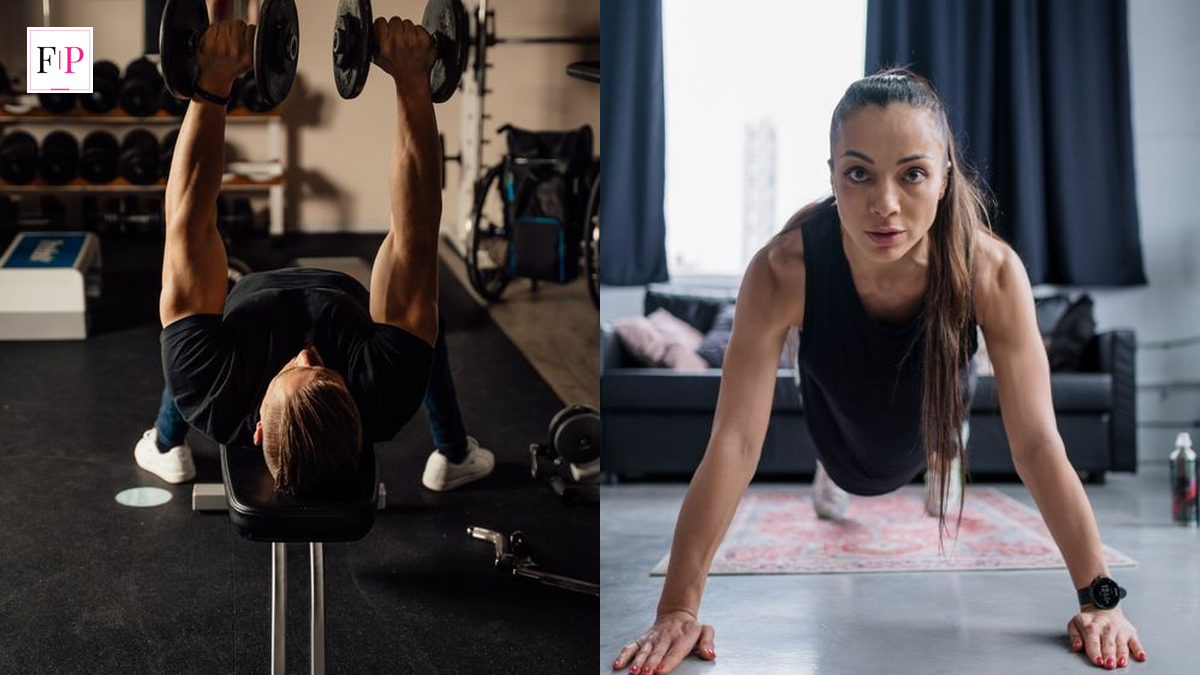
The best triceps workout at home combines diamond press-ups, chair dips, and dumbbell overhead extensions for 3 sets of 10–15 reps each, performed twice per week. Research from the American Council on Exercise found triangle press-ups produce the highest triceps activation of any common move, with dumbbell kickbacks a close second.
What Are Your Triceps? The Muscle Behind This Triceps Workout at Home
Definition: The triceps brachii is the large, three-headed muscle running along the back of your upper arm. Its three heads — the long head, the lateral head, and the medial head — all converge into a single tendon that attaches at the elbow.
The triceps’ primary job is extending the elbow — straightening your arm against resistance. According to a 2022 paper from the University of Illinois at Chicago College of Medicine, the triceps also stabilise the shoulder blade and power every pushing movement you make, from press-ups to pushing a door open or lifting a heavy suitcase.
Here is the fact that should reshape your training: the triceps account for about two-thirds of your upper-arm muscle mass. If you want bigger, stronger, more defined arms, the back of the arm deserves at least as much attention as the biceps. A smart triceps workout at home targets all three heads so no part of the muscle lags behind.
- Long head: runs down the inner back of the arm and is best stretched and loaded with overhead movements like dumbbell extensions.
- Lateral head: forms the outer “horseshoe” shape and responds brilliantly to press-downs, kickbacks, and dips.
- Medial head: sits deeper beneath the other two and works hardest during the final lockout of every pressing movement.
Why Train Your Triceps at Home? 5 Science-Backed Benefits
You do not need a commercial gym to build impressive triceps. In fact, a consistent triceps workout at home has several advantages over sporadic gym sessions, starting with the most important one: you will actually do it. Consistency beats perfection every single time.
- Bigger, stronger arms: because the triceps are two-thirds of upper-arm mass, training them is the fastest route to visibly larger arms.
- Better pressing strength: stronger triceps improve your press-ups, bench press, and overhead pressing — the lockout phase is almost entirely triceps.
- Healthier shoulders and elbows: balanced arm strength supports the shoulder joint and reduces the strain that causes achy elbows in desk workers.
- Everyday functional power: pushing yourself up from the floor, carrying shopping bags, and lifting children all rely on triceps strength.
- Zero-cost convenience: bodyweight moves like dips and press-ups need no equipment, and a pair of adjustable dumbbells covers everything else for years.
The NHS physical activity guidelines recommend strengthening activities that work all major muscle groups — including the arms — on at least two days per week. A twice-weekly triceps workout at home slots perfectly into that guidance alongside your other training.
Warm-Up and Safety Rules for Your Triceps Workout at Home
Never launch straight into hard sets with cold muscles. Spend five minutes raising your body temperature and mobilising the joints you are about to load. Your elbows and shoulders will thank you.
- 2 minutes of marching or jogging on the spot to raise your heart rate and warm the blood flowing to your arms.
- 20 arm circles each way, starting small and gradually widening, to lubricate the shoulder joint.
- 10 wall press-ups as a gentle rehearsal of the pressing pattern before you load it.
- 30 seconds of band pull-aparts (or doorway chest stretches) to open the shoulders and activate the upper back.
Safety first: stop immediately if you feel sharp pain in your elbows, shoulders, or wrists — muscular burn is normal, joint pain is not. If you are new to exercise, returning after a long break, or managing a health condition, speak to your GP before starting any new training routine, exactly as the NHS advises. Beginners should start with the easiest variation of each move and master the form before adding reps or weight.
The 9 Best At-Home Triceps Exercises (With Form Cues)
These nine moves form the backbone of any great triceps workout at home. They are ordered from foundational to more demanding, and each one includes the form cues that make the difference between wasted effort and real growth. Aim for 3 sets of 10–15 reps per exercise, resting 45–60 seconds between sets.
1. Chair Dips
The undisputed king of the home triceps workout at home arsenal. All you need is a sturdy chair, sofa edge, or coffee table — test it for stability first.
- Sit on the edge of the chair with your hands gripping the edge beside your hips, fingers pointing forward.
- Walk your feet out and lift your hips off the seat, keeping your back close to the chair.
- Bend your elbows to lower your body until your upper arms are roughly parallel to the floor, then press back up.
- Form cue: keep your shoulders down and away from your ears — shrugging shifts the load off the triceps.
2. Diamond Press-Ups
Research from the American Council on Exercise ranked triangle (diamond) press-ups as the most effective triceps-isolating exercise tested. No equipment, maximum return.
- Start in a high plank with your hands directly under your chest, thumbs and index fingers touching to form a diamond.
- Keep your elbows tucked tight to your ribs as you lower your chest toward your hands.
- Press explosively back to the top without letting your hips sag.
- Beginner fix: drop to your knees — you will still hammer the triceps, as the personal trainers who spoke to Marie Claire UK recommend for building up safely.
3. Close-Grip Press-Ups
A slightly wider cousin of the diamond press-up that is kinder on the wrists while still biasing the triceps heavily over the chest.
- Place your hands just inside shoulder-width apart, directly beneath your shoulders.
- Lower your body with elbows tracking backwards, not flaring out to the sides.
- Squeeze the triceps hard at the top of every rep — that final lockout is where the medial head does its best work.
4. Overhead Dumbbell Triceps Extension
The single best move for the long head, because it stretches the triceps fully overhead before contracting. One dumbbell is all you need.
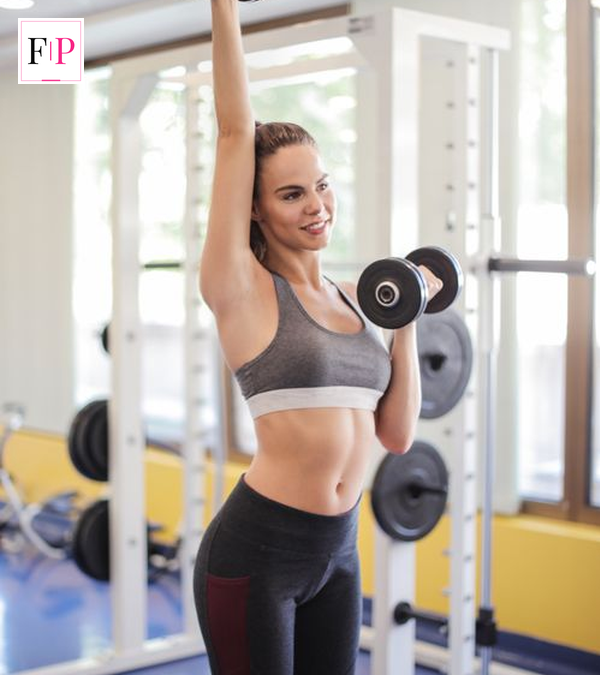
- Stand or sit tall, holding one dumbbell with both hands, arms extended overhead.
- Lower the weight slowly behind your head by bending only at the elbows — your upper arms stay still beside your ears.
- Extend back to the start, stopping just short of full lockout to keep tension on the muscle.
- Form cue: brace your core and avoid arching your lower back; choose a weight you can control for a full three-second lowering phase.
5. Dumbbell Triceps Kickbacks
The ACE study ranked kickbacks as the second-best triceps isolator behind triangle press-ups. They are unbeatable for carving definition into the back of the arm.
- Hinge forward at the hips with a flat back, a dumbbell in each hand, elbows bent at 90 degrees and pinned to your ribs.
- Straighten your arms behind you until they are fully extended, squeezing the triceps for a full second.
- Lower under control — no swinging or bouncing; if your torso rocks, the weight is too heavy.
6. Lying Triceps Extension (Skull Crusher)
A classic mass-builder you can perform on the floor if you have no bench. Despite the dramatic name, it is perfectly safe with sensible weights and controlled tempo.
- Lie on your back on a mat (or bench), knees bent, feet flat, a dumbbell in each hand pressed up over your chest.
- Bend the elbows to lower the weights toward your temples, keeping your upper arms vertical.
- Extend back to the start without letting your elbows drift forward — they should act as fixed hinges.
7. Resistance Band Pushdowns
No cable machine? Anchor a resistance band over a sturdy door or pull-up bar and you have the home equivalent of the gym’s favourite triceps finisher.
- Grip the band with both hands, elbows pinned tightly to your sides.
- Press your hands down toward your hips until your arms are straight, then return slowly.
- Keep your torso upright and still — the only things moving should be your forearms.
8. Plank to Press-Up
A dynamic combo that torches the triceps while demanding serious core stability — a brilliant conditioning addition to your triceps workout at home.
- Begin in a forearm plank with your body in one straight line from head to heels.
- Press up one hand at a time into a high plank, then lower back to your forearms the same way.
- Alternate the leading arm each rep and keep your hips level — no rocking side to side.
9. Wall Press-Ups
The perfect entry point for complete beginners, older adults, or anyone rebuilding strength. Master this before progressing to floor press-ups.
- Stand an arm’s length from a wall, hands flat against it at shoulder height and shoulder-width apart.
- Bend your elbows to bring your chest toward the wall, keeping your body straight as a plank.
- Press back to the start. When 3 sets of 20 feel easy, graduate to incline press-ups on a table edge.
Your Weekly Triceps Workout at Home Plan
Train triceps twice per week with at least 48 hours between sessions — muscles grow during recovery, not during the workout. This weekly triceps workout at home plan alternates a bodyweight day with a dumbbell day so every head of the triceps gets targeted from multiple angles.
| Day | Focus | Exercises | Sets × Reps | Rest |
|---|---|---|---|---|
| Monday | Bodyweight power | Chair dips, diamond press-ups, close-grip press-ups, plank to press-up | 3 × 10–15 | 60 sec |
| Tuesday | Active recovery | Walk, gentle yoga, or mobility work | 20–30 min | — |
| Wednesday | Rest | Full rest day | — | — |
| Thursday | Dumbbell strength | Overhead extensions, kickbacks, skull crushers, band pushdowns | 3 × 10–12 | 60–90 sec |
| Friday | Conditioning | brisk walk, cycling, or a session from our HYROX training guide | 20–30 min | — |
| Saturday | Rest | Full rest day | — | — |
| Sunday | Optional light session | Wall press-ups + gentle stretching | 2 × 15–20 | 45 sec |
Each full session takes around 25–35 minutes including the warm-up. If you are short on time, pick any three exercises and run them as a circuit — three rounds, minimal rest — for a brutally effective 15-minute arm day.
4-Week Progression Plan: From Beginner to Advanced
Muscles adapt quickly, so your triceps workout at home must evolve to keep delivering results. Follow this simple four-step progression, spending roughly one week on each stage before moving up.
- Week 1 — Learn the patterns: perform wall press-ups, knee diamond press-ups, and bent-knee chair dips for 2 sets of 10 reps. Focus purely on clean form and feeling the triceps work.
- Week 2 — Add volume: move to 3 sets of 12 reps on the same exercises. Try full chair dips with straight legs and standard close-grip press-ups for at least one set.
- Week 3 — Add load: introduce light dumbbells (2–4 kg) for overhead extensions, kickbacks, and skull crushers at 3 sets of 10–12 reps. Keep bodyweight moves at 3 sets of 15.
- Week 4 — Intensify: increase dumbbell weight slightly, slow every lowering phase to a full three seconds, and add a fourth set to your two favourite moves. Consider structuring sessions with the 4-1-1 workout method — 4 seconds down, 1 second hold, 1 second up — for maximum time under tension.
After week four, repeat the cycle with slightly heavier weights or harder variations. Progressive overload — gradually demanding more from the muscle — is the non-negotiable principle behind every successful strength programme.
7 Common Triceps Training Mistakes to Avoid
Small technical errors quietly steal your results and invite injury. Audit your form against these seven classic mistakes before your next session.
- Flaring the elbows: elbows drifting wide turns press-ups and dips into a chest-and-shoulder exercise. Pin them to your ribs.
- Using momentum: swinging dumbbells up on kickbacks or bouncing out of dips removes the tension the muscle needs to grow. Slow down.
- Going too heavy, too soon: the triceps are relatively small muscles — ego-lifting wrecks form and punishes the elbow joints. Master light weights first.
- Half reps: stopping short of full elbow extension skips the lockout phase where the medial head works hardest. Use the complete range of motion.
- Training triceps daily: they need 48 hours to recover and rebuild. Daily hammering leads to overuse injuries, not faster growth.
- Ignoring the warm-up: cold elbows and shoulders are injury-prone elbows and shoulders. Five minutes of preparation is never wasted.
- Only doing one exercise: dips alone will not fully develop all three heads. Variety across overhead, pressing, and kickback angles is essential.
Nutrition and Recovery: Fuelling Stronger Triceps
Training provides the stimulus, but nutrition and recovery build the muscle. No home arm programme outruns a poor diet and chronic sleep deprivation.
- Prioritise protein: sports nutrition research typically recommends around 1.6–2.2 grams of protein per kilogram of body weight daily for people building muscle. Spread it across 3–4 meals featuring eggs, Greek yoghurt, chicken, fish, lentils, or tofu.
- Eat enough overall: building muscle in a steep calorie deficit is extremely difficult. Aim for roughly maintenance calories, or a very small surplus, while training consistently.
- Hydrate properly: even mild dehydration impairs strength and concentration. Keep water within arm’s reach during every session.
- Sleep 7–9 hours: growth hormone release peaks during deep sleep, making good rest one of the most anabolic tools you own — and it is free.
- Expect mild soreness: delayed-onset muscle soreness (DOMS) 24–48 hours after a session is normal when starting out. Gentle movement and walking ease it faster than total inactivity.
Start your triceps workout at home this week.
Strong, defined arms are built with consistency, not complexity. You now have the anatomy knowledge, nine proven exercises, a weekly plan, and a four-week progression system — everything a triceps workout at home needs to deliver visible results within 4–6 weeks of steady training.
Do not wait for the perfect equipment or the perfect Monday. Warm up, pick four exercises from the list above, and complete your first session today. Bookmark this guide, share it with your training partner, and check back weekly as you climb the progression plan. Your strongest arms are a few living-room sessions away — start now.
What is the best triceps workout at home for beginners?
Beginners should start with wall press-ups, knee diamond press-ups, and bent-knee chair dips for 2 sets of 10 reps, twice per week. Master clean form first, then progress to full press-ups, straight-leg dips, and light dumbbell moves over 3–4 weeks.
Can you build big triceps at home without weights?
Yes. Bodyweight moves like diamond press-ups, chair dips, and close-grip press-ups can build significant triceps size and strength. Research from the American Council on Exercise ranked triangle press-ups as the most effective triceps-isolating exercise tested. Add slow tempos and extra sets to keep progressing without weights.
How often should I do a triceps workout at home?
Train your triceps twice per week with at least 48 hours of rest between sessions. This matches NHS guidance to strengthen all major muscle groups on at least two days per week, and gives the muscle time to recover and grow.
How long does it take to see results from a home triceps workout?
Most people notice improved strength within 2–3 weeks and visible definition within 4–6 weeks of consistent twice-weekly training, provided protein intake and sleep support recovery. Significant muscle growth typically takes 2–3 months or longer.
Are chair dips bad for your shoulders?
Chair dips are safe when performed correctly: keep your back close to the chair, shoulders down away from your ears, and lower only until your upper arms are roughly parallel to the floor. Stop immediately if you feel sharp shoulder or elbow pain, and speak to your GP first if you have joint issues.
What equipment do I need for a triceps workout at home?
You can start with zero equipment using press-ups and chair dips. A pair of adjustable dumbbells (2–10 kg) unlocks overhead extensions, kickbacks, and skull crushers, while an inexpensive resistance band adds pushdown variations. A sturdy chair and an exercise mat complete the ideal home setup.
