


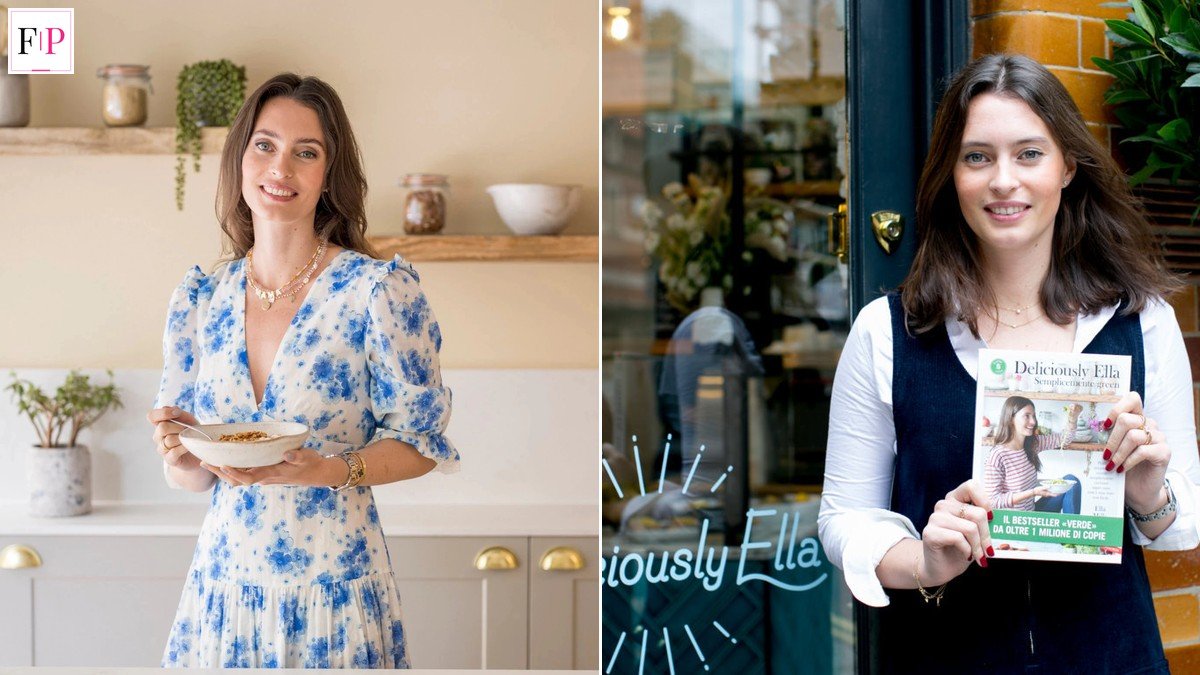
Deliciously Ella Business: The £724,000 Deli Collapse and the Comeback Nobody Predicted
In March 2018, Ella Mills did something few founders admit to in public. The woman behind Deliciously Ella — one of Britain’s biggest wellness brands — told her 1.2 million Instagram followers she was closing two of her three London delis. Behind the cheerful announcement lay an uncomfortable truth: the Deliciously Ella business had racked up deli losses of £724,000 in just over two years. It is a stark chapter in the brand’s story, and it holds lessons for every celebrity who dreams of turning fame into food.
Yet this is not a simple tale of failure. The Deliciously Ella business went on to conquer supermarket shelves, was bought by a Swiss food giant in 2024, and now sits inside one of the UK’s biggest healthy-snacking portfolios. Here is the full, data-backed story — the rise, the collapse, and the comeback.
From a student blog to a household name
The Deliciously Ella business began in 2012, not in a boardroom but in a student bedroom. Ella Mills, then a 20-year-old at the University of St Andrews, had been diagnosed with postural orthostatic tachycardia syndrome (POTS), a disorder of the autonomic nervous system that left her battling chronic fatigue, migraines and a heart rate that could spike to 190 beats per minute. When conventional treatments failed to help, she overhauled her diet, cutting out meat, dairy and ultra-processed foods in favour of plant-based whole foods — and her symptoms improved dramatically.
Her recipe blog became one of the UK’s most-read food websites. A bestselling cookbook followed in 2015, and in 2016 the first Deliciously Ella products — energy balls — hit supermarket shelves: audience first, products second. By the time the delis opened, the Deliciously Ella business had a devoted following most restaurant startups would envy.
The deli gamble
Flush with book royalties, Mills and her husband Matthew took the brand onto the high street: first the MaE Deli at Seymour Place in Marylebone — “Matt and my first venture together”, as she put it — then The Kitchen Counter in Herne Hill and a larger MaE Deli on Weighhouse Street.
The logic was understandable: a physical deli turns an online brand into something tangible. The menus were pure Deliciously Ella — porridge bowls, smoothies, sweetcorn fritters with baked beans and smashed avocado, plant-based salads and the brand’s signature energy balls.
But restaurants are a fundamentally different business from blogs and supermarket snacks. A blog scales for free; a restaurant pays London rent every single month.
The £724,000 collapse
In March 2018, Mills announced she was closing the Seymour Place and Herne Hill delis to focus on the largest site, Weighhouse Street. The announcement was upbeat, but reporting soon revealed the scale of the financial damage. According to the Mail on Sunday, the deli business had accumulated £724,000 in losses after just over two years of trading.
Companies House filings painted an even grimmer picture of the Deliciously Ella business’s underlying finances. By the end of the financial year to 31 May 2017, the deli company’s total debts stood at £630,000 — up £195,000 on the previous year. Fixed assets were worth just £26,000, cash at the bank was £143,000, and the business employed an average of only four people across the entire year. The accounts also showed £222,000 in dividends paid to Mills as the company’s sole director. (Full details were reported by Verdict.)
The remaining Weighhouse Street deli survived for two more years before closing in March 2020, when the COVID-19 pandemic shut down hospitality across the country. The space was later reborn in June 2021 as Plants by de, a fully vegan restaurant — a second attempt at the restaurant dream, this time with table service, a bigger kitchen and plant-based cocktails.
The pivot: shelves instead of shopfronts
While the delis were bleeding money, the supermarket side of the Deliciously Ella business was quietly thriving. Energy balls, oat bars, granola, dips and crackers were selling in Tesco, Sainsbury’s, Waitrose and Ocado — national distribution, no London rents, and margins a three-site deli chain could only dream of.
The market noticed. In September 2024, the Swiss-based Hero Group acquired Deliciously Ella for an undisclosed sum, describing it as a rapidly growing plant-based brand. From 1 January 2026, the brand was fully integrated into Hero UK&I, sitting alongside the company’s Organix baby-food range — and Matthew Mills, formerly CEO of Deliciously Ella, became Country Manager of the combined UK and Ireland business.
Crucially, Ella and Matthew Mills kept their separate Plants brand out of the Hero deal. In February 2025 they bought the Allplants brand out of administration and merged it with Plants, aiming to build what Ella called “a new, natural, plant-based powerhouse”. The lesson of the delis had been learned: the Deliciously Ella business works best when it sells products, not tables.
Jamie Oliver: the same story on a bigger stage
Ella Mills is far from the only British food celebrity to discover that fame does not pay the rent. In May 2019, Jamie Oliver’s UK restaurant group collapsed into administration: 22 of its 25 restaurants closed — including Jamie’s Italian, Barbecoa and Fifteen — with around 1,000 jobs lost. Administrators KPMG were called in despite Oliver personally injecting £4 million of his own money into the business earlier that year. Creditors were left owed around £83 million and eventually received just 2.47p in the pound.
Oliver’s own diagnosis is revealing: the group had “probably signed rents of 20% over the odds”, business rates had “gone up 40% over two years”, and high-street footfall had declined 16%. His ethical-food model meant thinner margins at the same prices as the restaurant next door. “Our model didn’t work and we died,” he admitted. (The Caterer reported his comments in full.)
The parallels with the Deliciously Ella business are striking: premium positioning, ethical sourcing that raises costs, prime London sites, and a brand that was far stronger than the underlying unit economics.
Levi Roots: the retail route that worked
There is, however, a celebrity food story that proves the model can work — if you skip the restaurants entirely. In 2007, Levi Roots walked into the Dragons’ Den with a song and a bottle of Reggae Reggae Sauce, and walked out with £50,000 from Peter Jones and Richard Farleigh. Instead of opening restaurants, he went straight to supermarket shelves: an exclusive launch in Sainsbury’s saw his sauce outselling Heinz tomato ketchup within weeks.
Manufactured by AB World Foods, the brand expanded into snacks, seasonings, ready meals, sandwiches and even a Domino’s pizza collaboration — all without the burden of a single restaurant lease. It is the mirror image of the Deliciously Ella business journey: the delis failed, the supermarket products soared, and the eventual exit came from the retail side.
Why celebrity food ventures keep failing
The pattern is structural, not personal. Government data shows 3,353 accommodation and food service businesses collapsed in the 12 months to December 2025 — the third-highest of any UK sector. A UKHospitality survey of 16,000+ venues in mid-2026 found 23% operating at a loss and one in six at risk of failure. Even established chains are cutting jobs under the same pressures, as our report on Greggs job losses shows.
Celebrity founders face four specific traps:
1. Rent signed on optimism. Famous founders open in prime locations because their brand “deserves” them — exactly what Jamie Oliver admitted doing at 20% over the odds. Landlords charge for the postcode, not the Instagram followers.
2. Scaling the unscalable. What makes a celebrity brand special — personal touch, hand-crafted quality, a founder’s story in every dish — is precisely what breaks when you try to replicate it across sites. Mills has spoken about how insisting on all-natural ingredients and eco-packaging “costs us more” — a cost the deli customer would not pay.

3. Brand strength mistaken for operational skill. Running a restaurant is about supply chains, rota management and negotiating with landlords. None of those skills comes free with a bestselling cookbook.
4. The ethical-cost squeeze. Both Mills and Oliver sold food that cost more to produce — plant-based, high-welfare, natural — at prices set by competitors who did not. When costs rise and you cannot pass them on, margins vanish.
The verdict on the Deliciously Ella business
So was the Deliciously Ella business a failure? The delis were — undeniably, and expensively. But the business itself is one of Britain’s great food-brand turnarounds: the founders saw their power lay in products, not premises, doubled down on supermarkets, and attracted a multinational buyer in Hero Group.
It is a case study future entrepreneurs should read twice: once for the warning, and once for the recovery. Fame can fill a restaurant on opening night. Only unit economics can keep it open in year three.
Why did Deliciously Ella’s delis close?
The two delis at Seymour Place (Marylebone) and Herne Hill closed in March 2018 because the business was losing money — reported losses reached £724,000 after just over two years of trading. Ella Mills said she wanted to focus on the largest site, Weighhouse Street, which itself closed during the COVID-19 pandemic in March 2020.
How much money did the Deliciously Ella delis lose?
The Mail on Sunday reported losses of £724,000. Companies House filings on the Deliciously Ella business showed the deli company’s debts stood at £630,000 at the end of the financial year to 31 May 2017, against fixed assets of only £26,000.
Who owns Deliciously Ella now?
The Swiss-based Hero Group acquired Deliciously Ella in September 2024 for an undisclosed sum. The brand was fully integrated into Hero UK&I on 1 January 2026, with former CEO Matthew Mills becoming Country Manager of the combined business.
What happened to the Mae Deli?
The Mae Deli sites at Seymour Place and Herne Hill closed in March 2018. The remaining Weighhouse Street deli closed in March 2020 during the pandemic and reopened in June 2021 as Plants by de, a fully vegan restaurant.
Is the Deliciously Ella business still running?
Yes. The supermarket products business — energy balls, oat bars, granola, dips and more — is thriving under Hero Group ownership and stocked in Tesco, Sainsbury’s, Waitrose and Ocado. Ella and Matthew Mills also retained their separate Plants brand.
Why do so many celebrity restaurants fail?
The main reasons are high rents and business rates, difficulty scaling a personal brand across multiple sites, and thinner margins from premium or ethical sourcing. UK hospitality is a brutal sector — 3,353 businesses in the sector became insolvent in 2025 alone, including Jamie Oliver’s 25-strong restaurant group in 2019.
