


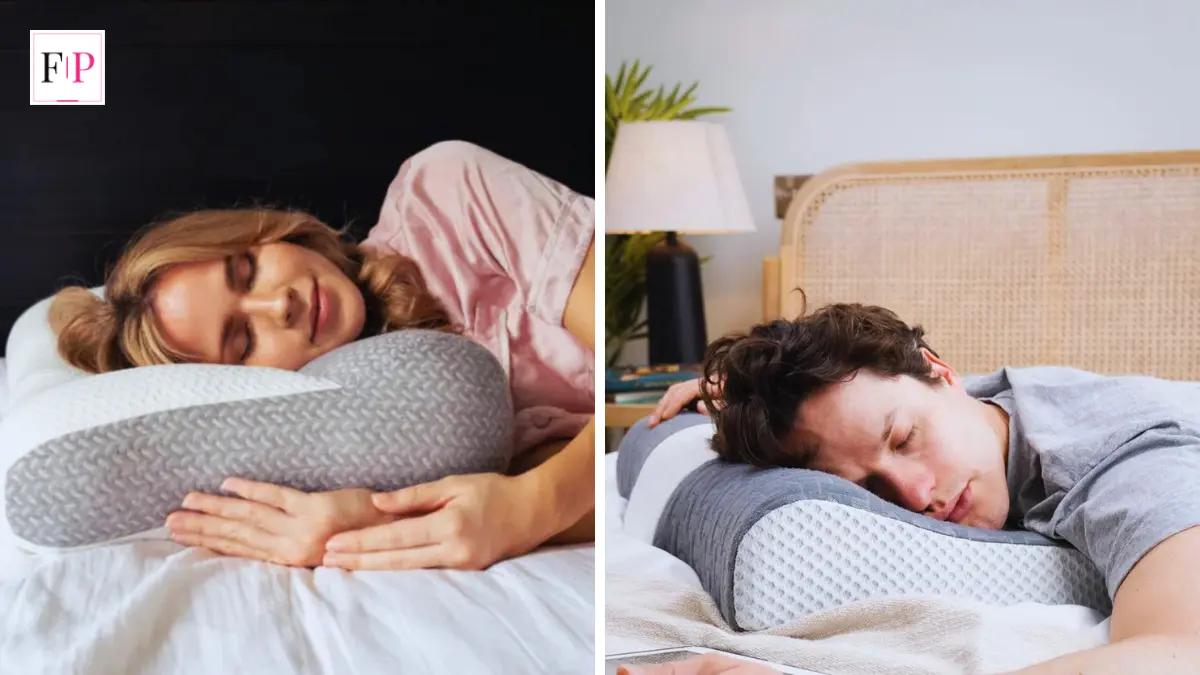
An ergonomic pillow is built to do one job well: keep your head, neck, and spine in a neutral line while you sleep. Most standard pillows are not. They flatten out, bunch up, or sit too high, forcing your neck into positions it was never meant to hold for eight hours straight. Over time, that mismatch shows up as morning stiffness, tension headaches, and neck pain that never quite goes away.
This guide breaks down what an ergonomic pillow actually is, how to pick the right height and material for your sleep position, and what the clinical research says about whether these pillows genuinely help. You will also find a quick comparison table, a step-by-step fitting process, guidance for specific sleep-related complaints, and answers to the questions people ask most often before buying one.
What Is an Ergonomic Pillow?
An ergonomic pillow is a pillow shaped and sized to support the natural curve of the cervical spine, keeping the head, neck, and shoulders aligned in every sleep position. Unlike a standard pillow, it usually has a contoured profile, adjustable loft, and firmer edge support, so the neck stays level with the spine instead of tilting up, down, or sideways overnight.
The goal is simple: reduce the muscle strain that builds up when the neck is held out of neutral for hours at a time. That is why ergonomic pillows are commonly recommended for people managing neck pain, tension headaches, or poor sleep quality tied to posture.
Why Pillow Ergonomics Matter
Neck pain is far more common than most people assume. Research by Cote and colleagues found that roughly half of Canadian adults report some degree of neck pain within any six-month period, and sleep posture is one of the few daily factors people can actually control.
Furthermore, the neck holds up the weight of the head — around 10 to 12 pounds — for eight hours a night. When a pillow does not match your body’s shape:
- The cervical spine loses its natural curve, straining the muscles that hold it in place.
- Pressure builds unevenly around the shoulders and base of the skull.
- Sleep quality drops, even if you do not fully wake up, because the body shifts constantly trying to find relief.
As a result, an ill-fitting pillow can quietly undo the benefits of an otherwise good mattress or sleep routine.
This matters even more for people who spend the day hunched over a laptop or phone. Hours of forward head posture already shorten and tighten the muscles at the front of the neck. Furthermore, sleeping on a pillow that keeps the neck in a similarly flexed position overnight gives those muscles no chance to reset, which is one reason “tech neck” symptoms often feel worse in the morning rather than better.
Signs Your Current Pillow Is Working Against You
You do not need a diagnosis to know something is off. Watch for these patterns:
- Waking up with a stiff or sore neck most mornings
- Tension headaches that start at the base of the skull
- Numbness or tingling in the arm after sleeping on your side
- Constantly flipping, fluffing, or folding your pillow during the night
- Your pillow looks visibly flat or lopsided within a year of buying it
- Neck pain that improves within an hour of waking up, then fades — a classic sign the pillow, not a structural issue, is the trigger
If two or more of these sound familiar, it is worth reassessing your pillow before anything else.
How to Choose an Ergonomic Pillow for Your Sleep Position
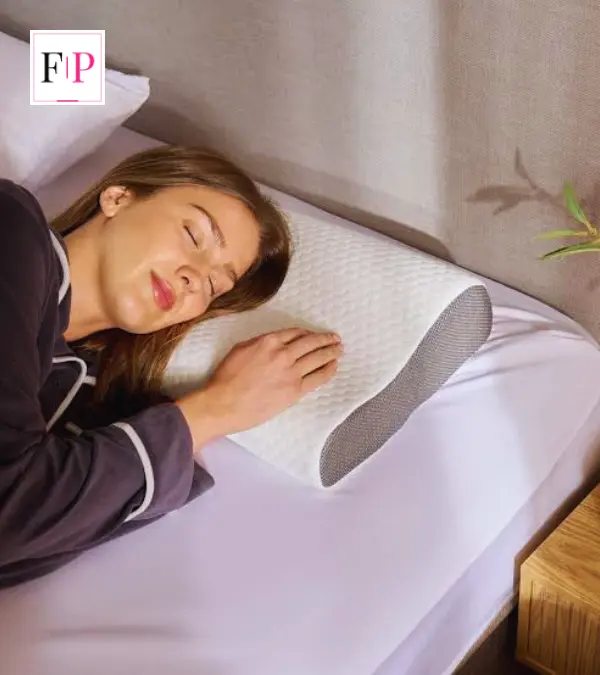
Height, or “loft,” matters more than most shoppers expect. Research summarized across multiple sleep and orthopedic sources points to a practical range: 7–9 cm (about 3 inches) for back sleepers and 8–11 cm (about 4 inches) for side sleepers, though exact needs vary with shoulder width and mattress firmness.
Here is how to match a pillow to your position:
- Back sleepers: Choose a contoured pillow with a lower center and slightly raised edges. This supports the neck’s natural curve without pushing the chin toward the chest.
- Side sleepers: Pick a firmer, higher-loft pillow that fills the full gap between your ear and shoulder, keeping your nose in line with the center of your body.
- Combination sleepers: Look for an adjustable-fill pillow so you can add or remove material as you shift positions through the night.
- Stomach sleepers: Use the thinnest, softest pillow you can find, or none at all — this position places the most strain on the neck regardless of pillow choice, so switching positions is worth considering.
- Everyone: Test firmness by pressing down with your forearm. If your hand touches the mattress underneath almost instantly, the pillow is too soft for nightly support.
Therefore, the “best” ergonomic pillow is not a single product — it is whichever loft and firmness keeps your neck level with your spine in the position you sleep in most.
It also helps to measure rather than guess. Lie on your side against a wall and have someone check whether your nose, sternum, and belly button line up in a straight vertical line. If your head tips down toward the mattress, the pillow is too flat; if your ear lifts noticeably above your shoulder, it is too tall. Repeating this quick check on your back, with your chin neither tucked nor pointed at the ceiling, gives you a practical, low-cost way to confirm fit before committing to a specific loft or firmness level.
Ergonomic Pillow Materials Compared
| Material | Support Level | Best For | Lifespan | Notes |
| Memory foam | High, contouring | Side and back sleepers | 2–3 years | Slow-response cushioning; can retain heat |
| Latex | High, responsive | Neck pain sufferers | 3–4 years | Bounces back quickly; naturally cooler than memory foam |
| Buckwheat hulls | Adjustable, firm | Custom firmness seekers | 3–5 years (refillable) | Contours without sinking; heavier and noisier |
| Water-based | Adjustable, dense | Chronic neck pain | 3–5 years | Water level can be tuned for firmness |
| Polyester fiber | Low, soft | Budget or stomach sleepers | Under 1 year | Flattens fastest; least ergonomic support |
However, the comparison research is consistent on one point: shape and height influence neck alignment more than material alone. Material affects comfort, temperature, and how long the pillow holds its shape — but a well-shaped polyester pillow at the wrong height still won’t outperform a correctly sized ergonomic design.
What the Research Actually Shows
The clinical picture on ergonomic pillows has strengthened in recent years, though it is not universally settled.
- A trial comparing ordinary, memory foam, and ergonomic pillows in patients with chronic neck pain found that only the ergonomic pillow group showed a statistically significant drop in pain levels, along with better sleep quality and faster time to fall asleep.
- A randomized controlled trial published in the Journal of Chiropractic Medicine tested an ergonomic latex pillow in people with cervical spondylosis and reported meaningful improvements in neck pain compared with a standard pillow.
- A separate randomized trial in Physical Therapy compared a spring-based cervical pillow with patient education alone for chronic nonspecific neck pain, also favoring the pillow group.
- A 2021 systematic review and meta-analysis in the Journal of Bodywork and Movement Therapies examined dozens of trials and concluded that pillow shape and height are the strongest predictors of better spinal alignment and reduced waking symptoms, even though the ideal loft range still needs more high-quality research to pin down precisely.
Meanwhile, earlier reviews from the mid-2000s were more skeptical, largely because the available studies at the time were small and low-quality. As a result, the fairest summary is this: the newer, better-designed research leans clearly in favor of ergonomic pillows for neck pain relief, while acknowledging that no single design works for every body.
Material-specific findings add useful detail. One comparative study measuring head pressure across pillow materials found that buckwheat-hull filling distributed pressure best while lying on the side, while memory foam performed best while lying on the back — a reminder that the “best” material can depend on which position you spend the most time in. Separately, a 2023 study on pillow-height adjustment found that fitting the loft correctly reduced not just neck pain but related symptoms like shoulder tightness and headaches, reinforcing that height is not a minor detail — it is one of the two or three variables that matter most.
Ergonomic Pillows for Specific Sleep Concerns
Different complaints call for slightly different priorities when shopping for an ergonomic pillow:
- Tech neck and desk-related stiffness: Look for a medium-loft contour pillow that supports the back of the neck specifically, helping counteract hours of forward head posture during the day.
- Shoulder pain from side sleeping: A taller, firmer pillow reduces the tendency to sleep with the arm tucked under the head, which can compress the shoulder joint overnight.
- Frequent tension headaches: Since these are often linked to neck muscle tension, a cervical-support pillow that keeps the neck level — rather than tilted — is generally the priority, alongside good daytime posture habits.
- Pregnancy-related discomfort: Side sleeping is typically recommended later in pregnancy, so a higher-loft pillow paired with a separate body or knee pillow can help maintain alignment through the hips and spine, not just the neck.
- Post-travel or occasional stiffness: Even people without chronic neck pain can benefit from an ergonomic pillow when recovering from long flights, car rides, or unusually strenuous physical activity.
However, persistent or worsening neck pain, numbness, or pain that radiates down the arm are signs worth discussing with a doctor or physical therapist rather than addressing with a pillow alone.
How to Break In and Sleep With a New Ergonomic Pillow
Switching pillows, especially to a firmer or more contoured one, can feel strange for the first few nights. Follow this process to adjust smoothly:
- Give it at least 7–10 nights before judging comfort — your neck muscles need time to adapt to a new resting position.
- Pair it with a supportive mattress. A pillow cannot compensate for a mattress that lets your shoulders sink too far.
- Keep your spine in mind, not just your head. Side sleepers may also benefit from a thin pillow between the knees to keep the hips level.
- Avoid stacking pillows. Two flat pillows rarely equal one properly contoured one, and stacking often pushes the neck into a worse angle.
- Reassess after three months. Even good pillows lose loft; if you are back to waking up stiff, it may be time to fluff, refill, or replace.
Common Mistakes People Make
- Buying based on softness alone. A pillow that feels plush in the store can compress flat within hours, offering no real support by 3 a.m.
- Ignoring shoulder width. Broader shoulders on side sleepers usually need a taller pillow to keep the neck level.
- Sticking with feather or down pillows for neck pain. These materials lack the structure needed to hold a consistent shape through the night.
- Skipping the mattress-pillow relationship. A firm mattress and a soft mattress change how much loft you actually need, so the two should be chosen together.
- Waiting too long to replace a flattened pillow. Most pillows lose meaningful support well before they look obviously worn out.
- Choosing purely by brand reputation or price. A high price does not guarantee the right loft or shape for your body; measuring your own needs matters more than the label.
- Assuming one pillow works for every position. Combination sleepers who shift positions through the night often do better with an adjustable-fill pillow than a fixed-shape one.
FAQ
What is the best ergonomic pillow for neck pain?
There is no single best option for everyone, but contoured latex and memory foam pillows have the strongest research support for chronic neck pain, provided the height matches your sleep position.
How long does an ergonomic pillow last?
Most memory foam and latex ergonomic pillows perform well for 2–4 years, while buckwheat and water-based pillows can last longer since their firmness is adjustable and refillable.
Can an ergonomic pillow fix neck pain on its own?
Not entirely. It can reduce strain caused by poor sleep posture, but neck pain linked to injury, arthritis, or nerve issues usually needs a broader treatment plan alongside better sleep support.
What pillow height is best for side sleepers?
Research generally points to roughly 8–11 cm (about 4 inches) of loft for side sleepers, enough to fill the gap between the ear and shoulder without tilting the head upward.
Are memory foam pillows better than regular pillows for neck support?
For most people, yes. Memory foam contours to the head and neck and holds its shape longer than standard polyester fiber pillows, which flatten quickly and offer little structural support.
Is it normal for a new ergonomic pillow to feel uncomfortable at first?
Some adjustment period is normal, especially if you are moving from a soft, flat pillow to a firmer contoured one. Most people adapt within one to two weeks.
Do I need a different ergonomic pillow for my mattress firmness?
Not necessarily a different pillow, but the loft you need can shift. On a firmer mattress, your shoulder sinks in less, so side sleepers usually need a slightly taller pillow to fill the extra gap; on a softer mattress, a shorter loft may feel more level.
Can children or teenagers use ergonomic pillows?
Most cervical-support pillows are designed and sized for adult proportions. Children and younger teens generally do better with a lower, softer pillow suited to their smaller frame, and a pediatrician or family doctor can advise on specific concerns.
Conclusion
Neck pain that starts overnight and eases during the day is one of the clearest signals that your pillow, not your posture at work or your mattress alone, deserves attention. An ergonomic pillow will not fix every source of neck discomfort, but the research is increasingly consistent: matching the right loft, shape, and material to your sleep position measurably reduces pain and improves sleep quality for many people.
Start with your sleep position, measure roughly what loft you need, and choose a material that fits your comfort and budget from the comparison above. If you are ready to stop waking up stiff, the right ergonomic pillow is one of the simplest, most affordable upgrades you can make to your sleep setup shop ergonomic pillows to find one built for how you actually sleep.
You may also read: Fame Post
