


The government has launched a new campaign urging every household in Britain to prepare for emergencies — and its advice starts with storing three days of food, three litres of water per person per day, and a supply of cash. The "Be Ready" campaign, published on gov.uk on Thursday 22 October 2026, is the most direct appeal of its kind in years, and it frames household preparedness as a shared national duty rather than a hobby for the anxious.
The campaign's message is deliberately plain: emergencies happen, and when they do, the households that cope best are the ones that have thought ahead. Ministers have wrapped the advice in the language of modern security — hybrid warfare, cyber-attacks, flooding and wildfires — but the checklist itself is resolutely practical. It is about tins in the cupboard, water in a container, and cash in a drawer.
The full checklist, explained
The campaign asks households to put together a small stock of essentials, built up gradually rather than bought in a panic. The list is short and specific:
Three days of food. Enough non-perishable food to feed everyone in the household for three days. Think tins, packets, rice, pasta, cereal — the things you already eat, so nothing goes to waste.
Three litres of water per person per day — plus extra for cooking and washing. For a family of four, that is 36 litres for drinking alone over three days, before cooking and washing are factored in. It is the item on the list that adds up fastest, and the one most households will need to plan for rather than improvise.
A supply of cash. Notes and coins kept somewhere sensible at home, in case card payments and cash machines stop working.
A wind-up or battery-powered radio. So you can still get news and official advice if the power goes out and the phone runs flat.
A torch. For the same reason — power cuts do not wait for daylight.
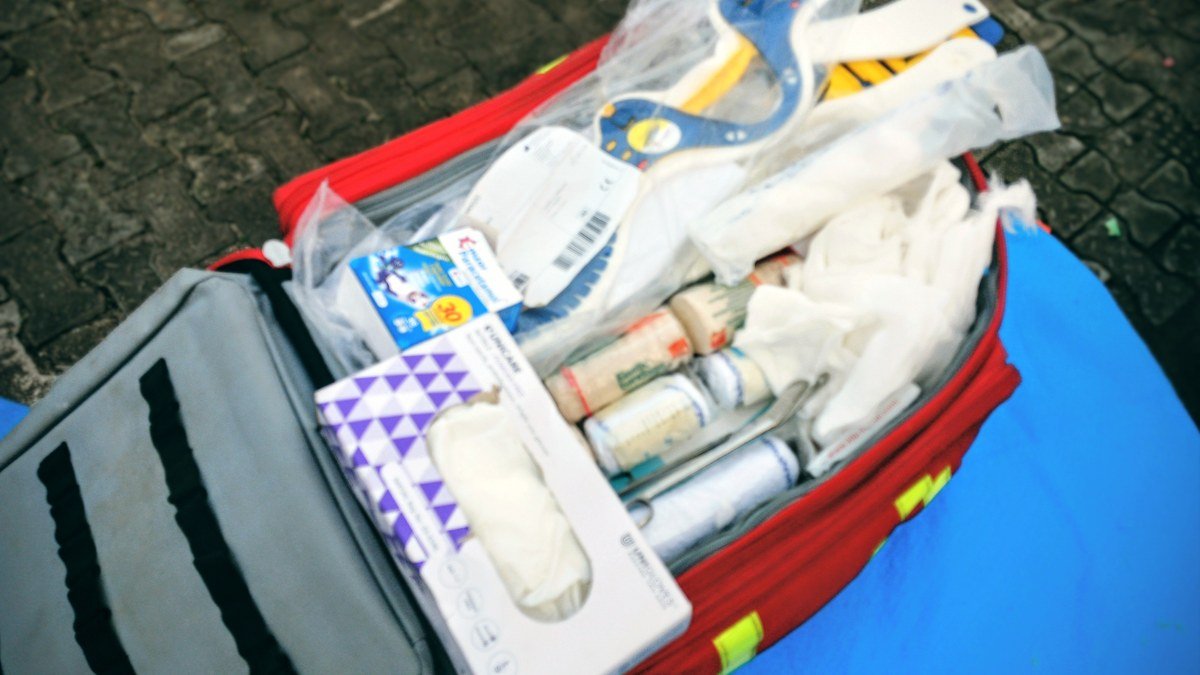
A first aid kit. The ordinary household kind: plasters, bandages, antiseptic, any essentials your family needs.
Blankets. Warmth if the heating fails.
The campaign's own advice is to build the kit up gradually — a few tins added to each weekly shop, a water container bought once and filled, batteries checked now and then — rather than treating it as a single emergency purchase.
Why now: the threats ministers named
The "Be Ready" campaign is framed around the threats the government says Britain faces in an age of hybrid warfare and "state-sponsored terrorism" — with Russia named in the coverage around the launch — alongside cyber-attacks, flooding and wildfires. The pitch is that disruption can arrive from many directions at once, and that households should be ready for the consequences whatever the cause.
Defence Secretary Wes Streeting gave the campaign its most vivid image: supermarket payment systems going down. He blamed the prospect on "hostile state actors or terrorists", and his message to the public was blunt: "everyone needs to do their bit". The scenario is not hard to picture — tills that will not take cards, cash machines out of action, and a weekly shop that cannot be paid for — and it is the reason cash sits so prominently on the checklist.
Security Minister Dan Jarvis struck a more measured note: "those who can follow this advice should follow this advice." It is a careful formulation, and a telling one. The campaign is advice, not instruction; nobody is being ordered to stockpile. But the expectation is clear enough: if you can prepare, you should.
Building a kit gradually, on a budget
The campaign's insistence on building supplies gradually is also its answer to the most obvious objection: cost. Few households will want to spend a large sum in one go on food they hope never to need, and nobody should have to.
The practical approach is to fold preparedness into the ordinary shop. Add a few extra tins or packets each week — soup, beans, tuna, rice — and choose things your household actually eats, so the stock rotates naturally and nothing expires on the shelf. Date the tins if it helps, and use the oldest first; a preparedness cupboard that never gets touched is a cupboard full of waste.
Water is the trickier item. Nine litres per person for three days of drinking is a lot of bottles, and the campaign asks for extra on top for cooking and washing. Dedicated water containers — the sturdy, sealable kind sold for camping — are a better bet than a forest of plastic bottles, and tap water stored properly keeps far longer than most people assume. Whatever you use, mark it, keep it cool and dark, and refresh it periodically.
Cash is the cheapest item on the list to arrange and the easiest to forget. The point is not a fortune under the mattress but a modest reserve of notes and small change, kept somewhere you will remember in a hurry. Streeting's scenario — the card machine that will not work — is the whole argument: cash is the backup payment system that never needs electricity.
A wind-up radio costs little and solves the information problem elegantly: no batteries to go flat, no mains to fail. If you prefer battery-powered, keep spare batteries with it and check them now and then; a radio with dead batteries is just a paperweight. The torch deserves the same treatment. Blankets, for most households, simply means keeping the spares you already own where you can find them in the dark. And a first aid kit is worth assembling even if you never face anything worse than a kitchen accident — which, to be fair, is the emergency most of us are actually likely to meet.
This advice is not as new as it sounds
There is nothing radical about keeping basics at home, and the campaign knows it. Anyone who has sat through a power cut, a storm, or a flooded street knows the value of a torch, a charged phone and a cupboard with something in it. What is new is the government's willingness to say so out loud, in plain terms, and to attach the advice to national security rather than bad weather.
That framing is the real story of the "Be Ready" launch. Preparedness advice has always existed in quiet corners of official guidance; putting it on gov.uk with the Defence Secretary's name attached, and talking about hostile states and payment systems, moves it from the margins to the mainstream. The government is asking the public to think about resilience the way it thinks about it: as something that starts at home.
The reaction — and what happens next
Campaigns like this one live or die on whether anyone acts. The honest obstacles are familiar: money is tight, cupboards are small, and most people assume that someone else — the council, the power company, the government — will sort things out. The campaign's answer to all three is the same word: gradually. Nobody is being asked to become self-sufficient overnight, only to be a little less dependent than they were last week.
There will be sceptics, of course. Some will hear "hostile state actors" and reach for the eye-roll rather than the shopping list; others will already have most of the checklist in a kitchen drawer without ever calling it preparedness. Both reactions miss the campaign's actual point, which is refreshingly unglamorous. This is not about bunkers or survivalism. It is about three days of food, some water, a bit of cash, a radio, a torch, a first aid kit and a blanket — the difference, when something goes wrong, between coping and not coping.
The government has made its ask. What happens now is up to the country's cupboards.
If the campaign works, its success will be invisible — a power cut that is merely inconvenient, a flooded road that does not become a crisis, a card machine failure that is solved with a few notes from a drawer. Preparedness, done properly, is the emergency that never quite happens. That is a hard thing to sell, which is perhaps why it has taken a Defence Secretary talking about hostile states to get the country thinking about its tins.
