


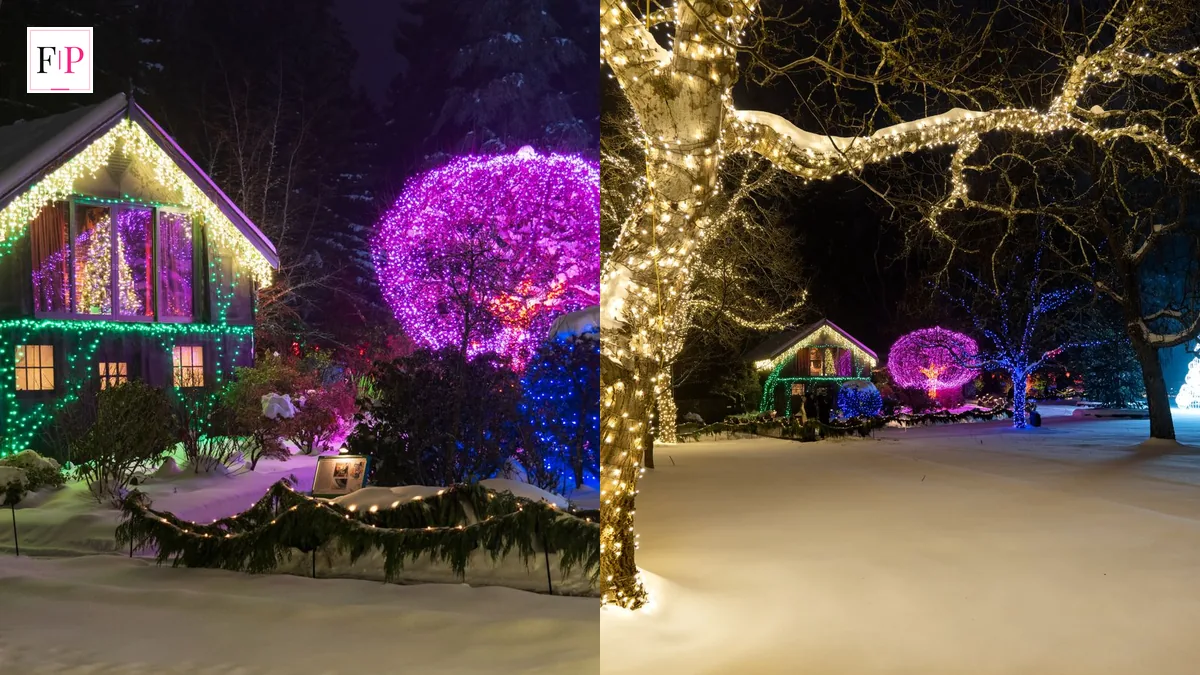
Outdoor Christmas lights turn the darkest weeks of the year into something genuinely magical, whether you are wandering through a grand illuminated trail or switching on your own display at home this winter.
Every November, gardens, stately homes and high streets across the United Kingdom glow with colour, and millions of families plan an evening around them. The best displays sell out fast, so knowing the dates before you book matters.
This guide brings both sides of the season together. You will find the best light trails to visit in 2026, with verified dates, plus a practical buying guide for your own home, covering the main types of lights, what IP ratings mean and how to hang everything safely.
We also cover the safety rules that keep a festive display from becoming a hazard, from IP ratings to RCD protection. Read on, and your Christmas will shine brighter and safer.
What are the best outdoor Christmas lights in the UK? The best outdoor Christmas lights in the UK for 2026 include Christmas at Kew in London, the illuminated trail at Blenheim Palace, Longleat Festival of Light, Christmas in the Garden at Chatsworth, Christmas at the Eden Project and RHS Glow at Wisley, most running from mid-November 2026 into early January 2027 with advance booking and after-dark opening.
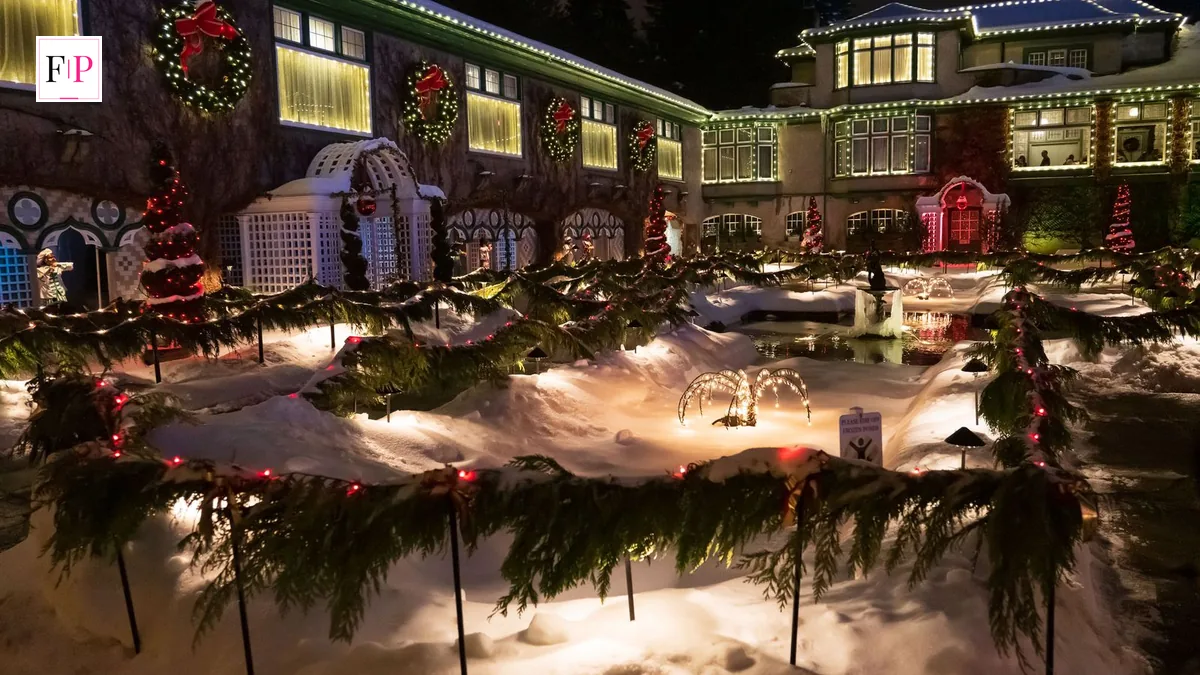
The Best Outdoor Christmas Light Displays to Visit in 2026
Britain does festive light trails better than almost anywhere else in Europe. The biggest events combine art, music and landscape, and they now run for weeks rather than a single switch-on night.
Every display below has had its 2026 dates checked against its official website. Dates and times can still change, so always confirm on the venue’s own page before you travel.
Christmas at Kew, London, runs on selected dates from 13 November 2026 to 3 January 2027, with tickets from £25.50 and advance booking essential. The trail opens from 4.20pm, and the gardens stay open until 10pm on most evenings.
Kew is the most famous of all the UK light trails, and for good reason. The route winds past the illuminated Palm House and its fountain, through tunnels of light and past brand-new installations created for 2026.
New for this year are adult-only evenings on 3 and 9 December. Allow around two hours to walk the full trail, and dress warmly, because much of the route is outdoors.
Christmas at Blenheim Palace, Oxfordshire, runs from 13 November 2026 to 3 January 2027. The illuminated trail through the gardens features more than a million lights, and this year’s theme inside the palace is Cinderella.
The Great Court also hosts a Christmas market, and there is an ice rink on site, so book a timed slot and allow a full evening.
Longleat Festival of Light, Wiltshire, runs from 7 November 2026 to 17 January 2027. This year’s theme is Legendary Worlds, with more than 1,000 lanterns across the park, including scenes inspired by Atlantis and Norse myth.
Longleat is one of the earliest trails to open, which makes it a good pick before the December crowds arrive, and the Enchanted Christmas Tree Show and Santa Train return for 2026.
Christmas in the Garden at Chatsworth, Derbyshire, runs from 7 November 2026 to 3 January 2027. The light and sound trail is around two kilometres long and takes between 45 and 60 minutes to walk.
This year’s theme is The 12 Days of Christmas, and the trail ends with an animated light show projected onto the house, with a Christmas market alongside until 13 December.
Christmas at the Eden Project, Cornwall, runs on selected dates from 20 November 2026 to 2 January 2027. The Biomes and gardens glow with light and sound, and the ice rink and carousel add to the atmosphere.
New for 2026 is Helios, a seven-metre illuminated Sun by artist Luke Jerram, suspended inside the Mediterranean Biome. Eden closes on Christmas Day.
RHS Glow at Wisley, Surrey, runs on selected dates from 20 November 2026 to 3 January 2027. The trail runs from 4pm to 9pm, with last entry at 7.30pm, and it even opens on Christmas Eve.
Wisley is one of the best-value trails in the south east, with an enhanced route and new displays for 2026, so book ahead because weekend slots sell out quickly.
Types of Outdoor Christmas Lights Explained
Choosing outdoor Christmas lights starts with knowing the main types, because each one suits a different part of your home. A string that looks perfect on a tree may be wrong for a roofline.
Fairy lights are the classic choice. They are small LEDs on a thin wire, and they work beautifully wrapped around trees, shrubs, banisters and fences.
Icicle lights hang in uneven drops from rooflines, gutters and porch edges. They create the look of frozen drips, and they are one of the most popular styles for the front of a house.
Net lights are grids of lights that drape neatly over bushes and hedges. They give even coverage in minutes, which makes them ideal if you hate untangling strings.
Curtain lights fall in straight vertical strands, usually from a window frame or a wall. They turn a plain window into a glowing panel that can be seen from the street.
Projector lights beam patterns, such as snowflakes or stars, onto a wall or the front of your house. They cover a large area with almost no installation, which suits renters and anyone who dislikes ladders.
Solar lights charge from a small panel during the day and switch on automatically at dusk. They are perfect for gardens with no outdoor socket, though they shine less brightly on short, cloudy December days.
Rope lights are LEDs sealed inside a flexible plastic tube. They are tough, weather resistant and brilliant for outlining paths, driveways and rooflines.
| Type | Best for | Power | Typical price band |
|---|---|---|---|
| Fairy lights | Trees, shrubs and fences | Mains, battery or solar | £10–£30 |
| Icicle lights | Rooflines and gutters | Mains | £15–£40 |
| Net lights | Bushes and hedges | Mains | £15–£35 |
| Curtain lights | Windows and walls | Mains | £15–£40 |
| Projector lights | Whole house fronts | Mains | £20–£50 |
| Solar lights | Gardens with no socket | Solar | £10–£30 |
| Rope lights | Paths and rooflines | Mains | £15–£40 |
Price bands above are broad guides for a standard set, not quotes for a specific product, so compare sets of the same length before you buy.
How to Choose Outdoor Christmas Lights for Your Home
Start by measuring, not shopping. Measure your roofline, doorway, fence or tree, and note how far the nearest socket is from where the lights will hang.
Check two lengths on the box: the lit length and the lead cable back to the plug. A ten-metre string is no help if its lead falls a metre short of the socket.
Choose LED every time, because LED outdoor Christmas lights use far less electricity than old filament bulbs, stay cool to the touch and last for many seasons. Electrical Safety First notes that LED Christmas lights use 80 to 90 per cent less electricity than traditional filament bulbs.
Pick one colour temperature for the whole front of your house. Warm white, around 2700K, gives a soft golden glow that suits most British homes.
Cool white looks crisp and modern but can feel harsh on brick, while multicolour suits a playful family display and a single colour looks calmer.
Think about how the lights are controlled. A built-in timer that switches the display on at dusk and off after six or eight hours saves electricity and means you never forget to turn them off.
Remote controls and smart plugs add convenience, especially for lights on a high roofline. Some sets offer twinkle, fade and chase modes, though a steady glow usually looks classier than constant flashing.
Buy from a reputable retailer and look for the UKCA or CE mark. Avoid suspiciously cheap sets from unknown sellers, and never buy second-hand lights with damaged cables.
Finally, decide your budget first. A single tree and a doorway can look wonderful for £20 to £30, while a full-house display can run into hundreds of pounds.
How to Hang Outdoor Christmas Lights Safely
Putting up outdoor Christmas lights involves ladders, electricity and wet weather, so a little planning keeps the job safe and stress free.
Work in daylight on a dry, calm day, and test the lights on the ground before you climb a ladder.
- Inspect every set before you hang it. Look for cracked bulbs, frayed cables, scorch marks or damaged plugs, and throw away any set that looks worn.
- Plan the route from the socket. Decide where each string starts and ends, and make sure cables do not cross paths or doorways where someone could trip.
- Use proper clips, never nails or staples. Plastic gutter clips and adhesive hooks hold cables firmly without piercing them, which keeps the wiring safe and your paintwork intact.
- Work with a helper on the ladder. Ask someone to steady the ladder, pass lights up to you and keep the ground clear, and never climb in wind or rain.
- Keep plugs and transformers dry. Plug lights in indoors where possible, or use a weatherproof outdoor socket, and keep every connection off the ground and out of puddles.
- Do not overload sockets. Check the maximum number of strings the maker allows you to join together, and never plug extension leads into other extension leads.
- Step back and check at dusk. Walk to the pavement and look at your display as a passer-by would, then adjust any sagging sections while there is still light.
- Set a timer and switch off at night. Use a timer so the lights go off when you go to bed, which saves energy and reduces any fire risk while you sleep.
Keep lights away from overhead power lines at all times. If a cable or branch is anywhere near a power line, stop and call in a professional rather than risking a shock.
When January comes, take the lights down promptly and store them loosely coiled in a dry box. Tangled, damp storage is the reason so many sets fail the following year.
Outdoor Christmas Lights Safety: IP Ratings, RCDs and the Rules That Matter
Safety is the least glamorous part of Christmas decorating, and the most important, because electricity and rain are a dangerous mix.
An IP rating, or Ingress Protection rating, is a two-digit code that shows how well an electrical product resists dust and water. The first digit covers solid objects and dust, and the second covers water.
For outdoor Christmas lights, IP44 is the minimum to look for. It means the lights resist splashes of water from any direction, which is enough for normal British winter weather.
IP65 offers stronger protection against jets of water, and it is a good choice for lights that will sit in an exposed spot. IP20, by contrast, has no water protection at all and must never be used outside.
Check the rating of every part of the set, not just the string. A weatherproof string with an indoor-only transformer is still unsafe in the rain, so keep transformers indoors or inside a rated enclosure.
Always connect outdoor Christmas lights through a 30mA RCD-protected socket. An RCD, or residual current device, cuts the power in a fraction of a second if electricity leaks, for example through water or a damaged cable.
Electrical Safety First advises that all outdoor lights are connected through an RCD-protected socket, and that indoor lights are never used outside unless they are specifically designed for outdoor use. If your RCD keeps tripping, find the fault rather than moving the lights to an unprotected socket.
Never use indoor lights outdoors, even for one night. Indoor sets are not sealed against rain, and a single damp evening can damage them or create a shock risk.
Switch all lights off when you leave the house or go to bed. A timer does this automatically, and it also keeps your electricity bill down through December.
If you put up a large display every year, consider asking a qualified electrician to fit a proper weatherproof outdoor socket. It is the safest long-term solution, and it removes the need to trail extension leads through windows.
How Much Do Outdoor Christmas Lights Cost to Run?
Running costs worry many households, but modern LED outdoor Christmas lights are surprisingly cheap to run. A typical set of 100 LEDs uses only a few watts, which costs pennies per evening.
Because LEDs use 80 to 90 per cent less electricity than old filament bulbs, swapping an old set for LEDs can cut the running cost dramatically. The savings grow with every extra string you add.
A timer is the easiest way to control the bill. Running lights from dusk until around 10pm, rather than all night, gives you the full festive effect for roughly half the electricity.
Solar lights cost nothing to run at all, since they charge from daylight. They are best for small garden features, because their brightness fades on the shortest, cloudiest days of December.
The real cost of a display is usually the purchase price, not the electricity, so budget for good-quality sets that last several years.
Planning Your Visit: Booking, Timing and Money-Saving Tips
Most of the big light trails now use timed tickets, and the best dates sell out weeks ahead. Book as early as you can, especially for Fridays, Saturdays and the week before Christmas.
Weekday evenings are usually quieter and cheaper than weekends. If you can visit on a Tuesday or Wednesday, you will enjoy shorter queues and a calmer atmosphere.
Arrive just before dusk, when the lights look their most dramatic in the first hour after sunset.
- Book direct through the venue’s official website, where tickets are genuine and refund terms are clear.
- Check what is included before you pay, because some tickets cover the trail only, while others include the house, market or ice rink.
- Dress for the weather with warm coats, hats, gloves and waterproof shoes, since most trails are fully outdoors.
- Plan food and drink in advance, as trail cafes get busy, and some venues allow you to book a festive meal nearby.
- Take the train where you can, because parking at popular trails is limited and often needs to be booked separately.
If you are visiting a Christmas market on the same trip, our guide to the best Christmas markets in the UK will help you plan the day. Markets pair perfectly with an evening light trail.
And if the cold makes you reach for something cosy, our Christmas jumper guide has styling ideas for the season. A warm jumper and a glowing trail are a classic British December evening.
Conclusion: Light Up Your Christmas in 2026
Outdoor Christmas lights are the simplest way to make the season feel special, whether you are walking a world-class trail or lighting up your own front garden. The displays above offer something for every budget and every part of the country.
Start with one trail, book it early, and enjoy the evening without rushing, then bring a little of that magic home with LED lights fitted safely and switched off on a timer.
Which display will you visit first? Tell us your favourite in the comments, share this guide with someone who loves Christmas, and check the official venue pages for the latest times and ticket availability before you travel.
When do outdoor Christmas lights go on in the UK in 2026?
Most major UK light trails open in mid-November 2026. Christmas at Kew and Blenheim Palace open on 13 November, Chatsworth and Longleat open on 7 November, and the Eden Project and RHS Glow at Wisley open on 20 November. Most run into early January 2027.
What IP rating do outdoor Christmas lights need?
Outdoor Christmas lights should be rated IP44 or higher. IP44 protects against splashes of water, which suits normal British winter weather. Check the rating of the string, connectors and transformer separately, because an outdoor-rated string does not make an indoor transformer safe outside.
Are LED outdoor Christmas lights better than traditional bulbs?
Yes. LED outdoor Christmas lights use 80 to 90 per cent less electricity than old filament bulbs, stay cool to the touch and last much longer. They are safer, cheaper to run and the best choice for any display that stays up for weeks.
Can I use indoor Christmas lights outside?
No. Indoor lights are not sealed against rain and must never be used outdoors unless the maker specifically marks that exact set for outdoor use. Always buy lights labelled for outdoor use and connect them through a 30mA RCD-protected socket.
Do I need to book Christmas light trails in advance?
Yes, almost all major UK Christmas light trails require advance booking with timed entry. Popular dates, especially weekends and the week before Christmas, sell out weeks ahead, so book direct through the venue’s official website as early as possible.
How much do outdoor Christmas lights cost to run?
Modern LED outdoor Christmas lights are cheap to run, with a typical set of 100 LEDs using only a few watts and costing pennies per evening. Using a timer to switch lights off around 10pm keeps costs even lower, and solar lights cost nothing to run at all.
