


Last Updated: 9 November 2026
A log burner fan could be the smartest £30 you spend on your home this winter. It sits on top of your wood-burning stove, needs no plug, no batteries and no wiring, and quietly pushes warm air into the corners of the room that your stove alone never seems to reach.
Searches for the gadget have surged this week as cold weather closes in across the UK. With frosty mornings forecast and households looking for cheaper ways to stay warm, thousands of stove owners are asking the same question: does this little fan actually work?
The short answer is yes — with one important caveat. A log burner fan cannot make your stove produce more heat than the wood you burn. What it can do is move the heat you already have much further, so your living room warms up faster and feels evenly cosy instead of roasting near the stove and chilly by the sofa.
In this guide, we explain exactly how a log burner fan works, what it costs in the UK, how to choose the right one for your stove, and the safety rules you need to follow. We have also checked the latest cold snap forecast, so you can decide whether now is the right time to buy one.
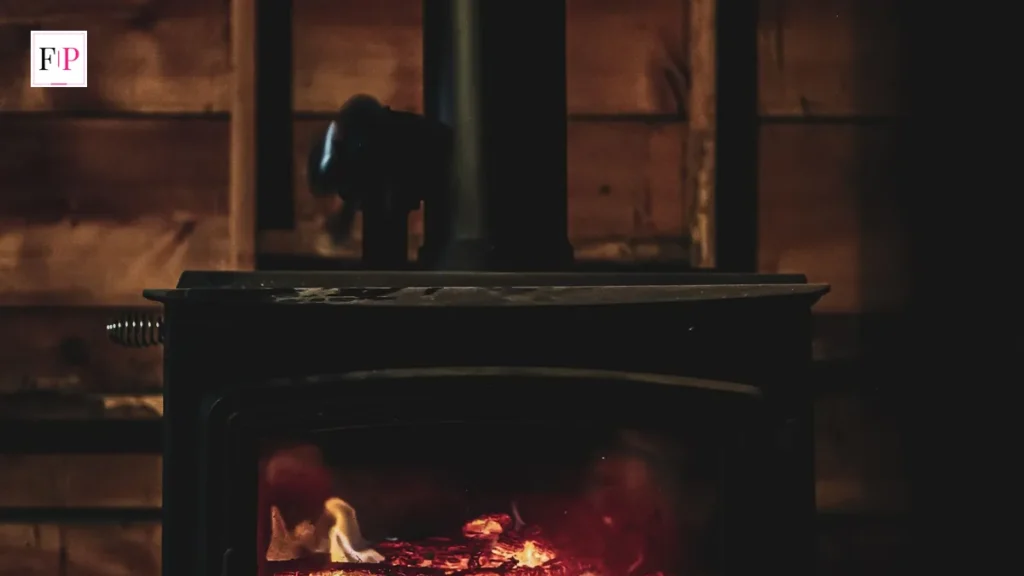
What is a log burner fan? A log burner fan is a heat-powered fan that sits on top of a wood-burning stove and circulates warm air around the room without using electricity. A thermoelectric module inside the fan converts heat from the stove surface into a small electric current, which spins the blades and pushes warm air outwards into the room.
What Is a Log Burner Fan?
A log burner fan, also called a stove fan, wood burner fan or heat-powered stove fan, is a freestanding device designed to sit directly on top of your wood-burning or multi-fuel stove. Its only job is to distribute the heat your stove produces more evenly throughout your living space.
Without a fan, most of the hot air from a stove rises straight up to the ceiling. It then drifts slowly down the walls, which leaves a familiar pattern in many British living rooms: baking hot beside the stove, and stubbornly cold at the far end of the room. A log burner fan interrupts that pattern by catching the warm air above the stove and projecting it sideways, across the room, where you actually sit.
Most fans on sale in the UK today are thermoelectric, but a small number of premium models use a Stirling engine instead. A Stirling fan moves its blades by harnessing the expansion of heated gas inside a sealed chamber, rather than by generating electricity. Both designs do the same job, and both run on heat alone, but thermoelectric models are far more common and considerably cheaper.
How Does a Log Burner Fan Work?
A log burner fan works through a neat piece of physics called the Seebeck effect. Inside the base of the fan sits a thermoelectric module, often called a Peltier module. When one side of this module is hot and the other side is cool, the temperature difference generates a small electric voltage. That voltage powers a tiny motor, and the motor spins the blades.
The process runs in three simple stages. First, heat from the stove warms the base of the fan as it sits on the hot stove top. Second, the Peltier module turns the difference in temperature between the hot base and the cooler top of the fan — where aluminium cooling fins release heat into the room — into electrical energy. Third, that energy drives the motor, and the spinning blades push warm air out into the room.
The hotter your stove burns, the faster the blades turn. Most fans start working when the stove surface reaches around 50°C, and they operate most effectively between roughly 80°C and 250°C. A well-burning stove running at 250°C to 300°C will push a good-quality log burner fan close to its maximum speed, while a stove that has only just been lit and is barely at 100°C will produce little more than a lazy turn.
For a clear, plain-English explanation of the same science, Direct Stoves has a helpful guide to the benefits of using a log burner fan — and it reaches the same conclusion: the fan improves circulation and comfort, but it never adds heat of its own.
Why Everyone Is Searching for a Log Burner Fan This Week
Interest in the log burner fan has spiked sharply in November 2026. Searches for “log burner” have risen by more than 1,000% in the UK over the past day, with over 2,000 searches recorded, while searches for the cold snap weather forecast have topped 20,000 — up 500% — as households brace for a chilly spell.
The trigger is a cold snap moving in from the north. The Met Office expects temperatures to fall to around 2°C in some inland and higher areas on Monday morning, 9 November, with lows of 4°C to 5°C in Greater Manchester and Lancashire before daybreak. Further north, some forecasts point to temperatures as low as −3°C to −4°C in parts of Scotland around 11 to 13 November, with frost, ice and the chance of wintry showers.
It is worth keeping a sense of proportion. In a review published on 5 November, the Met Office pushed back against dramatic headlines about a nationwide big freeze, explaining that temperatures are expected to stay broadly close to the seasonal average, with overnight frost and fog rather than a prolonged severe cold spell. A colder outbreak later in November remains possible, the Met Office says, but its timing and reach are still uncertain.
Even so, the surge in searches tells its own story. Households with a stove are getting ready now — sweeping the chimney, ordering logs, and looking for cheap ways to squeeze more warmth from the fire they already light. A log burner fan fits that mood perfectly: it is a small, one-off purchase, it costs nothing to run, and it arrives in time for the coldest weeks of the year. For the latest forecast before you light up, check the Met Office directly, as model forecasts can shift from day to day.
There is also a money angle. With energy bills still high, many families are leaning harder on their wood burner as a second heat source this winter. Anything that helps the stove heat the whole room, rather than just the hearth, feels like money well spent. If the cold weather leaves you worried about bills, it is also worth checking whether you qualify for extra help — our guide to the Winter Fuel Payment 2026 eligibility rules explains who can claim and how much is available.
The Benefits of a Log Burner Fan
The main benefit of a log burner fan is simple: a warmer room, faster, from the same fire. Instead of heat pooling uselessly around the ceiling, the fan pushes it outwards at sitting height, so you feel the warmth sooner and more evenly. Owners often report that the far side of the room becomes comfortable noticeably earlier in the evening.
- Faster warm-up: Warm air reaches the seating area sooner, so the room feels cosy within minutes of the stove getting going rather than half an hour later.
- Fewer cold spots: By breaking up the layer of hot air near the ceiling, a log burner fan reduces the temperature gap between floor and ceiling and evens out chilly corners.
- No running costs: The fan generates its own power from stove heat, so there are no batteries to replace, no plug sockets to find and nothing added to your electricity bill.
- Less wood wasted: Because heat is used where you sit rather than lost to the ceiling, many households find they can keep the fire a little lower and still feel just as warm.
- Silent operation: Most models run very quietly — a soft whirr at most — so they will not disturb conversation, television or a sleeping child.
- Works in a power cut: With no mains connection, the fan keeps circulating warm air during an outage, which is exactly when a wood burner earns its keep.
- Dead simple to use: There are no settings to learn. Place the fan on the stove, light the fire, and it starts itself — then stops itself when the stove cools.
How to Choose the Right Log Burner Fan
Choosing a log burner fan is not complicated, but a few details separate a good buy from a disappointing one. Follow these steps before you order, and you will end up with a fan that suits your stove, your room and your budget.
- Measure your stove top. Check the flat area on top of your stove and the clearance above it. Most fans are around 20 centimetres tall, and you need enough headroom beneath the flue pipe or mantelpiece for the blades to spin freely.
- Match the blade size to your room. A two-blade fan suits a small snug or cabin; a four-blade model is the all-rounder for an average living room; a six-blade or double-fan model moves more air for larger, open-plan spaces.
- Check the starting temperature. Fans that start at around 50°C, such as the Valiant Premium IV, begin spinning earlier on a gentle fire. Models that need 85°C or more, like the Caframo Ecofan AirMax, suit hotter-running stoves.
- Check the maximum temperature. Most quality fans are rated to around 340°C to 345°C on the stove surface. Never buy a fan whose maximum rating is below the surface temperature your stove can reach.
- Think about noise. Look for models described as silent or quiet-running, and check reviews. A cheap fan with worn bearings can develop an irritating rattle after a season of use.
- Decide whether you want a thermometer. Some fans come with a magnetic stove thermometer, which helps you keep the stove in its efficient burning zone — hot enough to burn cleanly, but not so hot that you risk damage.
- Set your budget. Basic four-blade fans start at around £16 to £30, reliable mid-range models cost £30 to £75, and premium fans run from £85 to £150. Spending more usually buys quieter bearings, a lower start temperature and a longer life.
The table below compares the main types of log burner fan on sale in the UK, using manufacturer figures and current UK retail prices checked on 9 November 2026.
| Fan type | Best for | Typical start temperature | Typical UK price |
|---|---|---|---|
| Two-blade fan | Small rooms, cabins, narrowboats | Around 50–85°C | £16–£40 |
| Four-blade fan | Average living rooms up to about 20–25 m² | Around 50–65°C | £30–£75 |
| Six-blade fan | Larger rooms needing stronger airflow | Around 60–85°C | £40–£90 |
| Double-fan model | Open-plan spaces, very large rooms | Around 50°C | £60–£150 |
| Premium fan (e.g. Ecofan) | Quiet running and long life | Around 85–110°C | £85–£135 |
Log Burner Fan Safety: What HETAS Guidance Says
A log burner fan is a safe device when it is used correctly, but it sits on top of a very hot appliance — so the safety rules that apply to your stove apply to your fan as well. The key authority in the UK is HETAS, the official body recognised by the government for solid fuel heating, and its guidance sits alongside Building Regulations Approved Document J, which covers combustion appliances, hearths, clearances and ventilation.
The single most important safety device in any room with a stove is a carbon monoxide alarm, and it is not optional. Under Building Regulations, a carbon monoxide alarm must be fitted in the same room as any new or replacement solid fuel appliance. Carbon monoxide is colourless and odourless, and it is produced by incomplete combustion — a blocked flue, a faulty stove or poor ventilation can let it leak into your living space with fatal consequences.
Fit the alarm on the ceiling at least 300 millimetres from any wall, or on a wall between one and three metres from the stove, and never directly above the appliance. Test it regularly, change the batteries when needed, and replace the alarm itself at the end of its working life, as the sensor degrades over time. If the alarm ever sounds, open windows, leave the room, and do not relight the stove until a qualified engineer has checked it.
Ventilation matters just as much. A stove burns oxygen from the room, and starving it of air is one way carbon monoxide builds up. If your stove is rated above 5kW, you need a permanent air vent — typically 550 square millimetres for every kilowatt above 5kW. A 7kW stove, for example, needs a vent of around 1,100 square millimetres. Stoves of 5kW or less in an older home usually need no extra vent, but in a newer, airtight home you should expect to need one whatever the stove size.
Clearances are the other half of stove safety. Keep the stove and flue away from anything that can burn: timber, plasterboard, furniture and curtains. A single-wall stove pipe needs a gap of at least three times its diameter from combustible material — a 150 millimetre pipe needs 450 millimetres of clearance. The hearth beneath the stove must extend at least 300 millimetres in front of the stove door and 150 millimetres on either side. As a rule of thumb, keep furniture and decorations at least 800 millimetres from the stove body.
For the fan itself, follow a short set of rules. Never place a log burner fan on the flue pipe, which can run far hotter than the stove top and will damage the thermoelectric module. Never let the stove surface exceed the fan’s maximum rated temperature, usually around 340°C to 345°C — a magnetic stove thermometer helps you keep an eye on this. Never touch the blades or the base while the stove is lit, and always let the fan cool completely before you pick it up, clean it or store it away for summer. Keep children and pets from reaching the spinning blades, and never cover the fan or place anything on top of it.
Finally, have your stove installed and checked by a HETAS-registered installer, who can self-certify the work, carry out a smoke test and issue a certificate of compliance. Get the chimney swept at least once a year, and always burn dry, seasoned wood with a moisture content below 20%. Wet wood burns cooler, produces more smoke and tar, and leaves deposits in the flue that increase the risk of a chimney fire.
How Much Does a Log Burner Fan Cost in the UK?
A log burner fan is one of the cheapest upgrades you can buy for a wood-burning stove. Prices in the UK start at around £16 for a basic four-blade model from an online marketplace, climb to £30 to £75 for well-known mid-range fans, and reach £85 to £150 for premium models. At the very top end, specialist British-made fans such as the Viking Ember 360° sell for around £150, while some hand-finished models from Black Country Metalworks cost up to £204.
For most households, the sweet spot sits between £30 and £60. In that range you can buy a VonHaus four-blade fan for roughly £30 to £45, a Tomersun four-blade fan with a built-in thermometer for about £40 to £60, or the Valiant Premium IV with a magnetic stove thermometer for around £40 to £45 — it was listed at £44.99 at Debenhams and £39.99 on Amazon in checks carried out on 9 November 2026. These are proven, widely reviewed models that suit an ordinary living-room stove.
Premium buyers pay more for quieter bearings, lower start temperatures and longer life. The Caframo Ecofan 800 Original, the entry-level model in the Canadian-made Ecofan range, was listed at £84.99 on Amazon, while the larger Ecofan AirMax 812 — with a 232 millimetre blade, a start temperature of 85°C and a maximum of 345°C — was listed at £134.59 on the same day. Ecofan claims a working life of more than 10,000 hours for the AirMax, which helps explain the price gap over budget fans.
If a cold snap is on the way, remember that support exists for households struggling with heating costs. Our Cold Weather Payment postcode checker explains how the £25 payment is triggered when temperatures stay at or below freezing for seven days in a row in your area.
Conclusion: Is a Log Burner Fan Worth It?
This is the question every buyer asks, and the honest answer is: yes, within their limits. A log burner fan genuinely improves how heat spreads around a room, and most owners notice the difference on the first evening. But it cannot create heat, so anyone expecting a small fan to turn a struggling stove into a central heating system will be disappointed.
Avoid these common mistakes, and your fan will do its job properly. Do not place it on the flue pipe or directly in front of it. Do not push it hard against the back wall, where it cannot pull in cooler air. Do not expect it to heat an adjoining room through a doorway — it circulates air in the room it sits in. And do not buy the cheapest fan you can find and judge the whole idea by it; a poorly made fan with stiff bearings may spin slowly even on a hot stove.
The verdict from stove owners and heating experts is consistent: a log burner fan is a modest, well-proven accessory that makes a good stove better. It will not transform your heating, but for £30 to £60 it will make your living room warmer, faster, and more evenly — and on a frosty November evening, that is a difference you can feel from the sofa.
So, is a log burner fan worth it? If you already own a wood-burning stove and you spend your evenings in the room it heats, the answer is almost certainly yes. Buy a four-blade model from a recognised brand, place it on the back third of the stove top, and give it a few evenings to prove itself. Then sit back, keep the fire topped up, and enjoy a room that is warm all the way across — not just beside the stove. If you are still weighing it up, check the forecast, compare prices while stock is available, and order before the coldest weather arrives.
What is a log burner fan?
A log burner fan is a heat-powered fan that sits on top of a wood-burning stove and circulates warm air around the room without using electricity. A thermoelectric Peltier module inside the fan converts heat from the stove surface into a small electric current, which spins the blades and pushes warm air outwards at sitting height.
Do log burner fans really work?
Yes, within their limits. A log burner fan improves heat distribution, warms a room faster and reduces cold spots, but it cannot create extra heat. It moves the warmth your stove already produces, so it works best on a well-burning stove in a suitably sized room.
Where should I place a log burner fan on my stove?
Place the fan on the back third of the flat stove top, away from the flue pipe and away from the hottest spot. It needs cool air behind it to maintain the temperature difference that powers the motor, so leave space around it and never push it hard against a wall.
How much does a log burner fan cost in the UK?
Prices start at around £16 for a basic four-blade model, £30 to £75 for reliable mid-range fans such as VonHaus, Tomersun and Valiant, and £85 to £150 for premium models such as the Caframo Ecofan range. The fan costs nothing to run, so the purchase price is effectively the whole cost.
Is a log burner fan safe?
Yes, when used correctly. Never place it on the flue pipe, never exceed its maximum rated temperature of around 340°C to 345°C, and never touch the blades while the stove is hot. Always fit a carbon monoxide alarm in the same room as the stove, keep combustibles clear, and have the stove installed by a HETAS-registered installer.
Does a log burner fan need electricity or batteries?
No. Most log burner fans are thermoelectric and generate their own power from the heat of the stove, so they need no plug, batteries or wiring. They start automatically when the stove reaches around 50°C and stop by themselves when the stove cools down.
