


Last Updated: 18 November 2026
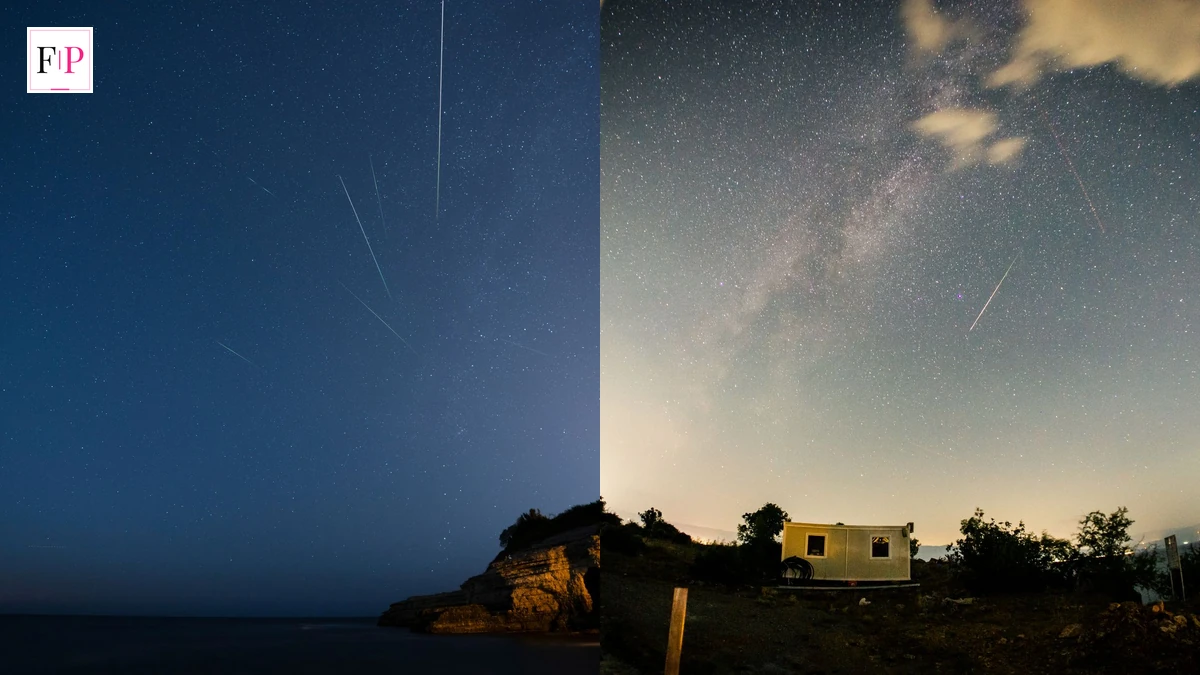
The leonid meteor showers reached their peak on the night of Tuesday 17 November into the early hours of Wednesday 18 November 2026, and for the sky watchers who stayed up past midnight, the year’s fastest shooting stars put on their brief annual show. The peak has now passed, but the leonid meteor showers are far from over: they remain active until Monday 30 November 2026, which means there are still twelve nights left to catch a stray Leonid streaking across a clear, dark sky.
This guide to the leonid meteor showers is both a recap of peak night and a practical guide to what is still visible. It covers when the peak fell, what causes the shower, why Leonid meteors are the fastest of any annual shower, the comet behind them, the famous storms of 1833 and 1966, and how to watch the remaining nights before the shower fades at the end of November.
When did the leonid meteor showers peak in 2026? The leonid meteor showers peaked on the night of Tuesday 17 November into Wednesday 18 November 2026, with the maximum at 23:45 UTC on 17 November. Observers could expect 10 to 15 meteors an hour under dark skies, and the shower stays active until 30 November.
What Happened on Peak Night: Tuesday 17 into Wednesday 18 November
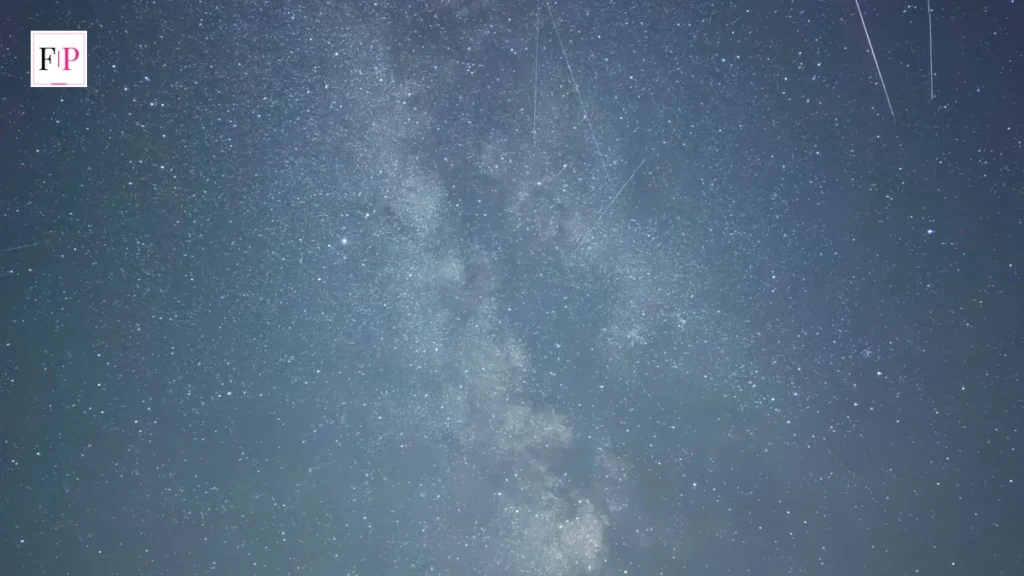
The peak of the leonid meteor showers fell on the night of Tuesday 17 November into the early hours of Wednesday 18 November 2026. The International Meteor Organization placed the regular maximum at 23:45 UTC on Tuesday 17 November, while other guides put the peak at around midnight UTC, at the turn into Wednesday 18 November. The two timings describe the same night, and the difference of a few hours is normal for a meteor shower forecast: the peak is a broad rise and fall in activity, not a single minute when the meteors switch on.
The hours that mattered most came after midnight. The constellation Leo, from which the meteors appear to stream, rose in the east late in the evening and climbed higher through the small hours, so the best viewing in the UK ran from about 1am until dawn twilight began at around 5.30am GMT on Wednesday 18 November. The Moon helped rather than hindered: it reached its first quarter phase at 11.48 UTC on Tuesday 17 November, so it was only about half lit, and in London it set at 23.29 GMT, just before midnight, leaving the rest of the peak night dark.
Cloud was the real obstacle on peak night. Ahead of the peak, BBC Weather gave the best chances of clear skies to the far north of Scotland, including Orkney and Shetland, where cloud was expected to be well broken. Parts of Northern Ireland, Wales, the Midlands and southern England were forecast clear spells at times, but with periods of cloudier weather and some splashes of rain. The peak night rewarded patience and a willingness to wait for a gap in the cloud, and a short clear spell between 3am and 5am could still have delivered a sighting.
By mid-morning on Wednesday 18 November, no UK-wide tally of peak-night sightings had been published, and no single official count of how many meteors were seen from Britain was available. That is normal for a modest shower: there is no central count to report, and sightings reach the public through individual photographs and reports shared online over the following days. Royal Museums Greenwich had invited sky watchers to share their pictures of the shower.
What is certain is that the peak of the leonid meteor showers was a modest one. Forecasters expected 10 to 15 meteors an hour under dark skies, and most viewers in towns and cities would have seen fewer. Nobody expected a storm in 2026, and none was reported: the night was a quiet, classic Leonid peak, a handful of very fast, bright meteors an hour for those with a dark sky and a clear view.
What Are the Leonid Meteor Showers?
A meteor shower is a display of shooting stars that happens when the Earth passes through a trail of dust and small rock left behind in space by a comet. The tiny grains, most of them no bigger than a grain of sand, hit the top of the atmosphere at enormous speed and burn up, producing a brief streak of light. A single streak is a meteor. When dozens of them appear to come from the same part of the sky over several nights, that is a meteor shower.
The leonid meteor showers take their name from the constellation Leo, the Lion. If you trace the path of each meteor backwards across the sky, the streaks all seem to start from the same patch of sky inside Leo, near a pattern of stars known as the Sickle and close to the bright star Regulus. That patch is called the radiant. The meteors do not really come from Leo itself: they are travelling on almost parallel paths, and the radiant is simply the effect of perspective, in the same way that parallel railway lines seem to meet at a point in the distance.
The leonid meteor showers are annual, returning every November as the Earth crosses the same trail of comet dust. In 2026 it was active from Friday 6 November to Monday 30 November, with activity building slowly towards the peak on 17 November and then fading night by night. The nights around the peak are always the best, but a Leonid can appear on any night inside that window, which is why the shower is worth watching for the rest of November even now that the peak has passed.
Why the Leonids Are the Fastest Meteors in the Sky
The single most remarkable fact about the leonid meteor showers is their speed. Leonid meteors enter the atmosphere at about 71 kilometres per second, which is roughly 44 miles per second or about 158,000 miles per hour. That makes them the fastest meteors of any annual shower, and Guinness World Records lists the Leonids as the fastest annual meteor shower for exactly that reason. At that speed, a meteor covers 100 kilometres in under a second and a half.
The reason is a head-on collision. The parent comet travels around the Sun in the opposite direction to the planets, on an orbit tilted at about 162 degrees, so its dust meets the Earth almost head-on. The Earth moves along its orbit at about 30 kilometres per second, and a grain of comet dust moves at about 41 kilometres per second in nearly the opposite direction. Add the two speeds together and you arrive at about 71 kilometres per second. A Leonid is, in effect, a grain of dust and a planet running into each other.
That speed is also why Leonids look so bright. A grain of dust only 1 millimetre to 1 centimetre across, about the size of a grain of sand or a small pebble, burns up some 80 to 120 kilometres above the ground, and the fierce heat of its passage through the air makes it glow. Brighter Leonids often leave a glowing train behind them, a faint trail that can hang in the sky for a second or two after the meteor itself has gone. The leonid meteor showers are known for these persistent trains, and for occasional fireballs bright enough to outshine the brightest stars.
Comet Tempel-Tuttle: The Comet Behind the Shower
Every Leonid is a grain of dust shed by Comet 55P/Tempel-Tuttle. The comet was discovered independently by two astronomers: Wilhelm Tempel in December 1865 and Horace Tuttle in January 1866, which is why it carries both of their names. Its nucleus, the solid heart of the comet, is about 3.6 kilometres across, roughly 2.24 miles, and every time it passes close to the Sun it sheds dust and gas, leaving a trail of debris along its orbit.
Tempel-Tuttle takes about 33 years to complete one orbit of the Sun. It last passed through perihelion, its closest point to the Sun, in 1998, and it is not expected back in the Sun’s vicinity until around 2031. That long orbit is the key to the whole story of the leonid meteor showers: the Earth crosses the comet’s dusty trail every November, but the trail is thickest and freshest in the years around the comet’s return, and thin and widely scattered when the comet is far away, as it is now.
There is a longer-term reason to remember the comet’s timetable. The next return of Tempel-Tuttle, in the early 2030s, is when the leonid meteor showers may grow livelier again, and some forecasts point to the years 2033 and 2034 as the next possible storm period.
The Leonids’ Stormy History: 1833, 1966 and the Storm Years
To understand why the Leonids are so famous, you have to look back to the nights when they stopped being a shower and became a storm. A meteor storm is officially defined as a display producing at least 1,000 meteors an hour, and the Leonids have produced some of the greatest storms ever recorded.
The most famous of all came in November 1833. That month, observers across North America watched the sky fall: witnesses reported more than 100,000 meteors an hour, so many that people woke thinking the world was ending. The 1833 storm was the event that turned meteors from weather into astronomy. It led scientists to recognise that meteor showers were annual, predictable events tied to the Earth’s orbit, and within a few decades the German astronomer Giovanni Schiaparelli had linked meteor showers to comets, with the Leonids tied to Tempel-Tuttle.
The greatest storm of the modern era came in 1966, when thousands of meteors a minute fell during a 15-minute period over the south-western United States. More recent storms followed in 1999, 2001 and 2002, the last storm year, when rates again passed 1,000 an hour. Each of those storms arrived in the years around the comet’s return, when the Earth crossed a dense, freshly laid strand of dust. The leonid meteor showers of 2026 sat at the opposite end of that history: with the comet far from the Sun and the dust trails thin, no storm was forecast and none happened.
How to See the Leonids Before 30 November
The peak may have passed, but the leonid meteor showers are still worth an evening outside. The shower stays active until Monday 30 November 2026, and the nights closest to the peak still offer the best remaining chances: the night after the peak brings about half as many meteors as the peak night itself, and the numbers fade night by night from there. A clear, dark sky matters far more now than the exact date, so a cloudless night on 20 November will beat a cloudy night on 18 November every time.
- Pick one of the next few nights. The nights of Wednesday 18 into Thursday 19 November and Thursday 19 into Friday 20 November are the best that remain. Later nights will be quieter, but a Leonid is still possible on any clear night before 30 November.
- Check the cloud forecast first. Cloud, not the Moon, is the biggest obstacle in a British November. Check the hour-by-hour cloud forecast for your area, and be ready to wait for a clear spell rather than giving up after ten minutes under cloud.
- Get away from street lights. Find a safe, wide open space away from street lights and other light pollution, where you can see as much of the sky as possible. The meteors can appear anywhere in the sky, so a spot with a clear view in every direction beats a narrow gap between buildings.
- Dress for a long, cold wait. November nights are cold, and meteor watching is a waiting game, so wear extra warm layers, bring a hot drink and take a reclining chair if you have one. Our guide to the cold snap and snow across the UK is a reminder of just how chilly the nights can get at this time of year.
- Let your eyes adjust. Give your eyes 20 to 30 minutes to adjust to the dark, and keep your phone in your pocket. A bright screen or a white torch undoes that adjustment in an instant, so use a red light if you need light at all.
- Lie back and look at the whole sky. You do not need binoculars or a telescope: the Leonids are a naked-eye sight. Lie back with your feet towards the east, look up at a wide sweep of sky, and do not stare only at Leo. Meteors near the radiant look short, while the longest streaks appear further away from it.
- Give it at least an hour. At 10 to 15 meteors an hour under a perfect sky, and fewer from anywhere with light pollution, a Leonid is a meteor every few minutes at best. Settle in, stay patient, and remember that the leonid meteor showers reward the watcher who stays out longest.
One warning applies to the later nights in particular. As the Moon grows from first quarter towards full, it stays up later and shines brighter, washing out the fainter meteors. By the time of the full Moon on 24 November, only the brightest meteors of the leonid meteor showers will stand out.
| Night | What to expect |
|---|---|
| Wednesday 18 into Thursday 19 November | Best remaining Leonid night, with about half as many meteors as the peak |
| Saturday 21 into Sunday 22 November | Alpha Monocerotid meteor shower peaks, but a bright waxing gibbous Moon washes out faint meteors |
| Tuesday 24 November | Full Beaver supermoon, the first of three supermoons, lights up the whole night |
| Sunday 29 into Monday 30 November | Last night of Leonid activity in 2026 |
What Is Still to Come in the November Night Sky
The leonid meteor showers are not the only event in a busy November sky. The same pre-dawn sky that holds the Leonids also holds a line-up of four planets: from 18 to 22 November, Mercury, Venus, Mars and Jupiter stretch across the morning sky before sunrise, and NASA’s November chart for 18 November shows the Leonid radiant in the east before sunrise, close to Jupiter and Mars. It is a good reason to look east in the small hours even on a night when the meteors are quiet.
The next big date is Tuesday 24 November, when the full Beaver Moon rises. It is a supermoon, a full Moon near its closest point to the Earth, so it looks slightly bigger and brighter than an average full Moon, and it is the first of three supermoons in a row spanning November, December and January. A day later, on Wednesday 25 November, Uranus reaches opposition, its closest point to the Earth for the year, and shines at its brightest, in front of the constellation Taurus near the Pleiades star cluster.
Then, in December, comes the year’s richest meteor shower. The Geminids peak on the nights of Sunday 13 and Monday 14 December 2026, and under ideal dark skies they can produce up to about 150 meteors an hour, roughly ten times the Leonid peak rate. If the leonid meteor showers left you wanting more, the Geminids are the shower to put in the diary.
How to Photograph the Leonids With Your Phone
A modern phone can catch a bright Leonid during the leonid meteor showers, but it needs help. Put the phone on a tripod, switch to the ultra-wide lens and night mode, and shoot lots of frames: a meteor crosses the sky in a fraction of a second, so most frames will show nothing at all, and the trick is to keep shooting until one catches a streak.
For a camera, the standard advice is a wide-angle lens of 14 to 24 millimetres with a fast aperture of f/2.8 or wider, a high ISO of 1600 to 3200, and long exposures of 15 to 25 seconds on a tripod. Whatever you use, keep your expectations honest: a phone or camera will miss most of what your eyes see, and the best photographs of the leonid meteor showers are usually the result of dozens of frames and a good deal of luck.
The leonid meteor showers of 2026 have given Britain a quiet, fast and beautiful peak, and the shower still has twelve nights left to run. Check the cloud, wrap up warm, find a dark sky and look up after midnight: the next streak could be only a few minutes away. If you were out on peak night, or if you catch a Leonid on one of the nights still to come, share your sighting in the comments below, and tell us where you watched from and how many meteors you counted.
When did the Leonid meteor showers peak in 2026?
The Leonid meteor showers peaked on the night of Tuesday 17 November into Wednesday 18 November 2026. The International Meteor Organization put the maximum at 23:45 UTC on 17 November, and other guides put the peak at around midnight UTC. The shower stays active until Monday 30 November 2026.
How many meteors per hour could you see during the Leonid meteor showers?
At the peak, observers could expect 10 to 15 meteors an hour under dark skies. Most viewers in towns and cities would have seen fewer, and NASA cautions that real-world counts are often as low as about three meteors an hour. From a good country sky, five to seven an hour was a realistic count.
What causes the Leonid meteor showers?
The Leonid meteor showers are caused by dust shed by Comet 55P/Tempel-Tuttle. Every November the Earth passes through the trail of dust the comet leaves along its orbit, and the tiny grains burn up in the atmosphere, producing shooting stars that appear to stream from the constellation Leo.
Can you still see the Leonid meteor showers after the peak?
Yes. The leonid meteor showers stay active until Monday 30 November 2026. The nights closest to the peak are the best that remain, and the night after the peak brings about half as many meteors as the peak night. Rates fade night by night, and the brightening Moon washes out fainter meteors later in the month.
Where should you look to see the Leonid meteor showers?
Look at the whole sky rather than staring only at Leo. The meteors appear to stream from the radiant in the constellation Leo, which rises in the east after midnight, but they can appear anywhere in the sky. Lie back, look up at a wide sweep of sky, and give your eyes 20 to 30 minutes to adjust to the dark.
When is the next big meteor shower after the Leonids?
The next big meteor shower after the Leonids is the Geminids, which peak on the nights of Sunday 13 and Monday 14 December 2026. Under ideal dark skies the Geminids can produce up to about 150 meteors an hour, and they are visible from mid-evening rather than only after midnight.
