


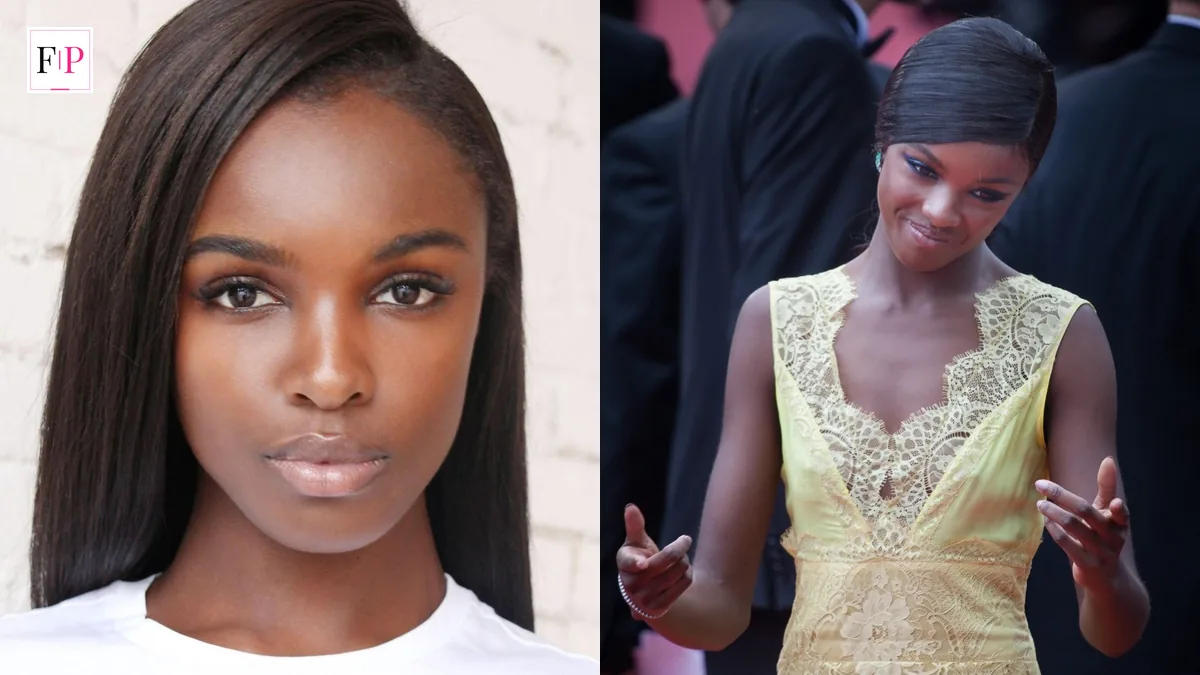
Leomie Anderson (https://en.wikipedia.org/wiki/Leomie_Anderson) is one of the most recognisable British models of her generation, a south Londoner whose career has taken her from a scouting at fourteen to the Victoria’s Secret runway, the face of a global beauty launch, and the front of her own purpose-driven fashion label. For readers in the United Kingdom who know her from the catwalk, from television, or from her outspoken advocacy, the story is about much more than a single famous show. It is about longevity in an industry that rarely offers it, and about a model who has used her platform to push for fairer treatment of the women working inside fashion.
Born in Wandsworth, London, in February 1993 and raised in south London, Leomie Anderson is of Jamaican heritage. She did not grow up planning to model. Her first ambition, by her own account, was to become a fashion journalist, and she was interested in writing about fashion long before she wore it for a living. That early instinct for words and ideas would later shape the second half of her career, when she built a platform of her own and began speaking publicly about the industry she worked in. The modelling opportunity arrived unexpectedly when she was scouted at fourteen in south London, and what followed was a steady climb rather than an overnight breakthrough.
This article sets out what can be said with confidence about her life and career: the early scouting, the Marc Jacobs debut, the years walking for the world’s biggest houses, the Victoria’s Secret milestone, the Fenty Beauty role, the LAPP label and platform, and her television work. Where the record is thin or disputed, this article says so plainly rather than filling the gap with guesswork.
From Wandsworth to the catwalk
Leomie Anderson grew up in Wandsworth, in south London, in a family of Jamaican heritage. South London has produced a remarkable run of British fashion talent, and her story fits that pattern: a young Londoner spotted close to home, then launched into an international industry before she had finished school. She was scouted at the age of fourteen, an age that now sits at the centre of many of the industry’s debates about the welfare of young models. Leomie Anderson herself has spoken in later years about how young models can struggle to speak up for themselves, and her own early start gives that argument a personal edge.
Initially, she wanted to become a fashion journalist rather than a model. That ambition matters because it explains the shape of her later career. Many models leave the industry’s conversation to others; Anderson, by contrast, has always been a writer and a talker as well as a wearer of clothes. She ran a personal blog in her early years, writing about her experiences as a young Black woman in modelling, and that habit of writing and speaking out became the foundation for LAPP, the platform and brand she would found in 2016.
Her professional career is generally dated to 2010, and her first major runway moment came early. At seventeen, she was booked for her first catwalk show by Marc Jacobs, and she went on to become one of the designer’s favourites. For a teenager from south London, that first booking was a statement of intent: she was not a one-season novelty but a model whom serious designers wanted to work with again and again. It also set the tone for the decade that followed, in which her name appeared on the cast lists of the most important shows in London, Paris, Milan and New York.
The Marc Jacobs breakthrough and the big houses
After her Marc Jacobs debut, Leomie Anderson built a runway CV that reads like a roll call of modern fashion. She has walked for Giorgio Armani, Burberry, Chloé, Tom Ford, Tommy Hilfiger, Calvin Klein, Ralph Lauren, Moschino, Oscar de la Renta, Vivienne Westwood, Temperley and Jeremy Scott, among others. She also worked with Yeezy and with Fenty Puma, Rihanna’s sportswear collaboration, long before her later, better-known association with Rihanna’s beauty brand.
That breadth is significant. Some models become associated with a single house or a single aesthetic; Anderson moved between classic British tailoring at Burberry, American sportswear polish at Tommy Hilfiger and Ralph Lauren, and the sharper, more theatrical worlds of Moschino and Jeremy Scott. Her campaign portfolio extended the same range, with work reported for Pat McGrath’s make-up line, Uniqlo, Topshop and Jones New York. In an industry where casting can be narrow and repetitive, that versatility kept her working at the top level for more than a decade.
Leomie Anderson was also ranked as a “Money Girl” by models.com, the industry’s influential casting and ranking site, a recognition that reflects consistent commercial demand rather than a single viral moment. For British readers, the point is a simple one: before the Victoria’s Secret chapter that made her famous with the wider public, Anderson was already a serious, working, high-fashion model, booked by the houses that define the industry’s calendar.
Victoria’s Secret: third casting to Angel
The chapter that changed Leomie Anderson’s public profile began with rejection. She was not cast for the Victoria’s Secret Fashion Show at her first attempt, nor at her second. She was selected on her third casting, in 2015, and she later joked about the persistence that took, telling interviewers that she had arrived determined to make the third attempt count. That detail has become part of her story because it captures something true about her career: she is a model who kept turning up, season after season, until the door opened.
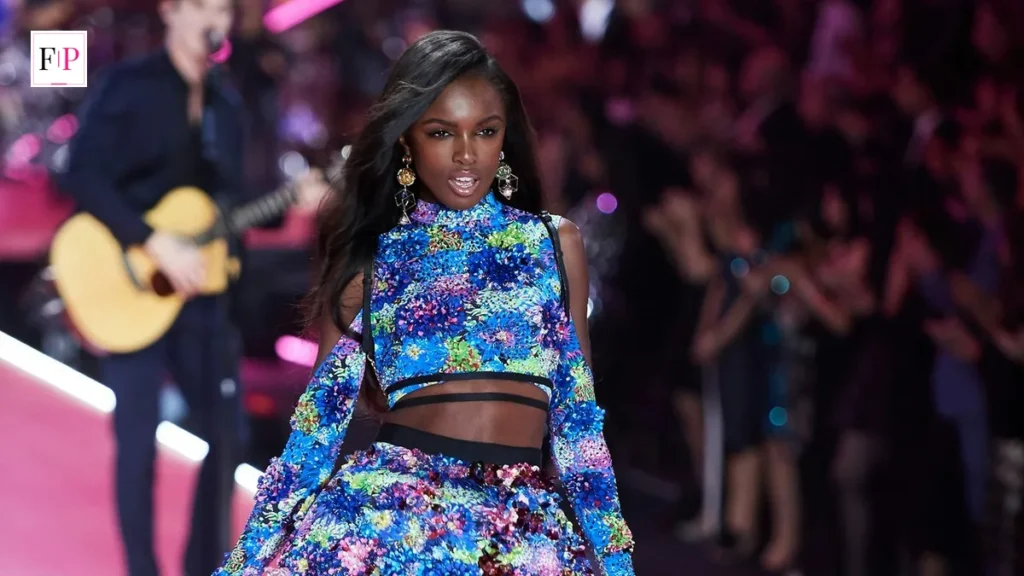
From 2015 to 2018, she walked in four consecutive Victoria’s Secret Fashion Shows. The show, at its peak, was one of the most watched fashion events in the world, and a place on its runway carried a different kind of fame from the high-fashion calendar. It made models recognisable far beyond fashion’s usual audience, and it turned its longest-serving faces, the Angels, into household names. Leomie Anderson’s four consecutive appearances established her as a fixture of the show in its final years in that format.
In April 2019, she became a Victoria’s Secret Angel (https://www.buzzfeed.com/patricepeck/leomie-anderson-victoria-secret-angel-first-black-british?bfsource=relatedmanual), and the announcement carried real historical weight. She became the sixth Black model and the first Black British model to be named a Victoria’s Secret Angel since the brand’s spokesmodel structure began in 1997. Contemporary coverage, including BuzzFeed’s report at the time, underlined the significance: out of forty Angels named up to that point, only six had been Black models. Leomie Anderson herself described the moment with striking honesty, saying it was something she had been scared even to dream about because she had never thought it would come true.
The milestone mattered beyond one woman’s career. For young Black British girls watching at home, an Angel who looked like them, and who spoke with a south London accent, was a visible change in an industry that had long been criticised for its narrow casting. Anderson has never treated that representation as a burden, but she has also never pretended it was unimportant. It is, in many ways, the achievement for which she is most often introduced, and it remains the single most searched-for fact about her career.
Fenty Beauty and the campaign years
Alongside the Victoria’s Secret years, Leomie Anderson built a second high-profile association that reflected a different side of the beauty industry. When Rihanna’s Fenty Beauty launched in 2017, Anderson became one of the faces of the brand, a role that placed her at the centre of one of the decade’s most talked-about beauty launches. Fenty Beauty’s arrival was widely praised for its broad shade range and its casting, and Anderson’s presence in its early campaigns fitted the brand’s message: beauty marketing that looked like the people actually buying the products.
Leomie Anderson’s connection with Rihanna went back further than Fenty Beauty. Anderson had modelled Rihanna’s debut River Island collection at London Fashion Week in 2013, and she had worked with Fenty Puma, so the beauty-brand role was a continuation of a working relationship rather than a sudden pairing. In later interviews, Leomie Anderson has described Rihanna as a mentor and a friend, and has spoken warmly about the singer’s support during a difficult period in her own life, including after the death of her father during the Covid-19 pandemic.
The campaign years also showed her range beyond the runway. Beauty, sportswear, high street and luxury work sat side by side in her portfolio, and that mix is part of why her career has lasted. A model who can move from a couture-adjacent runway to a beauty campaign to a high-street collaboration is a model with options, and Anderson’s bookings across the 2010s and into the 2020s reflect exactly that flexibility.
LAPP: fashion with a purpose
In 2016, Leomie Anderson created LAPP, short for Leomie Anderson, the Project, the Purpose. It began as a blog and later became known as LAPP Magazine, a platform offering insight and awareness around women’s mental health, rights and body consciousness, and promoting female empowerment. The idea grew directly out of her own writing: an open letter she had written about consent and the pressure many young women face had gone viral, and she realised that her platform could carry other women’s voices as well as her own.
LAPP was deliberately built as more than a personal blog. It published submissions from other women, covering subjects from careers and relationships to mental health and domestic violence, and it gave some contributors the option to write anonymously about difficult experiences. Leomie Anderson has described the aim in simple terms: she wanted anyone who encountered LAPP to learn something and leave inspired, and she wanted to spotlight women whom fashion and society too often ignore, including disabled models and women who had been bullied for their appearance.
To support the platform without relying on subscriptions or advertising, she founded her own clothing brand, LAPP The Brand, launched in September 2016. The label produced women’s athletic garments that could be worn as fashion or as activewear, with the slogan “Advocating Women’s Issues Through Fashion”. Money from the clothing was invested directly back into the platform, so that the writers contributing to it could be supported. The brand later collaborated with other labels, including Amsterdam-based Daily Paper, and held pop-up shops, including one at London’s Truman Brewery off Brick Lane.
LAPP remains the clearest expression of what sets Anderson apart from many of her contemporaries. Plenty of models launch clothing lines; far fewer build a publishing platform first and then use fashion sales to fund it. For readers interested in the business of modern modelling, LAPP is a case study in turning influence into infrastructure: a model using her own earnings and audience to create a space that outlasts any single campaign.
Speaking out: activism, talks and the podcast
Leomie Anderson’s activism is not a side project bolted onto her modelling career; it is the thread that runs through it. She has been vocal about racial discrimination in the modelling industry, about the treatment of young models, and about body image, and she has taken those arguments to some of the most formal stages available to a public speaker. She has given two TEDx talks and has spoken at Oxford and Cambridge universities, engagements that underline how seriously her advocacy is taken outside fashion’s own circles.
Her writing and speaking have covered the practical realities of model welfare: how young models can be unsure of how to advocate for themselves, how casting and backstage treatment can affect confidence and mental health, and how the industry’s beauty standards shape the girls who enter it. In interviews, she has argued that models who start as teenagers need better support and clearer routes to speak up, and she has linked that argument to her own experience of entering the industry at fourteen. That willingness to discuss the industry’s workings, rather than only its glamour, is part of why she is often described as a model activist rather than simply a model with opinions.
In April 2021, she debuted the podcast Role Model with Leomie Anderson, made with Somethin’ Else and Sony Music, in which she spoke to international figures who were breaking boundaries and shaping culture. The podcast format suited her: long-form conversation rather than a runway walk or a short interview, and a chance to ask other successful people how they had handled the pressures of public life. She was also included in the 2020 Forbes 30 Under 30 list for arts and culture in Europe, a recognition that reflected both her modelling career and her work as a founder and advocate.
Taken together, the talks, the podcast and the platform show a career deliberately built in two directions at once: outward, towards bigger runways and campaigns, and inward, towards the conditions of the industry itself. That combination is rarer than it looks, and it is a large part of why Anderson’s name continues to appear in conversations about fashion’s future, not only its past.
Television: Glow Up, Celebrity Bear Hunt and beyond
From 2023 onwards, Leomie Anderson became familiar to a new audience as a television presenter. She joined the BBC series Glow Up: Britain’s Next Make-Up Star as a co-host, and from its fifth series she took over as the show’s host and presenter. Glow Up, which follows aspiring make-up artists competing for a professional break, suited her background: a fashion insider who could talk credibly about beauty, presentation and the pressures of a creative career, without pretending to be a make-up artist herself.
She had earlier television experience as well. In 2011, she appeared on Channel 4’s reality series The Model Agency, which followed the workings of a London modelling agency, and she later appeared on shows including RuPaul’s Drag Race UK and Celebrity Gogglebox. In 2025, she took part in the first series of Netflix’s Celebrity Bear Hunt, the survival competition hosted by Bear Grylls, in which she was the first contestant eliminated, finishing twelfth. She has also acted, appearing in the 2023 action comedy film Sumotherhood.
That television arc matters for a simple reason: it shows a model planning beyond the runway. Modelling careers are short by nature, and the models who last in public life are usually the ones who build a second skill while the first is still going. Presenting, podcasting and advocacy have given Anderson a public identity that does not depend on being cast for the next show, and that is a large part of why she remains a relevant British fashion figure well into her thirties.
Style, influence and why she matters in British fashion
Leomie Anderson’s personal style is often described as bold and distinctly London: streetwear edge mixed with high-glam polish, statement looks worn with confidence rather than caution. That description fits her public image, but her influence in British fashion runs deeper than styling. She is part of a generation of Black British models who changed what the industry’s biggest stages looked like, and her Victoria’s Secret Angel milestone remains a reference point in discussions about representation in fashion.
For British readers, her story also has a local resonance. She is a south Londoner who stayed based in south London, who built a brand rooted in London’s creative scene, and whose platform has given space to British women writing about their own lives. Her career connects the high-fashion world of Paris and Milan to the everyday reality of a London upbringing, and that connection is part of her appeal: she is an international model who still reads, unmistakably, as a Londoner.
There is also a practical lesson in her longevity. She entered the industry at fourteen, survived its pressures, diversified into beauty, television, podcasting and entrepreneurship, and kept speaking about the conditions that younger models face. That combination of staying power and outspokenness is unusual, and it is why her name continues to trend in the United Kingdom, including in the fashion searches that brought her to FamePost readers’ attention this week.
In the end, the fair summary of her career is a short one: a Wandsworth schoolgirl scouted at fourteen who became a Marc Jacobs favourite at seventeen, a four-time Victoria’s Secret runway model, the first Black British Victoria’s Secret Angel, a Fenty Beauty face, the founder of LAPP, and a presenter and advocate who has used her platform to argue for a fairer fashion industry. That is a substantial career by any measure, and it is one that is still developing.
Frequently Asked Questions
Who is Leomie Anderson?
Leomie Anderson is a British fashion model, television presenter and activist from Wandsworth, south London, of Jamaican heritage. She was scouted at fourteen, made her catwalk debut for Marc Jacobs at seventeen, walked in four consecutive Victoria’s Secret Fashion Shows from 2015 to 2018, and became the first Black British Victoria’s Secret Angel in 2019.
How did Leomie Anderson become famous?
Leomie Anderson first built a high-fashion runway career, walking for houses including Marc Jacobs, Burberry, Giorgio Armani and Tom Ford. She became widely known through the Victoria’s Secret Fashion Show, which she walked from 2015 to 2018, and through becoming a Victoria’s Secret Angel in 2019, the first Black British model to hold that title.
What is LAPP, Leomie Anderson’s brand?
LAPP stands for Leomie Anderson, the Project, the Purpose. Anderson created it in 2016 as a blog and later magazine focused on women’s mental health, rights, body consciousness and empowerment, and she founded LAPP The Brand, a women’s athletic and fashion label launched in September 2016, to support the platform.
Was Leomie Anderson the first Black British Victoria’s Secret Angel?
Yes. In April 2019, Leomie Anderson became the first Black British model to be named a Victoria’s Secret Angel, and the sixth Black model overall to hold the title since the brand’s Angel structure began in 1997.
What television shows has Leomie Anderson presented or appeared on?
Leomie Anderson joined Glow Up: Britain’s Next Make-Up Star as a co-host in 2023 and later became its host and presenter. She has also appeared on The Model Agency, RuPaul’s Drag Race UK, Celebrity Gogglebox and Netflix’s Celebrity Bear Hunt, and she acted in the 2023 film Sumotherhood.
What has Leomie Anderson said about the modelling industry?
Leomie Anderson has spoken openly about racial discrimination in modelling, about body image, and about the welfare of young models, arguing that models who start as teenagers need better support and clearer ways to speak up. She has given TEDx talks, spoken at Oxford and Cambridge universities, and built her LAPP platform around women’s voices and empowerment.
