


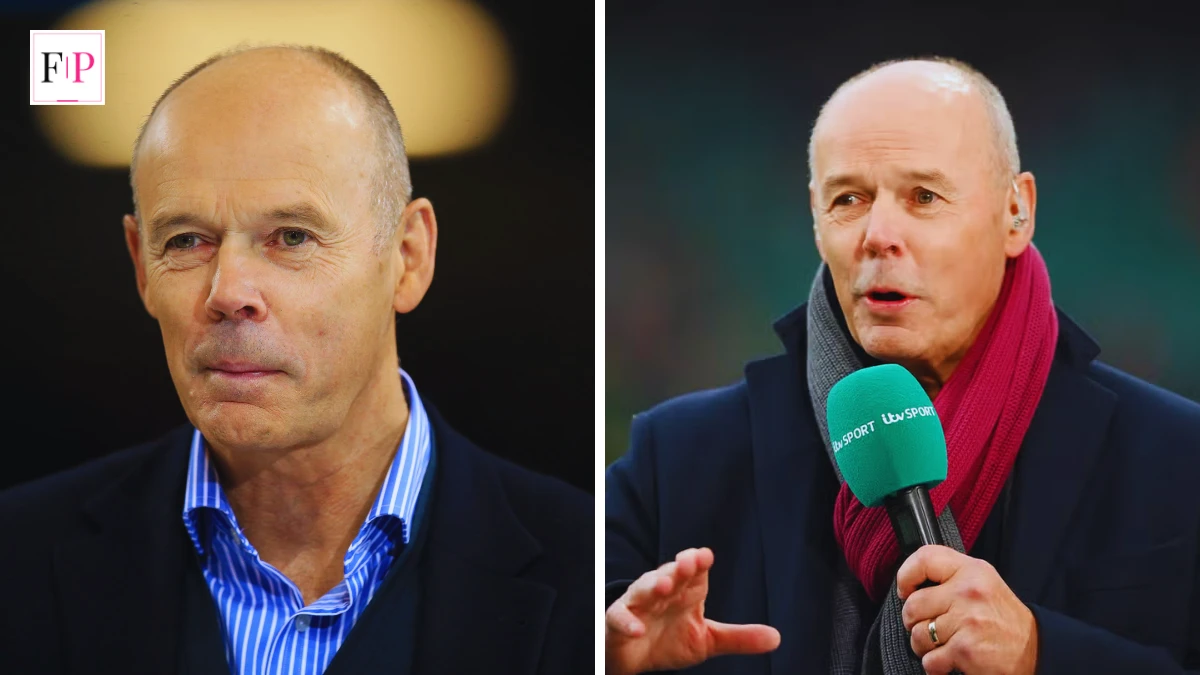
Quick answer: Clive Woodward is an English former rugby union player and coach best known for leading the England national team to victory at the 2003 Rugby World Cup. Knighted in 2004, he later served as Director of Sport for the British Olympic Association and remains a prominent rugby broadcaster and business speaker today.
Clive Woodward is the name every England rugby fan associates with one unforgettable night in Sydney, when a last-gasp drop goal turned decades of near-misses into the country’s only Rugby World Cup title. Long before that, he was an England centre, a businessman, and a coach rebuilding unfashionable clubs from the ground up.
This article traces the full Clive Woodward story: his early life, his playing days, the transformation of England into world champions, his rockier spells in football and with the British & Irish Lions, and the second act that has kept him at the centre of British sport for over two decades.
Who Is Clive Woodward?
Sir Clive Ronald Woodward, born on 6 January 1956, is widely regarded as one of the greatest rugby coaches of all time. He is the man who took England from sixth in the world rankings to World Cup champions in just six years as head coach, then went on to help Team GB deliver its most successful Olympic Games in modern history.
Today, Woodward works as a rugby pundit and sits at the top of the corporate speaking circuit, still drawing on lessons from a career that has spanned professional sport, football, and the Olympics.
Early Life and Education
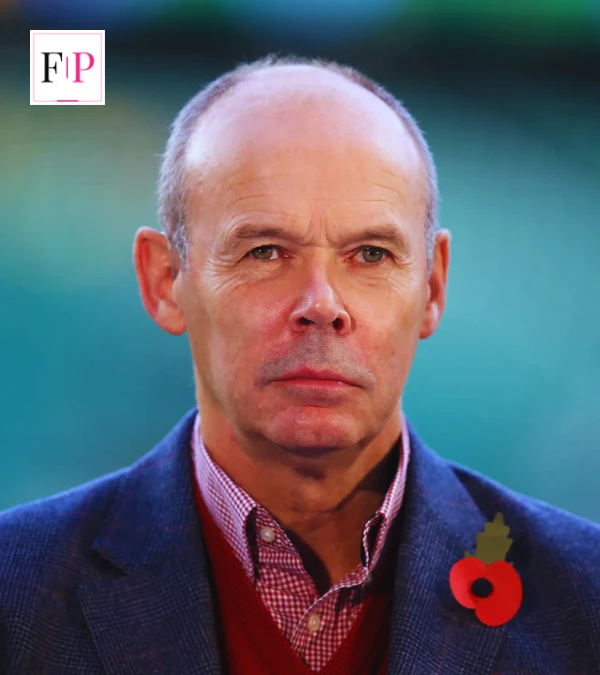
Woodward was born in Ely, Cambridgeshire, the son of an RAF pilot. His family’s postings took him to Edinburgh for his early schooling before he was sent to HMS Conway, a naval school, after his father disapproved of his early ambition to play professional football instead of rugby.
At Conway, Woodward played centre alongside future Conservative Party leader Iain Duncan Smith at fly-half. He later applied to study law at Durham University but was turned down, so he took a job at NatWest bank in London instead of heading straight into higher education.
His path back to academia came through rugby. Woodward left his first club, Harlequins, to attend Loughborough University, where he earned a degree in sports science followed by a teaching qualification. Loughborough would later award him an honorary doctorate in recognition of his sporting achievements.
By his own account, Woodward was overlooked for the Welsh Schoolboys side simply because he was English, despite being good enough to represent a Welsh school. It was an early taste of the selection politics he would later navigate from the other side of the touchline as a national head coach.
Playing Career: Leicester Tigers to England Caps
Woodward made his name as a centre for Leicester Tigers, turning out 148 times for the club between 1979 and 1985 and forming a well-known midfield partnership with fellow centre Paul Dodge. He scored 43 tries in a Tigers shirt across three John Player Cup finals.
His England debut came on 19 January 1980 against Ireland, during the same Grand Slam-winning season. Woodward went on to win 21 caps between 1980 and 1984, scoring four tries, and was selected for British & Irish Lions tours to South Africa in 1980 and New Zealand in 1983.
Alongside his club and country commitments, Woodward turned out for the Barbarians, the invitational side famous for open, attacking rugby, and was part of the team that won the Hong Kong Sevens in 1981.
After his final England appearance in 1984, Woodward moved to Australia to play for Manly, staying until 1990. During this period he also built a business career, including nine years with Xerox across the UK and Australia, experience he would later fold into his coaching philosophy.
Coaching Beginnings: Henley, London Irish and Bath
Woodward returned to the UK in 1990 and set up his own computer leasing company while starting out in coaching almost by accident. He took charge of Henley Hawks, then a modest club, and guided them to promotion into the national leagues and four Oxfordshire RFU County Cup titles.
A successful stint at London Irish followed, along with a spell coaching England’s Under-21 side. In 1997 he briefly joined Bath as assistant coach under Andy Robinson, but his time there was cut short when the Rugby Football Union came calling with a much bigger job.
England Head Coach: Building a World-Beating Team
When Jack Rowell stepped down in 1997, Woodward became England’s first full-time professional head coach, tasked with dragging the side out of the amateur era. Early results were mixed, and his position was questioned after England lost to South Africa and exited the 1999 Rugby World Cup, a tournament by which Woodward had publicly asked to be judged.
What followed was a remarkable turnaround. England won the Six Nations in 2000 and 2001, then became the world’s number one ranked team in 2002 after beating New Zealand, Australia and South Africa at Twickenham in the same autumn campaign. A Grand Slam followed in 2003 with a 42–6 demolition of Ireland in Dublin.
That summer, England beat New Zealand 15–13 in Wellington, their first win on New Zealand soil since 1973, despite playing much of the second half with 13 men. A week later they beat Australia 25–14 in Melbourne for their first ever victory on Australian soil, arriving at the World Cup as favourites and the top-ranked side in the world.
Between 2000 and 2003, Woodward’s England won 41 of 46 matches, including every single game played at Twickenham. It remains one of the most dominant stretches in the sport’s history.
Much of that success came from Woodward’s willingness to professionalise every part of the operation years before rival unions caught up. He brought in dedicated fitness, psychology and analysis staff, and set written standards of conduct for the squad, an early version of the “Teamship” culture he still teaches today. Off the field, conditioning coach Dave Reddin helped turn England into what Woodward later called the fittest team in world rugby.
The 2003 Rugby World Cup Triumph
England swept through their pool with wins over Georgia, South Africa, Samoa and Uruguay, before beating Wales and France in the knockout rounds to reach the final against hosts Australia in Sydney. On 22 November 2003, Jonny Wilkinson’s drop goal in the last minute of extra time sealed a 20–17 victory.
The win made England the only Northern Hemisphere nation ever to lift the Rugby World Cup, a distinction that still stands today. The squad returned home to an open-top bus parade through central London watched by hundreds of thousands of fans, a scale of reception rugby in England had never seen before.
Woodward was knighted in the 2004 New Year Honours and named IRB International Coach of the Year, and in 2011 he was inducted into the sport’s Hall of Fame alongside every other World Cup-winning head coach.
The Fall: 2005 Lions Tour and Leaving England
The years after the World Cup proved far harder. Key players including captain Martin Johnson retired, Jonny Wilkinson was sidelined by injury for almost four years, and England finished third in the 2004 Six Nations. A brutal tour of New Zealand and Australia followed, with England losing all three Tests and failing to score a single try against the All Blacks.
Woodward announced his resignation as England coach in September 2004, walking away from a contract that had been due to run until 2007. He had already agreed, months earlier, to lead the British & Irish Lions on their 2005 tour of New Zealand.
The Lions lost the series 3–0, and Woodward faced heavy criticism over his squad selection, his management style, and his handling of the media. Critics pointed to an unusually large touring party and a reluctance to settle on a test team early, leaving little time for his strongest combinations to gel before facing the All Blacks. He returned home with a reputation that had taken a serious hit within the sport.
A Difficult Spell at Southampton FC
Woodward’s next move surprised the sporting world: a switch into football. He became Performance Director at Southampton FC in 2005, a club whose chairman, Rupert Lowe, was a personal friend, though reports at the time suggested a strained relationship with manager Harry Redknapp.
Woodward’s appointee as head of sports science, Simon Clifford, left the club after just two months amid resentment from existing staff, an early sign the project was struggling. Following Redknapp’s departure in December 2005, Woodward was promoted to Director of Football alongside new head coach George Burley.
The experiment did not last. By the end of August 2006, Southampton confirmed he was no longer with the club, closing what remains the one notable setback in an otherwise decorated career.
British Olympic Association and Team GB Success
Woodward bounced back quickly, joining the British Olympic Association as director of elite performance in September 2006. He served as deputy chef de mission at the 2008 Beijing Olympics, using the experience to prepare for a home Games four years later.
As Team GB’s Director of Sport, Woodward worked across the organisation’s roughly two dozen Olympic sports, supporting athletes and national coaches through the Beijing and Vancouver Winter Olympics before helping deliver London 2012, widely regarded as Britain’s most successful Games of the modern era. In March 2008 he ran a leg of the Olympic torch relay through London’s Russell Square ahead of the Beijing Games.
He left the BOA role in October 2012 after six years, and has served on the International Olympic Committee’s Entourage Commission ever since. He has also sat on the board of Leicester Tigers as a non-executive director since 2007.
Clive Woodward’s Career Timeline
| Year | Milestone |
| 1956 | Born in Ely, Cambridgeshire |
| 1979–1985 | Plays centre for Leicester Tigers |
| 1980–1984 | Wins 21 England caps |
| 1990–1997 | Coaches Henley Hawks, London Irish and England U21 |
| 1997 | Appointed England’s first full-time head coach |
| 2000–2001 | Wins back-to-back Six Nations titles |
| 2003 | Leads England to Rugby World Cup glory; knighted |
| 2005 | Coaches the British & Irish Lions in New Zealand |
| 2005–2006 | Performance Director, then Director of Football, at Southampton FC |
| 2006–2012 | Director of Sport for the British Olympic Association |
| 2012 | Helps deliver Team GB’s London Olympics success |
| Today | ITV Sport pundit, keynote speaker and executive coach |
Life Today: Punditry, Speaking and Business
Woodward is now a regular pundit for ITV Sport, covering the Six Nations and Rugby World Cup, and remains one of the most quoted voices on the current England team. Ahead of the 2026 Six Nations he pushed publicly for uncapped forward Henry Pollock to start over the more experienced Tom Curry, and later in the year he set out changes he wanted to see before England’s Autumn Nations Series meeting with New Zealand.
His analysis often circles back to the current head coach, Steve Borthwick, who played under Woodward earlier in his own international career. In a 2026 interview reflecting on the current England side, Woodward summed up his coaching outlook simply: “coaching the team is not the difficult part,” he said, arguing that a coach’s real job is making individual players better. In July 2026, with England on a run of five straight defeats, Woodward publicly backed Borthwick to keep his job and lead the side into the 2027 Rugby World Cup.
Away from broadcasting, Woodward built a second career as a keynote speaker and executive coach, drawing on what he calls “Teamship,” a framework for turning talented individuals into high-performing teams. He has spoken at business events across the UK, including Cumbria’s flagship business conference in 2026, and co-created a golf coaching programme called TeeToCup with a leading golf professional, applying the same coaching principles beyond sport.
Personal Life and Legacy
Woodward is married to Jayne Williams, with whom he once ran a computer leasing business, and the couple live near Maidenhead. He published his autobiography, Winning!, in 2004, detailing the World Cup campaign and his career and crediting performance consultant Yehuda Shinar as one of the influences who helped turn the team around. He was the subject of an independent biography by journalist Alison Kervin the following year.
Beyond rugby, Woodward is Honorary President of the Wooden Spoon Society, a children’s charity linked to the rugby community, and has played in the Gary Player Invitational, a celebrity golf event that raises money for children’s causes.
Woodward’s legacy rests on a rare double: he is the only person to have coached England to Rugby World Cup glory and later helped direct one of Britain’s most successful Olympic Games. His influence lives on through the current England set-up, where his former player Steve Borthwick now leads the team, and through the generation of coaches who studied his methods for building winning cultures both on the field and off it.
Frequently Asked Questions
Who is Clive Woodward?
Clive Woodward is a former England rugby international and coach who led the national team to victory at the 2003 Rugby World Cup.
Did Clive Woodward win the Rugby World Cup?
Yes. He coached England to a 20–17 win over Australia in the 2003 final, England’s only Rugby World Cup title.
Why did Clive Woodward leave the England job?
He resigned in September 2004 after a difficult post-World Cup period, walking away from a contract that ran until 2007.
Is Clive Woodward still involved in rugby?
Yes. He works as a pundit for ITV Sport and remains a frequent commentator on the current England team.
Was Clive Woodward’s move into football successful?
No. His 2005–2006 spell as Performance Director and then Director of Football at Southampton FC ended after roughly a year.
Is Clive Woodward married?
Yes, to Jayne Williams. The couple live near Maidenhead.
Conclusion
From an England centre to a knighted World Cup-winning coach and Olympic chief, Clive Woodward’s career is one of the richest in modern British sport. His methods reshaped English rugby, his Teamship philosophy now guides boardrooms as much as changing rooms, and his influence is still visible every time England takes the field under a coach who once played for him.
Want more sporting legends like Clive Woodward? Explore FamePost’s full archive of biographies from the world of sport and entertainment.
You may also read: Fame Post
